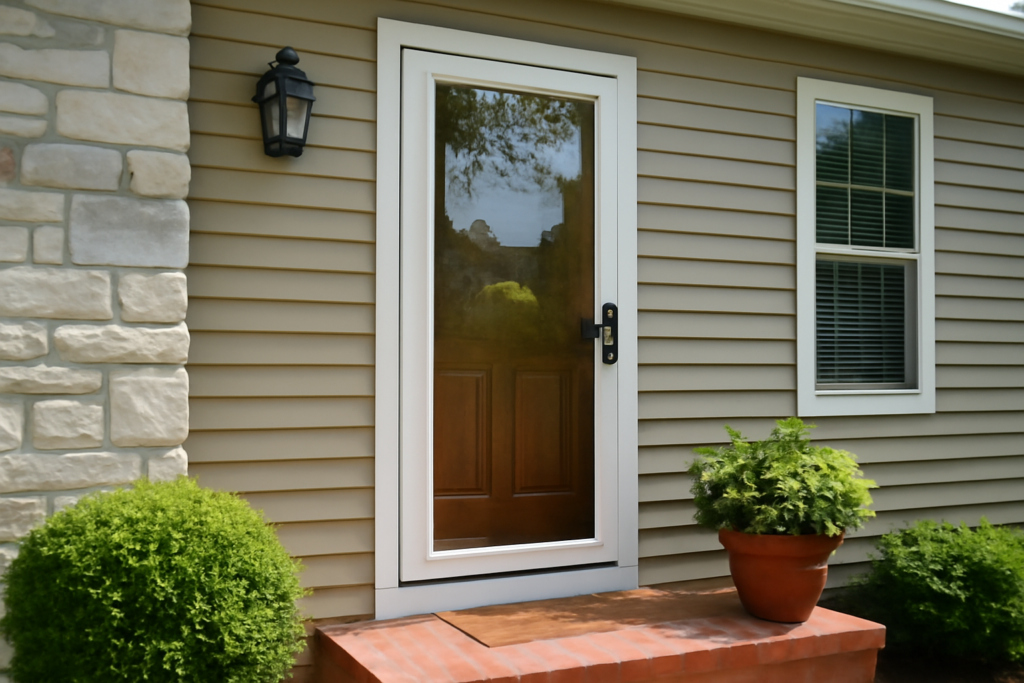
A Pella storm door is the upgrade most homeowners reach for when they want a name-brand door that fits tight, seals well, and doesn’t look like a bargain-bin add-on bolted to the front of the house. Pella has been building doors and windows since 1925, and their storm door line — sold largely through Lowe’s — hits a middle ground between the cheap aluminum doors at the hardware store and the premium Andersen units.
- Why a Storm Door at All
- Pella Storm Door Series
- Glass and Ventilation Options
- What a Pella Storm Door Costs
- Standard Sizes and Measuring
- Hardware and Features Worth Checking
- Installation Notes
- Warranty and Longevity
- Pella vs. the Competition
- Care and Seasonal Adjustment
- Is a Pella Storm Door Worth It
If you’re deciding whether a Pella storm door is worth the money, this guide covers the series lineup, glass and screen options, real-world pricing, sizing, and what installation actually involves.
Why a Storm Door at All
A storm door mounts in front of your entry door and does three things: it lets you open the main door for ventilation while keeping bugs out, it shields the entry door and its finish from sun and weather, and it adds a modest insulating air gap that trims drafts. On an older or dark-finished entry door, the sun protection alone can add years to the finish. Pella builds all three functions into a heavier, better-sealed package than the generic doors most builders hang.
Pella Storm Door Series
Pella organizes its storm doors into a few tiers. Names shift year to year, but the structure holds:
- Traditional / Standard-vent series — the entry point. A fixed glass panel over a lower screen, or a partial-vent design where the top glass slides down over a screen. Budget-friendly, solid aluminum frame.
- Full-view series — a single large glass panel for maximum light and an unobstructed view. You swap the glass for a screen insert by hand, seasonally. This is the cleanest look.
- Rolscreen retractable-screen series — Pella’s signature feature. The screen rolls up and hides inside the top of the frame when you don’t need it, and pulls down when you open the glass to vent. No storing a screen panel in the garage.
- Select and premium models — heavier extrusions, upgraded hardware, and options like between-the-glass blinds on some configurations.
The Rolscreen is the feature people pay Pella for. If you like the idea of glass most of the year and a screen on demand without hauling panels around, that series is the reason to choose Pella over a cheaper brand.
Glass and Ventilation Options
How the door ventilates is the decision that shapes daily use:
- Full-view with interchangeable panels — one big glass panel; you physically swap in a screen for summer. Best view, most storage hassle.
- High-view / mid-view partial vent — the top glass slides down behind a fixed screen. Always ready to vent, no panel swapping, but a visible screen crossbar splits the view.
- Rolscreen retractable — glass stays in place; the hidden screen drops down when you open the entry door behind it. The best of both, and the priciest.
Glass is tempered safety glass on all models. Some upper-tier configurations offer Low-E coated glass, which reflects heat and cuts UV fade on your entry door and nearby flooring.
What a Pella Storm Door Costs
Pricing depends heavily on series and glass style:
- Traditional partial-vent models: roughly $200-$350 for the door alone.
- Full-view models: $300-$500.
- Rolscreen retractable-screen models: $400-$700-plus depending on size and finish.
- Professional installation: $150-$400 for a standard swap through Lowe’s or an independent installer.
Installed, a mid-range Pella storm door typically runs $500-$900 all-in. That’s more than a $120 hardware-store door, and the premium buys a heavier frame, tighter weatherstripping, and hardware that doesn’t feel loose in six months.
Standard Sizes and Measuring
Pella storm doors fit the same nominal openings as standard entry doors:
- Widths: 32″, 34″, and 36″ cover most homes; 36″ is the common front-door width.
- Height: 80″ (6’8″) standard.
- Handing: most doors are reversible left/right at install, so you pick the hinge side on the porch.
To size a door, measure the width of the door opening — the inside face of the brick mold or exterior casing the storm door mounts against — at top, middle, and bottom, and use the narrowest measurement. Then measure the height from the sill to the top casing. Pella’s mounting flanges are adjustable within a range, but the door itself has to match the nominal opening. When in doubt, order the store’s in-home measure; a door that’s the wrong size is not a return you want to make.
Hardware and Features Worth Checking
Pella’s hardware is a step above generic doors, but options vary by model. Look for:
- Handle set: matching lever-style handle sets in satin nickel, oil-rubbed bronze, black, and brass. Pick a finish that matches your entry-door hardware.
- Multi-point or deadbolt lock: upper-tier models offer a keyed deadbolt; base models use a simpler latch.
- Two closers: a top and bottom pneumatic closer keeps the door from racking and slamming. Both have adjustable speed and a hold-open feature.
- Wind chain and safety spring to protect the closer from gusts.
- Continuous hinge on many models, which won’t sag like separate butt hinges.
Installation Notes
A Pella storm door is a realistic weekend DIY project, but it rewards patience. The doors ship with an install kit — a hinge-side Z-bar or mounting rail, latch rail, top expander, and screws. The critical steps:
- Confirm the opening is close to square. Anything more than 1/4″ out of plumb will bind the latch.
- Mount and plumb the hinge rail first, checking with a level before driving all the screws.
- Hang the door, set an even reveal on the latch side, then fasten the latch rail.
- Install the top expander so it seals against the header.
- Mount both closers and dial in the speed so the door latches firmly without banging.
Because Pella sells heavily through Lowe’s, professional installation is easy to bundle at purchase, and for a full-view or Rolscreen model that’s often the smarter call — the glass panels are heavy and the retractable screen mechanism is unforgiving of an out-of-plumb frame.
Warranty and Longevity
Pella backs its storm doors with a limited warranty — typically 10 years on the aluminum frame and shorter coverage on glass, screen, and hardware components, with the retractable Rolscreen mechanism covered under its own terms. Read the specific warranty card for your model, because coverage differs between the base and premium series and requires the door to be professionally installed on some tiers. A well-installed Pella storm door commonly lasts 15-20 years; the closers and weatherstrip are the wear items, and both are cheap, replaceable parts.
Pella vs. the Competition
Two brands sit on either side of Pella. Larson, sold at Home Depot, is the volume leader and undercuts Pella on price at the low end, with a comparable retractable-screen option on its upper models. Andersen sits above Pella, with heavier extrusions, a wider premium range, and a price to match. Pella lands in the middle: better built than a bargain aluminum door, easier on the wallet than top-tier Andersen, and carried at Lowe’s where you can see the finishes in person and bundle a measured install.
The practical decision usually comes down to the screen. If you want a retractable screen that disappears when unused, compare Pella’s Rolscreen directly against Larson’s retractable line at your local store — feel how each one rolls and latches, because that mechanism is the part you’ll touch every day. For a plain full-view or partial-vent door, the brands are close enough that finish match, price, and installer availability should drive the call.
Care and Seasonal Adjustment
A Pella storm door asks little, but a few habits keep it tight. Wipe the weatherstrip and lubricate the closer pivot once a year. On full-view models, store the off-season glass or screen panel flat and labeled so the gasket doesn’t deform. As temperatures swing, tweak the closer’s speed screw — cold thickens the fluid and slows the swing, warmth speeds it up. And on hot, sunny days, prop the entry door open behind a full-glass storm door only briefly: the trapped heat between the two doors can climb high enough to stress the finish on a dark-painted entry door.
Is a Pella Storm Door Worth It
For a back door or a rental, a $150 generic aluminum door is fine. For a front entry you look at every day — where fit, finish, and a screen that isn’t an eyesore actually matter — a Pella storm door earns its price. The Rolscreen retractable models are the standout, giving you a clean glass front with a screen that disappears when you don’t need it. Match the handle finish to your entry hardware, get the opening measured accurately, and set the hinge rail dead plumb, and you’ll have a door that seals tight and swings clean for two decades.