After every hurricane season I get the same calls, so here’s the straight rundown on storm shutters for windows exterior protection: five main types, priced anywhere from $60 to $1,200 per window, each with a distinct trade-off between cost, convenience, and looks. Choosing storm shutters for windows exterior walls isn’t just about surviving one storm — in Florida, coastal Texas, and much of the Gulf and Atlantic coasts, the right shutters also cut your windstorm insurance premium by 15 to 45 percent.
Part of our Windows & Doors guide — explore the full guide →
I’ve installed all five types on coastal jobs. Below is what each one actually costs, how fast you can deploy it when a storm is 48 hours out, and where each makes sense.
- Storm Panel Shutters: Cheapest Real Protection
- Accordion Shutters: The Workhorse
- Roll-Down Shutters: Push-Button Convenience
- Bahama Shutters: Island Looks, Built-In Shade
- Colonial Shutters: Curb Appeal That Actually Works
- Cost and Speed Comparison
- Codes, Ratings, and Insurance Paperwork
- Shutters vs Impact Windows and Plywood
- Which Type Should You Buy?
Storm Panel Shutters: Cheapest Real Protection
Corrugated panels of aluminum, galvanized steel, or clear polycarbonate that bolt over the window on permanently mounted tracks or direct-mount studs. Expect $60 to $150 per window for aluminum, $100 to $250 for polycarbonate — far and away the lowest cost per opening that still meets Miami-Dade impact standards.
The catch is labor at crunch time. Each panel weighs 4 to 12 pounds, overlaps its neighbor by one corrugation, and hangs on wingnuts or a track header. Shuttering a 12-window house takes two people a solid two to three hours, usually in the heat, on a ladder, while everyone else is at the gas station. Then you need somewhere to stack 40-plus panels the other 360 days of the year — figure a garage wall rack. Clear polycarbonate versions are worth the upcharge on a few key windows so the house isn’t a cave during an outage.
Accordion Shutters: The Workhorse
Accordion shutters live permanently beside the window in vertical housings and unfold horizontally along a top and bottom track, latching in the middle. Installed cost runs $200 to $500 per window, or roughly $20 to $30 per square foot of opening. One person can close an entire house in 15 to 20 minutes with no ladder, which is why they dominate mid-market coastal construction.
They’re not pretty — stacked housings add visible bulk at each jamb — and cheap ones get stiff if you never lubricate the tracks. Do these two things and they last 20-plus years:
- Run each shutter closed and open once a month; silicone-spray the tracks every quarter.
- Hose salt film off the blades and housings twice a year in oceanfront exposure.
Most accordion systems carry Miami-Dade NOA approvals for large-missile impact, and many double as security shutters with a keyed lock — handy for seasonal homes left empty all summer.
Roll-Down Shutters: Push-Button Convenience
Roll-downs (also called rolling shutters) stow in a horizontal box above the window and descend in side tracks, either by hand crank or motor. They’re the premium choice: $400 to $800 per window manually operated, $700 to $1,200-plus motorized, with big picture windows and sliders pushing $2,000 or more.
Deployment is the selling point — a motorized whole-house system closes in under a minute from a wall switch or phone app, which matters enormously for elderly owners and for evacuations on short notice. Get a battery backup or manual crank override on every motor; the power is usually out exactly when you need them moved. Aluminum slat versions also deliver serious security, sound damping of 10 to 15 decibels, and useful shade — snowbird clients run them daily as blackout shades, which spreads the cost over year-round use.
Bahama Shutters: Island Looks, Built-In Shade
Bahama (or Bermuda) shutters hinge at the top and prop outward over the window at roughly 45 degrees, held by adjustable arms. To deploy for a storm, you unhook the arms and lock the shutter flat against the wall. Cost lands between $200 and $600 per window in aluminum; composite and wood versions for looks-only applications run less but often lack impact ratings — check for a Miami-Dade or Florida Building Code approval number before assuming protection.
The everyday payoff is shade: propped Bahamas block high-angle summer sun while preserving the view downward, trimming cooling loads on south and west glass. The trade-off is a permanently filtered view and reduced daylight. They suit true tropical and coastal-cottage architecture; on a colonial brick facade they look bolted-on.
Colonial Shutters: Curb Appeal That Actually Works
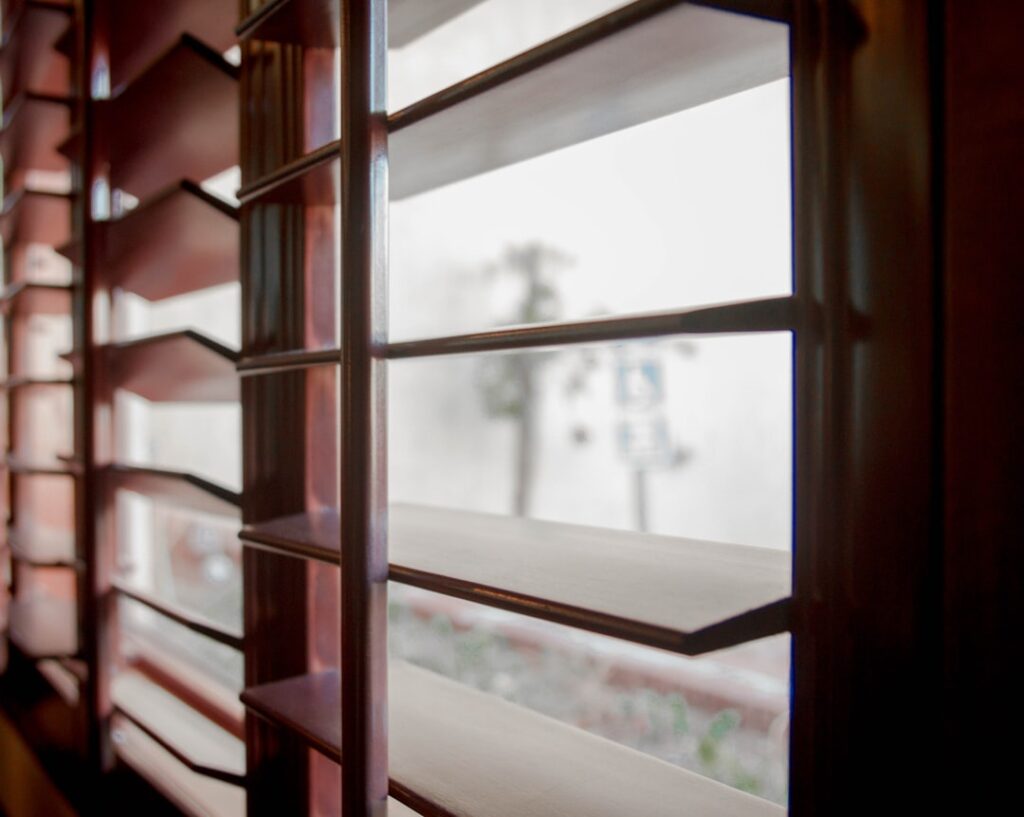
Colonial storm shutters are hinged pairs flanking each window — the classic look — but unlike decorative vinyl shutters screwed to the wall, these are functional louvered aluminum panels that swing shut and bar across the glass. Figure $200 to $500 per window installed. Closing the house takes 30 to 60 minutes because each pair latches individually, some over flower beds and shrubs you’ll be leaning through.
They’re the pick when an HOA or historic district would reject accordion housings and roll-down boxes. One planning note: colonials don’t fit wide openings well — anything past about 60 inches needs a different solution, so most colonial jobs mix in panels or roll-downs for sliders and picture windows.
Cost and Speed Comparison
Per-window installed pricing and realistic whole-house closing time for a typical 12-opening home:
- Storm panels: $60-$250; 2-3 hours, two people, ladder work
- Accordion: $200-$500; 15-20 minutes, one person
- Colonial: $200-$500; 30-60 minutes
- Bahama: $200-$600; 20-40 minutes
- Roll-down manual: $400-$800; 20-30 minutes
- Roll-down motorized: $700-$1,200+; under 5 minutes
Many owners mix systems: motorized roll-downs on the big rear sliders, accordions on bedroom windows, panels on the garage and bathroom. That hybrid approach typically shaves 25 to 35 percent off an all-roll-down quote.
Codes, Ratings, and Insurance Paperwork
In Florida’s wind-borne debris regions, opening protection must pass large-missile impact testing — ASTM E1996/E1886, or Miami-Dade TAS 201/202/203 in the High-Velocity Hurricane Zone covering Miami-Dade and Broward counties. Every legitimate product carries a Notice of Acceptance (NOA) or Florida Product Approval number; ask for it in writing and keep it. Texas coastal counties run parallel TDI approvals.
Permits are required for shutter installation in most coastal jurisdictions, and the permit plus a wind mitigation inspection (about $75 to $150) is what unlocks the insurance discount. Insurers only credit whole-house protection — every glazed opening including doors and skylights — so one unprotected bathroom window can void the entire credit. On a $4,000 annual windstorm premium, a 30 percent opening-protection credit repays a $10,000 shutter job in about eight years, before counting the storm you actually needed them for.
Shutters vs Impact Windows and Plywood
Two alternatives always come up in the same conversation. Impact-rated windows — laminated glass units tested to the same missile standards — run $800 to $1,800 per opening installed, two to four times the cost of shuttering the same window, but they protect with zero deployment effort and add everyday benefits: burglary resistance, UV filtering, and 3 to 6 decibels of noise reduction. Many coastal owners split the difference, putting impact glass in hard-to-shutter openings like arched and second-story windows, with shutters covering the rest.
Plywood deserves an honest word too. Properly installed 5/8-inch plywood with barrel bolts into pre-drilled anchors is recognized as emergency protection in some jurisdictions, and a full house can be boarded for $300 to $600 in material. The catches: it takes half a day of hard labor per storm, sheets warp and delaminate in storage, and most insurers give it no premium credit whatsoever. Treat plywood as the fallback for the storm that arrives before your shutter budget does, not the plan.
Which Type Should You Buy?
Match the shutter to your budget and your deployment reality. If you’re fit, home year-round, and watching costs, panels protect a whole house for $1,000 to $2,500. If you want one-person closing without ladders, accordions at $3,000 to $6,000 per house are the value sweet spot. If the house is a seasonal property, you’re over 65, or you simply want the button, motorized roll-downs are worth every dollar. Bahamas and colonials buy architecture along with protection — just verify the impact rating, because plenty of pretty shutters are decoration. Get three quotes, confirm NOA numbers, and schedule installation between December and April; June quotes come with hurricane-season pricing and eight-week backlogs.