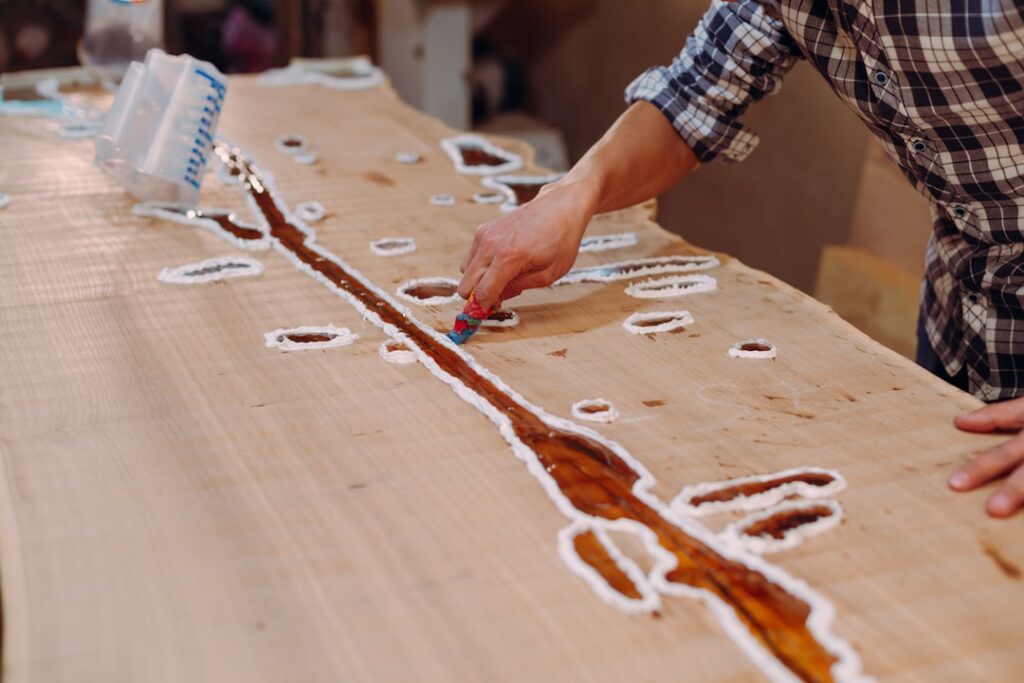
Structural epoxy is a high-strength, two-part adhesive engineered to bond, repair, and reinforce load-bearing materials such as concrete, steel, and masonry. Unlike general-purpose epoxies used for coatings or crafts, structural epoxy is formulated to carry real loads, which is why it appears in crack injection, anchor setting, and concrete repair.
Part of our Epoxy, Concrete & Garage Floors guide — explore the full guide →
Because it is used where failure could be dangerous, structural epoxy is not a guessing game. The right product, the right surface prep, and the right cure conditions all matter, and for anything load-bearing you should follow the manufacturer’s data sheets and involve a structural engineer. This guide explains what the material does and where its limits are.
What Makes Epoxy “Structural”
The word structural refers to the cured material’s ability to transfer load. These epoxies cure to high compressive, tensile, and bond strengths, often exceeding the strength of the concrete they are bonded to. Manufacturers publish those values, along with cure times and temperature ranges, on technical data sheets that you should treat as the controlling instructions for any application.
General hardware-store epoxies are fine for filling a cosmetic chip or gluing a loose tile, but they are not rated to hold a foundation crack together or anchor a steel post. Always match the product class to the job, and never substitute a decorative or fast-set epoxy where a structural-rated one is specified.
Common Uses Around the Home
Structural epoxy shows up in several repair and construction scenarios homeowners may encounter.
- Crack injection: Filling and bonding cracks in poured concrete foundations and walls to restore monolithic strength and stop water intrusion.
- Anchoring: Setting threaded rod, rebar, or bolts into hardened concrete for railings, posts, ledgers, and equipment.
- Concrete repair: Bonding fresh concrete or patching mortar to existing concrete, and rebuilding spalled or damaged sections.
- Doweling rebar: Tying new construction into existing slabs and footings.
Each of these has its own product, mix ratio, and installation method. A crack-injection epoxy behaves very differently from an anchoring adhesive, so the application drives the product choice rather than the other way around.
How Crack Injection Works
Epoxy crack injection is one of the most common structural repairs. The goal is to fill a crack completely and bond both faces so the wall behaves as a single piece again. The general process involves cleaning the crack, sealing the surface with a paste, installing injection ports, and then pumping low-viscosity epoxy into the crack from the bottom up until it travels through the full depth.
The reason it works is that the cured epoxy is stronger than the surrounding concrete, so a properly injected crack will typically not re-crack along the same line. That said, injection treats the crack, not the cause. If a foundation is still moving because of soil pressure, settlement, or hydrostatic load, the underlying problem needs to be addressed first, which is a job for a professional evaluation.
Epoxy Anchoring Basics
Adhesive anchoring uses structural epoxy to bond a rod or bolt into a drilled hole in cured concrete. Done correctly, it can carry significant tension and shear loads. Done carelessly, it can fail suddenly, so the details are not optional.
- Drill the hole to the exact diameter and depth the manufacturer specifies for the anchor and load.
- Clean the hole thoroughly, usually with a brush and compressed air, because dust drastically reduces bond strength.
- Inject the epoxy from the bottom of the hole to avoid trapping air.
- Insert the anchor with a twisting motion to coat it fully, then leave it undisturbed.
- Respect the full cure time before applying any load, longer in cold conditions.
Embedment depth, edge distance, and spacing between anchors all affect capacity. For overhead applications and any safety-critical anchoring, code often requires specially certified products and trained installers, so this is a place to follow the data sheet precisely or hire it out.
Surface Preparation and Cure
Epoxy is only as good as the surface it bonds to. Concrete must be clean, sound, and free of dust, oil, paint, and loose material. Many products call for a specific surface profile achieved by grinding or etching. Skipping prep is the single most common reason structural epoxy repairs underperform.
Cure is equally important. These products have a working time and a full-cure time that both shift with temperature. In cold weather the epoxy cures slowly and may need supplemental heat; in hot weather working time shrinks and you must mix smaller batches. The data sheet gives the temperature window and cure schedule, and applying load before full cure can compromise the entire repair.
Safety and Handling
Structural epoxies are chemical products and demand respect. Work in a ventilated area, wear chemical-resistant gloves and eye protection, and keep skin contact to a minimum, since uncured epoxy resins and hardeners can sensitize skin and irritate the eyes and lungs. Read the safety data sheet for the specific product and follow its handling and disposal guidance.
Mix only the amounts called for, at the stated ratio, and use the recommended applicator. Off-ratio mixing leads to soft, weak cures that will not carry load. Never improvise a substitute or stretch a product beyond what its data sheet allows.
Choosing the Right Product and Reading the Data Sheet
Selecting a structural epoxy starts with matching the product to the exact application, not the price tag on the cartridge. Crack-injection resins are low in viscosity so they can wick deep into hairline fractures, while anchoring adhesives are thixotropic, meaning they hold their shape in an overhead hole instead of running back out. Using one in place of the other is a recipe for a weak repair. For anchoring that supports people or heavy loads, look for products carrying ICC-ES evaluation reports and, where applicable, qualification under ACI 318 and the relevant AC308 acceptance criteria, which confirm the adhesive has been tested for code-recognized capacities.
The technical data sheet is the controlling document for any structural application, so read it before you buy. Pay attention to several published values in particular. Gel time, or working time, tells you how long you have to place the product once mixed. Full-cure time, which can stretch from a few hours at 70 degrees Fahrenheit to a full day or more near freezing, tells you when the repair can actually carry load. Bond strength and compressive strength figures confirm the product is rated for the demand, and the temperature window tells you whether conditions on site are even acceptable for installation that day.
Cost varies widely with grade. A standard 10-ounce cartridge of anchoring adhesive runs roughly $15 to $40, while code-listed seismic-rated products and full crack-injection kits can run $80 to $250 or more. When the numbers on the data sheet do not match your conditions, stop and reconsider rather than improvising.
When to Call a Structural Engineer
For cosmetic fixes and small non-load tasks, a careful homeowner following the manufacturer’s instructions can use structural epoxy successfully. The calculus changes the moment the application is load-bearing or safety-critical. Foundation cracks that are widening, walls that are bowing, anchoring that will support people or heavy equipment, and any seismic consideration all warrant professional input.
A licensed structural engineer can confirm the cause of a problem, specify the correct product and embedment, and verify that the repair actually restores capacity. The cost of that consultation is small next to the cost of a structural failure, so when in doubt, get the design checked before you mix anything.