An umbrella that’s too small casts a shadow you’ll constantly chase around the table — and that single sizing mistake is the most common reason a patio still bakes in the afternoon. A well-chosen sun umbrella patio setup delivers reliable shade, drops the surface temperature beneath it by 15 degrees or more, and turns an unusable midday deck into a comfortable outdoor room. Getting it right means matching the umbrella’s size, type, fabric, and base to how you actually use the space. Here’s how to choose.
Part of our Decks & Outdoor guide — explore the full guide →
Why Umbrella Size Matters Most
The number one rule: your umbrella canopy should extend about 2 feet beyond the table or seating area on all sides. Shade moves with the sun, and the extra reach keeps people covered as the afternoon shifts.
As a quick guide, a 6-foot umbrella suits a small bistro setup, a 9-foot covers a standard 4 to 6 person table, and an 11-foot or larger canopy is needed for big tables or lounge seating. When in doubt, size up.
Canopy shape factors in too. Round canopies cast a circular shadow that suits round tables, while rectangular and square canopies match rectangular tables and seating arrangements more efficiently. Matching the canopy shape to your furniture footprint means less wasted shade and better coverage where people actually sit.
Center-Pole vs. Cantilever Umbrellas
The two main styles serve different layouts. A center-pole (market) umbrella runs through a hole in the table — simple, stable, and affordable, but the pole occupies table space.
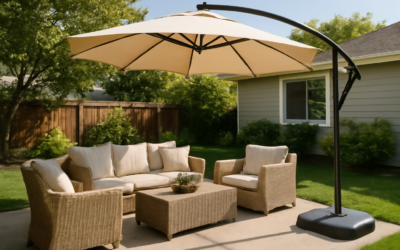
A cantilever (offset) umbrella arches over the area from a side base, leaving the space below completely open. It’s ideal for shading a lounge set, hot tub, or seating arrangement without a table, and many models rotate and tilt to track the sun. Cantilevers cost more and need a heavier base to stay put.
Choosing the Right Fabric
The canopy material determines how long your umbrella looks good and how well it blocks UV. Not all fabrics are equal.
- Solution-dyed acrylic (e.g., Sunbrella) — top tier for fade resistance and longevity, 5 to 10+ years
- Olefin — good fade resistance at a lower price, a strong mid-range pick
- Polyester — budget-friendly but fades faster, typically 1 to 3 seasons
Look for a UPF or UV rating on the canopy; quality fabrics block 98 percent or more of UV rays, protecting both your skin and the furniture below.
Don’t Skimp on the Base
A great umbrella on an undersized base becomes a sail in the wind. Match the base weight to the canopy size and style.
- 9-foot center-pole umbrella: at least a 50-pound base
- 11-foot umbrella: 75 to 100 pounds
- Cantilever umbrellas: 150 pounds or more, often filled with sand or water
- If the pole goes through a table, you still need a weighted base beneath it
Always close the umbrella in high wind regardless of base weight — no base fully protects against a strong gust.
Smart Placement on Your Patio
Position the umbrella based on where the sun is during your peak use hours. For afternoon and evening dining, place it on the west or southwest side so it blocks the low, hot sun rather than the overhead noon light.
A tilting umbrella earns its keep here, letting you angle the canopy toward the sun as it drops without moving the whole setup.
Care and Storage
A little maintenance doubles an umbrella’s life. Hose off the canopy periodically and spot-clean with mild soap and water; let it dry fully open before closing to prevent mildew.
Always close it when not in use and during storms, and store it in a protective cover (or indoors) over winter. Quality acrylic fabric rewards this care with a decade of service; neglect shortens even the best canopy to a few seasons.
Useful Features Worth Paying For
A few upgrades meaningfully improve daily use. Decide which matter for your patio before you shop.
- Tilt mechanism: push-button or crank tilt to chase the low afternoon sun
- Crank lift: easy one-hand opening, far better than pulley systems on large umbrellas
- Vented canopy: a top air vent lets wind pass through, reducing the sail effect
- Integrated LED lights: solar-powered ribs that extend evening use
- Sturdy ribs: fiberglass ribs flex in wind instead of snapping like cheap steel
A vented canopy and quality ribs are the two features that most affect how long an umbrella survives, since wind is the leading cause of patio-umbrella failure.
Alternatives Worth Considering
An umbrella isn’t the only way to shade a patio, and sometimes a different solution fits better. For a permanent, large-area cover, a pergola or a retractable awning shades more space and stands up to weather an umbrella can’t.
Patio umbrellas also pair well with these other options rather than competing with them. A pergola provides structure and partial shade while a movable umbrella fills in the gaps where the sun slips through, giving you adjustable coverage that a fixed structure alone can’t match. For most homeowners, starting with a well-sized umbrella and adding a permanent structure later is the most flexible and budget-friendly path to a fully shaded patio.
Shade sails are a budget-friendly middle ground, stretching triangular fabric between posts or the house to cover an irregular area. That said, for flexibility and cost, an umbrella still wins for most homeowners — it moves with the sun, stores away in winter, and requires no construction. Many patios end up using an umbrella over the dining set plus a sail or pergola over a separate lounge zone.
Bottom Line
The right sun umbrella patio setup starts with size — extend the canopy 2 feet past your seating — then matches the style to your layout, the fabric to your budget and climate, and the base to the umbrella’s pull. Choose solution-dyed acrylic if you can, weight the base properly, tilt to chase the sun, and close it in wind. Do that and you’ll gain a cool, comfortable outdoor space that holds up for years.