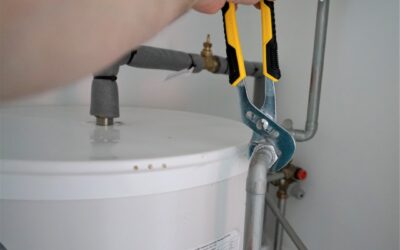
The small brass valve sticking out of the side or top of your water heater is the single most important safety device in the tank, and most homeowners ignore it until it starts leaking or shrieking. The t&p valve water heater relies on a temperature and pressure relief mechanism that prevents catastrophic tank failure by releasing pressure before it reaches dangerous levels. This guide explains how the valve works, how to test it annually, what a leak or drip actually means, and when replacement is the right call instead of another test.
What the T&P Valve Actually Does
The temperature and pressure relief valve, commonly abbreviated T&P, opens automatically when tank pressure exceeds 150 PSI or when water temperature climbs above 210°F. Either condition signals that something is wrong with the thermostat, the heating element, or the expansion tank, and continued pressure buildup could turn the tank into an explosive projectile.
This is not a dramatic statement. A 50-gallon tank at 300°F contains enough stored energy to launch through a two-story roof if pressure releases suddenly. The Mythbusters demonstration of a failed water heater explosion showed exactly this scenario and remains one of the more memorable episodes of the series. The T&P valve’s job is to make sure that never happens.
Location and Identifying Your Valve
The T&P valve is usually mounted near the top of the tank, either on the top surface or on the upper side wall. It is a brass fitting with a long lever-style test handle and a discharge tube that drops down the side of the tank to within 6 inches of the floor.
That discharge tube is required by every plumbing code in the United States. It channels any released water safely downward instead of spraying scalding water across the mechanical room. If your valve is missing its discharge tube or the tube has been cut short, that needs correcting before you test anything else.
How to Test the Valve Annually
Testing takes about 2 minutes and should happen once a year. Plumbers and water heater manufacturers agree on this frequency. Here are the steps:
- Place a bucket or towel under the discharge tube to catch released water
- Warn anyone at the hot taps that water will briefly stop
- Lift the test lever on the valve straight up for 2 to 3 seconds
- Water should flow freely out of the discharge tube during that time
- Release the lever and it should snap back down, stopping flow completely
- Watch for 10 minutes after testing to confirm no drip continues
If no water flows when you lift the lever, the valve is stuck and must be replaced immediately. If water continues dripping after release, the valve is no longer sealing and also needs replacement. Either condition is a safety issue, not a minor inconvenience.
What a Leaking Valve Means
A dripping or steadily flowing T&P valve is the tank’s way of telling you something is wrong. Possible causes include:
- Thermostat stuck on: Water is actually too hot, over 210°F
- Thermal expansion: No expansion tank installed on a closed plumbing system
- High incoming pressure: City water pressure over 80 PSI overwhelms the valve
- Mineral buildup: Sediment has prevented the valve from seating fully
- Worn valve: Internal seat is pitted or damaged and no longer seals
Turn the thermostat down to 120°F as an immediate diagnostic step. If the dripping stops within a few hours, the thermostat is the culprit. If it continues, check incoming water pressure with a $10 gauge that screws onto any hose bib. Anything over 80 PSI requires a pressure-reducing valve on your main supply line.
Replacing a Faulty T&P Valve
Replacing the valve is a moderate DIY job for homeowners comfortable with a pipe wrench. Turn off power to the water heater at the breaker, shut off the cold water supply above the tank, and open a hot tap downstairs to relieve pressure. Drain about 2 gallons from the tank’s drain valve before starting.
Unscrew the old valve using a pipe wrench, noting the thread sealant position. Clean the threads on the tank port with a wire brush, apply 3 to 4 wraps of PTFE plumber’s tape in the direction of threading, and install a new valve rated for your tank’s working pressure, typically 150 PSI and 210°F. Reattach the discharge tube, restore water and power, and check for leaks at startup.
Choosing the Right Replacement Valve
Not every T&P valve fits every tank. Match the thread size, the temperature and pressure ratings, and the mounting position. Most residential water heaters use a three-quarter-inch male NPT thread and 150 PSI / 210°F ratings. Watts Regulator and Cash Acme are the two dominant manufacturers, and a direct replacement runs $15 to $35 at any plumbing supply store or home center.
For tankless water heaters, the valve sits in a different location, usually on the outlet pipe rather than the tank body. Always follow manufacturer specifications for your specific unit, since using the wrong rating can cause the valve to release too early or, worse, fail to release in time.
Code Requirements and Inspections
Every T&P valve installation must comply with the International Plumbing Code and any local amendments. The discharge tube must terminate no closer than 6 inches from the floor, cannot have threads on the discharge end, and cannot connect to any other piping or trap. Code also prohibits any cap or plug on the tube, and the pipe size must match the valve outlet.
Home inspectors flag T&P valve violations frequently during property sales. If you are buying or selling a home, verify the discharge tube setup follows current code to avoid a last-minute negotiation issue. A properly maintained T&P valve costs almost nothing to install and inspect, yet protects a $1,500 tank and potentially a $400,000 house from catastrophic failure. Test yours every spring, replace it the day it misbehaves, and your water heater will deliver its full 8 to 12 year service life without drama.