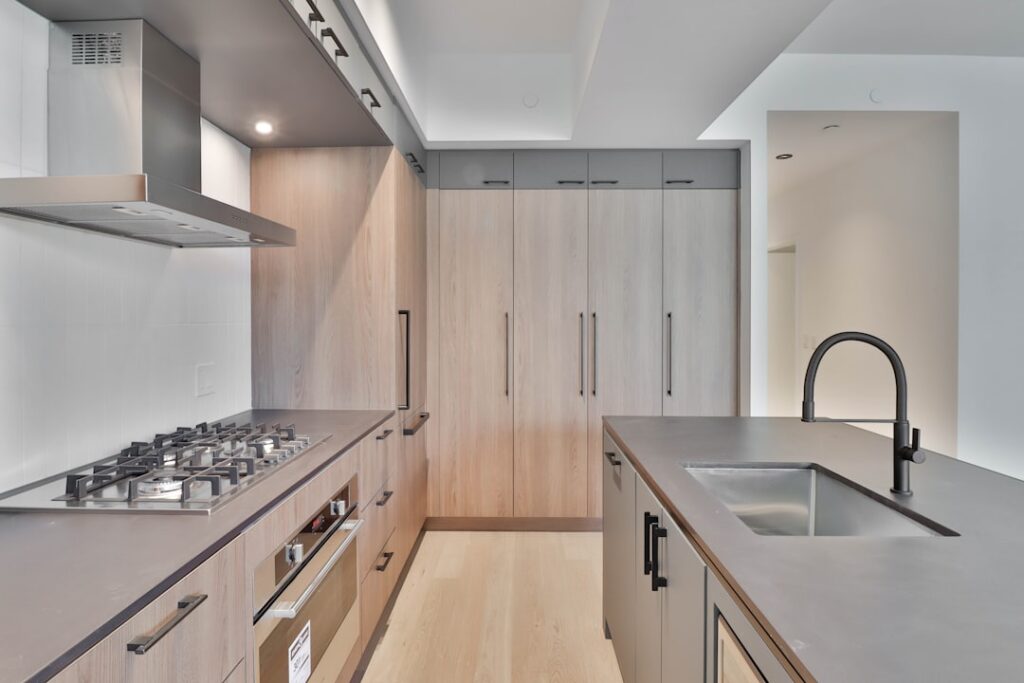
That awkward gap beside the refrigerator or the sliver of wall between the range and the corner is prime real estate that most kitchens waste. A thin kitchen cabinet turns those forgotten inches into genuinely useful storage, whether it’s a pull-out pantry for spices and oils or a slim base cabinet that keeps baking sheets upright and organized. If your kitchen feels short on space, the solution may be hiding in the narrow gaps you’ve been ignoring. This guide covers the sizes, styles, and smartest uses for slim cabinetry.
Part of our Kitchen Remodeling guide — explore the full guide →
Kitchen storage isn’t only about big pantries and deep drawers. Some of the most valuable storage comes from claiming the narrow spaces that would otherwise sit empty or get filled with clutter. Thin cabinets are purpose-built for exactly this, and they’ve become a favorite trick among designers working with tight footprints.
What Counts as a Thin Cabinet
Standard base cabinets come in widths from 12 to 36 inches, jumping in 3-inch increments. A thin or slim cabinet generally means anything from 3 to 12 inches wide. These narrow units serve a very different purpose than their full-size siblings, fitting into leftover gaps rather than forming the backbone of your run.
The most common thin kitchen cabinet widths are:
- 3 to 6 inches: Pull-out spice racks and tray dividers, often the width of the gap left after installing standard cabinets.
- 9 inches: A popular base pull-out for oils, bottles, and canned goods, or an upper cabinet for glasses.
- 12 inches: The largest slim size, roomy enough for a narrow pantry pull-out or a stack of dinner plates.
Pull-Out Pantry Cabinets
The star of the slim-cabinet world is the pull-out pantry. This tall, narrow cabinet uses full-extension slides to roll the entire shelving unit out into the room, giving you access to items from both sides. A 6- or 9-inch pull-out beside the fridge can hold a startling amount: dozens of spice jars, oil and vinegar bottles, sauces, and canned goods, all visible at a glance.
Because you pull the whole rack out, nothing hides in the back the way it does on a deep fixed shelf. This eliminates the archaeology of digging behind three-year-old cans to find what you need. For narrow gaps between an appliance and a wall, a floor-to-counter pull-out pantry is often the single most useful storage upgrade you can make.
Base Filler and Tray Cabinets
When cabinets don’t perfectly fill a wall, installers add a “filler” strip to close the gap. A smarter move is replacing that dead filler with a functional thin kitchen cabinet. A 3- to 6-inch base pull-out fitted with vertical dividers is perfect for storing cookie sheets, cutting boards, muffin tins, and cooling racks on edge, where they’re easy to grab and don’t topple over.
These vertical storage cabinets solve one of the kitchen’s most annoying problems: the sliding, clattering pile of flat bakeware that never stays organized in a regular cabinet. Standing everything upright in a slim divided pull-out keeps it tidy and instantly accessible.
Slim Upper Cabinets
Narrow storage isn’t limited to the base. Thin wall cabinets, typically 9 to 12 inches wide, fit above small gaps or flank a range hood or window. They’re ideal for stemware, coffee mugs, spices, or small dishware. In a galley or small kitchen, using every inch of upper wall space with a slim cabinet can add a surprising amount of daily-use storage.
Open slim shelving is another option for uppers, giving a lighter, more airy feel while still using the narrow space. Just remember that open shelves collect grease and dust in a working kitchen, so reserve them for items you use often enough to keep clean.
Freestanding Slim Cabinets
You don’t have to renovate to add slim storage. Freestanding thin cabinets and rolling carts slot into gaps beside the fridge, at the end of a counter run, or in a pantry nook. A rolling slim cabinet on casters, sometimes called a slide-out storage tower, tucks into a gap as narrow as 4 inches and rolls out to reveal tiered shelves.
These are a renter-friendly and budget-conscious way to gain storage without touching your existing cabinetry. Look for sturdy construction, smooth-rolling casters with locks, and shelves sized to hold the bottles and cans you actually own. A well-built freestanding unit runs $40 to $150 and installs in minutes.
Measuring for a Perfect Fit
Slim cabinets live or die by accurate measurements, since there’s no room to fudge in a tight gap. Measure the width, depth, and height of the opening at several points, because walls and floors are rarely perfectly square. For a pull-out, account for the cabinet frame and the slide hardware, which consume some of the interior width.
Also confirm clearance for the door or drawer to open without hitting an appliance handle or adjacent cabinet. A refrigerator door, for example, swings wide and needs room, so a pull-out beside it must clear that arc. Leaving a small gap and covering it with a matching filler panel looks cleaner than forcing a too-tight fit that binds.
Materials and Hardware Quality
Because a thin kitchen cabinet often carries heavy items like bottles and canned goods on extended slides, hardware quality is critical. Look for full-extension, soft-close slides rated for the weight you’ll load, ideally 75 to 100 pounds for a tall pull-out pantry. Cheap slides sag and stick under load, turning a great idea into a daily frustration.
For the cabinet box itself, plywood construction holds up better than particleboard, especially in the humid, spill-prone environment of a kitchen. Match the door style and finish to your existing cabinets for a built-in look, or choose a contrasting slim cabinet as an intentional accent. Many manufacturers sell slim pull-outs designed to match popular cabinet lines.
Creative Uses Beyond the Pantry
Slim cabinets solve problems all over the kitchen, not just beside the fridge. A narrow pull-out next to the range makes an ideal spot for cooking oils, salt, and frequently grabbed spices, keeping them within arm’s reach of the stove. A thin cabinet at the end of an island or peninsula can hold cookbooks, tablets, or a charging station, turning an exposed cabinet end into useful space.
Near the sink, a slim tilt-out tray disguised as a false drawer front holds sponges and scrub brushes, hiding the clutter that usually piles on the counter. Some homeowners use a thin cabinet as a dedicated recycling or trash pull-out in kitchens too tight for a full bin cabinet. Even a 6-inch gap can house a slide-out towel bar or a rack for cutting boards, proving that no leftover space has to go to waste.
Installation Tips for Slim Cabinets
Installing a thin kitchen cabinet is generally easier than a full-size unit because it’s lighter, but a few details make the difference between a wobbly add-on and a solid built-in. Secure base cabinets to the floor and to the adjacent cabinets with screws through the face frames so the slim unit can’t shift under the load of a heavy pull-out. Shim the cabinet level before fastening, since an out-of-plumb slim cabinet makes drawers and pull-outs bind.
For pull-out mechanisms, follow the slide manufacturer’s mounting specs exactly, because even a small misalignment causes the rack to rub or stick. If you’re retrofitting a pull-out into an existing cabinet, measure the interior opening carefully and account for the slide thickness on each side. When in doubt, dry-fit the hardware and rack before final assembly to confirm smooth, full-extension travel.
Getting the Most From Slim Storage
The best results come from matching each slim cabinet to a specific job. Use a tall pull-out for pantry goods beside the fridge, a divided base cabinet for bakeware near the oven, and slim uppers for glassware close to the sink or coffee station. Organizing by task keeps everything within a step of where you use it.
A thin kitchen cabinet is proof that good storage isn’t about having a huge kitchen, it’s about using every inch well. Reclaim the gaps you’ve been ignoring, invest in solid slides, and measure carefully. You’ll gain organized, accessible storage exactly where you need it, and your kitchen will feel roomier and work harder without adding a single square foot.