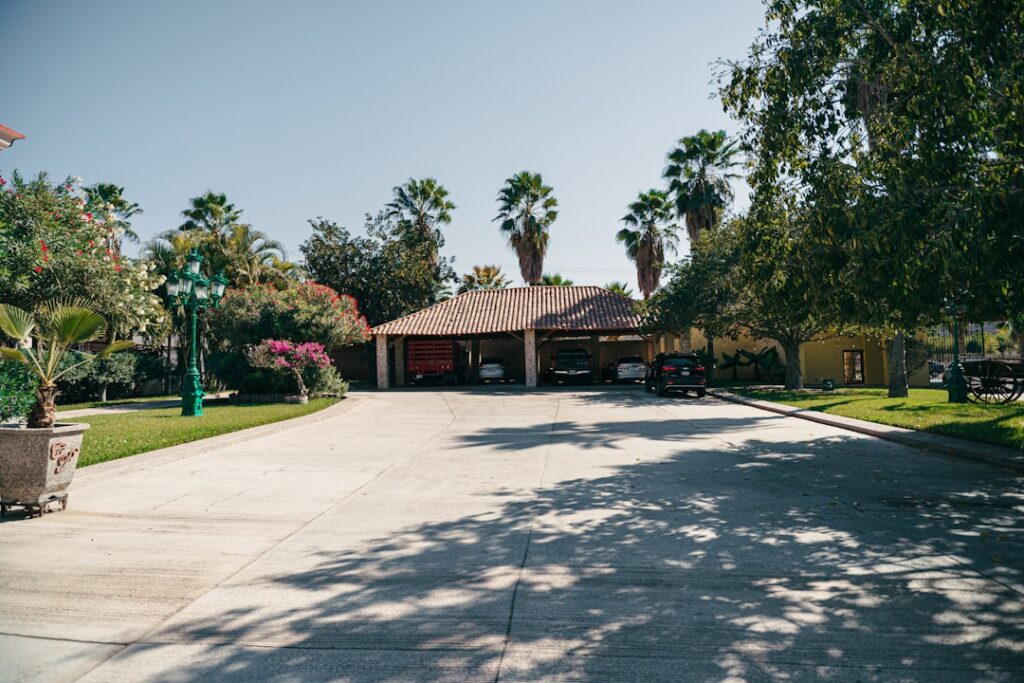
When most people picture a driveway, they think of concrete or asphalt, but a tile driveway can turn that purely functional strip of pavement into a striking architectural feature. Done right, tiled or paved driveways add curb appeal, durability, and a custom look that plain concrete cannot match. Done wrong, they crack, crumble, or turn dangerously slick. Here is how to decide whether a tile driveway is right for you and how to do it properly.
Part of our Tile & Grout guide — explore the full guide →
- What Counts as a Tile Driveway
- Best Tile Types for Driveways
- The Non-Negotiable: A Proper Base
- Slip Resistance and Climate Concerns
- Pros and Cons of a Tile Driveway
- What a Tile Driveway Costs
- Installation Overview
- Maintenance and Longevity
- Design Patterns and Curb Appeal
- Drainage and Long-Term Performance
- Final Thoughts on a Tile Driveway
What Counts as a Tile Driveway
The term covers a few related approaches. Some homeowners install heavy-duty porcelain pavers rated for vehicle traffic, while others use clay or concrete paving tiles and brick pavers set in sand or mortar over a solid base. What all successful versions share is a material and installation method engineered to bear the enormous, repeated weight of vehicles. A driveway is not a patio; it must handle thousands of pounds rolling over it daily without cracking or shifting. That reality drives every decision from tile selection to base preparation.
Best Tile Types for Driveways
Only certain materials belong under a car. The strongest candidates include:
- Porcelain pavers (2 cm thick): extra-thick, low-absorption tiles specifically rated for vehicular use.
- Clay brick pavers: a classic, durable choice with excellent traction and timeless looks.
- Concrete pavers: affordable, tough, and available in many shapes and colors.
- Natural stone pavers (granite, cobblestone): premium, extremely durable, and beautiful.
Standard interior floor tile is never appropriate for a driveway; it is too thin and will crack under vehicle loads. Always confirm the product is rated for vehicular traffic.
The Non-Negotiable: A Proper Base
The single biggest factor in a driveway’s longevity is what lies beneath it. Even the toughest paver fails over a weak base. A durable tile or paver driveway relies on a deep, compacted foundation, typically several inches of compacted crushed gravel topped with a bedding layer of sand or mortar over a concrete slab, depending on the system. This base distributes vehicle weight and prevents settling, shifting, and cracking. Skimping on base preparation is the number one reason driveways fail early, so this is not the place to cut corners.
Slip Resistance and Climate Concerns
Two safety issues deserve special attention. First, slip resistance: a driveway gets wet, so choose a textured, matte, or structured surface with a high slip rating, never a polished tile. Second, freeze-thaw durability: in cold climates, water absorbed by tile can freeze, expand, and crack the surface. In these regions, use only tile and pavers rated frost-resistant with very low water absorption, and ensure proper drainage so water does not pool and refreeze. Porcelain pavers and quality clay or concrete pavers handle freeze-thaw far better than porous materials.
Pros and Cons of a Tile Driveway
Weigh the trade-offs honestly before committing:
- Pros: outstanding curb appeal, long lifespan, replaceable individual units, huge design range, and resistance to oil stains with the right sealer.
- Cons: higher upfront cost than plain concrete or asphalt, labor-intensive installation, the need for a robust base, and potential for weeds or shifting in sand-set systems if not properly maintained.
For homeowners who value appearance and longevity and are willing to invest, the payoff is a driveway that looks custom and lasts for decades.
What a Tile Driveway Costs
Expect a premium over basic paving. Concrete pavers typically run $10 to $20 per square foot installed, clay brick pavers $12 to $25, porcelain pavers $15 to $30, and natural stone $20 to $40 or more, all including the essential base preparation. By comparison, plain concrete runs roughly $6 to $12 and asphalt less still. For an average two-car driveway of around 600 square feet, a paver driveway can total anywhere from $7,000 to $20,000 depending on material and site conditions. The higher cost buys appearance, durability, and repairability.
Installation Overview
A quality installation follows a clear sequence. The contractor excavates to the required depth, installs and compacts a gravel base, adds a bedding layer, then sets the pavers or tiles tightly in the chosen pattern. Edge restraints lock the perimeter so units cannot spread under load. For sand-set systems, polymeric sand is swept into the joints to resist weeds and washout; for mortar-set porcelain over a slab, appropriate exterior thinset and grout are used. Proper slope for drainage is built in throughout. This is demanding work best handled by an experienced paving contractor.
Maintenance and Longevity
A well-built tile or paver driveway is low-maintenance but not no-maintenance. Sweep debris, rinse periodically, and address oil spills promptly. Re-sand joints in sand-set systems every few years and pull any weeds that sprout in the joints. Sealing pavers can enhance color and stain resistance, and resealing every few years keeps them looking sharp. Because individual pavers can be lifted and replaced, damage from a heavy impact or a utility repair is far easier to fix than patching a cracked concrete slab. With basic care, expect decades of service.
Design Patterns and Curb Appeal
One of the biggest draws of a paver or tile driveway is the design freedom it offers, turning a purely functional surface into an architectural feature. The pattern you choose sets the whole tone. Popular options include:
- Running bond: a simple, staggered brick-style layout that is economical and classic.
- Herringbone: interlocking angled pavers that resist shifting under vehicle loads, making it both attractive and structurally sound.
- Basketweave: a traditional pattern that adds old-world charm.
- Borders and accents: a contrasting soldier-course border frames the driveway and defines its edges crisply.
Coordinating the driveway with your home’s exterior, walkways, and landscaping creates a unified, high-end look that lifts the entire property’s curb appeal and, often, its resale value.
Drainage and Long-Term Performance
Water is the enemy of any paved surface, so drainage deserves attention from the planning stage. A tile or paver driveway must be built with a slight slope, generally away from the house and toward a street, drain, or landscaped area, so water sheds rather than pools. Permeable paver systems take this further, allowing water to filter down through open joints and a special base into the ground, reducing runoff and helping with local drainage requirements. Proper drainage protects the base from erosion and, in cold climates, prevents the freeze-thaw cycles that crack and heave poorly drained surfaces. Combined with a compacted base and edge restraints, good drainage is what allows a well-built paver driveway to stay flat, stable, and attractive for decades rather than shifting and cracking after a few harsh winters. When interviewing contractors, ask specifically how they plan to handle slope and drainage; the answer reveals a lot about the quality of the installation you will get.
Final Thoughts on a Tile Driveway
A tile driveway built from vehicle-rated pavers over a properly engineered base delivers a level of beauty and durability that plain pavement simply cannot match. The keys to success are choosing frost-resistant, slip-resistant, load-rated materials, investing in a deep compacted base, and hiring a contractor who respects both. Budget more than you would for concrete, plan for periodic joint maintenance, and you will be rewarded with a driveway that elevates your home’s curb appeal and stands up to daily traffic for a generation.
When gathering quotes, look beyond the price per square foot and ask each contractor how they prepare and compact the base, how they handle drainage and slope, and what edge restraints they use, because those hidden fundamentals determine whether your driveway lasts five years or fifty. Request references and, if possible, visit a paver driveway they installed a few years ago to see how it has held up. A driveway is a significant investment and one of the first things visitors notice about your home, so it pays to choose materials and an installer with a proven track record. Get those pieces right and your paver driveway becomes a lasting, low-worry asset.