A worn concrete driveway can be transformed into a smooth, durable, attractive surface with the right coating. Driveway epoxy bonds to concrete to create a tough, sealed finish that resists oil, chemicals, and weather, but success depends almost entirely on proper preparation and curing. Done wrong, it peels; done right, it lasts for years. Here is what you need to know.
Part of our Epoxy, Concrete & Garage Floors guide — explore the full guide →
What Driveway Epoxy Is and Does
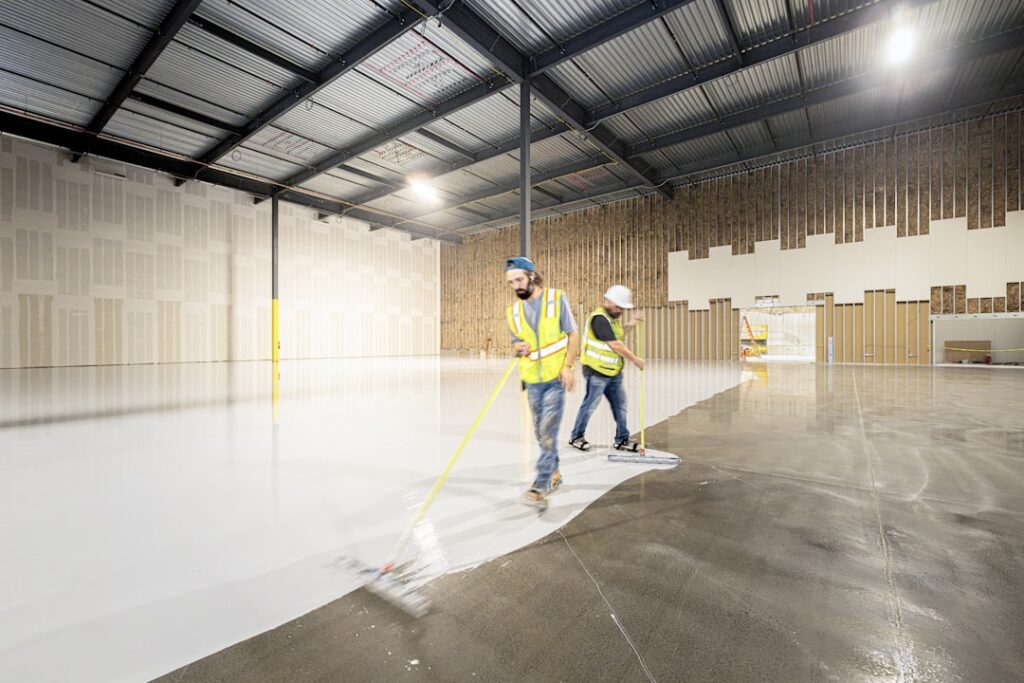
Epoxy is a two-part system, a resin and a hardener, that you mix and apply to clean concrete where it chemically cures into a hard, bonded film. On a driveway it serves both protection and appearance, sealing the porous concrete against oil stains, road salt, and moisture intrusion while delivering a finished look in solid colors or with decorative flakes.
Worth noting up front: not every coating sold for concrete is true epoxy, and driveways have demands that interior garage floors do not, including UV exposure and vehicle weight. Many pros use polyaspartic or polyurethane topcoats over epoxy, or specialized systems, for better UV and abrasion resistance outdoors. Choose a product rated specifically for exterior driveway use and follow its data sheet.
The Critical Role of Surface Prep
If you remember one thing, make it this: epoxy is only as good as the surface beneath it. The vast majority of coating failures trace back to inadequate prep. Concrete must be clean, sound, and properly profiled so the epoxy can mechanically grip it.
- Repair cracks, spalls, and pits with appropriate patching products and let them cure.
- Degrease and remove all oil stains, dirt, and old sealers.
- Profile the surface by diamond grinding or acid etching so it has a slight texture, like fine sandpaper.
- Vacuum and rinse thoroughly, then let the concrete dry completely before coating.
Skipping or rushing any of these steps is the fast track to a coating that bubbles, flakes, or delaminates within a season.
Moisture Testing Is Non-Negotiable
Concrete looks solid but it breathes moisture, and trapped moisture vapor pushing up from below will lift epoxy right off the slab. Before you coat, test for moisture. A simple field check is to tape a square of plastic sheeting to the concrete and leave it overnight; condensation underneath signals a moisture problem.
For a more reliable result, use a calcium chloride test or a concrete moisture meter. If moisture is present, address the source and consider a moisture-mitigating primer designed for the condition. Coating over a damp or vapor-driving slab is one of the most common and costly mistakes homeowners make.
Slip Resistance and Safety
A glossy epoxy surface can become dangerously slick when wet, and a driveway sees rain, snow, and ice. Build in traction by broadcasting an anti-slip aggregate, such as fine silica or polymer grit, into the topcoat, or use the manufacturer’s recommended slip additive. This small step dramatically improves safety in wet weather.
Because epoxy products involve chemicals, work safely. Ventilate the area, wear gloves, eye protection, and a respirator rated for the product, and keep children and pets away during application and curing. Always read and follow the safety data sheet and application instructions for your specific product.
Curing and Return to Service
Patience at the end protects all your earlier work. Epoxy needs time to cure before it can handle traffic, and rushing it ruins the finish. Foot traffic is usually possible within a day, but the surface needs a full cure, often several days, before you drive on it.
Temperature and humidity strongly affect cure time, and applying in conditions outside the recommended range, typically a moderate temperature window, leads to poor results. Follow the product’s stated cure schedule for foot traffic and vehicle traffic precisely. Driving on an undercured coating can leave tire marks, gouges, or peel the film away from the concrete.
Decorative Options and Finishes
Driveway epoxy is not limited to a single flat gray. Color flakes, broadcast into the wet topcoat, add texture, hide minor imperfections, and provide a popular speckled, terrazzo-like appearance while improving slip resistance. Metallic epoxies create swirled, marbled effects, though these are more common on protected surfaces than exposed driveways.
Solid color coatings offer a clean, uniform look, and decorative quartz or aggregate systems deliver a heavily textured, highly durable surface well suited to outdoor traffic. Keep in mind that UV exposure outdoors can yellow or fade some epoxies, which is why many systems finish with a UV-stable topcoat. Choose colors and finishes rated for exterior use, and follow the system manufacturer’s recommended buildup of base, color, and protective coats.
Maintenance and Longevity
A well-installed epoxy driveway is low-maintenance, but it is not maintenance-free. Routine care means sweeping off grit, which can abrade the surface, and rinsing periodically to remove dirt, salt, and chemicals. Clean up oil and fluid spills promptly, since the coating resists them far better than bare concrete but is easiest to keep pristine with quick attention.
Over years of sun, weather, and tire traffic, the finish may dull or show wear in high-use areas. Many systems can be cleaned and recoated to refresh the surface rather than fully stripped, extending the life of the floor. How long it lasts depends heavily on the quality of the original prep and the product chosen, which is the strongest argument for doing the foundational work correctly the first time.
Cost and DIY Versus Professional
A DIY driveway epoxy kit might cost a few dollars per square foot in materials, while a professionally installed system with grinding, primer, and a UV-stable topcoat typically runs higher, often in the range of $5 to $12 per square foot or more depending on the system and condition of the slab.
Driveways are large, exposed to the elements, and unforgiving of prep mistakes, which makes them harder than a small garage floor. If your slab has moisture issues, significant damage, or you lack grinding equipment, hiring an experienced concrete coating professional is often worth the cost. Treat all prices as estimates that vary by region, slab condition, and product.
The Bottom Line
Applied to a properly prepped, dry, and profiled slab, driveway epoxy gives you a durable, good-looking, stain-resistant surface that elevates your home’s curb appeal. The keys are honest moisture testing, thorough surface prep, built-in slip resistance, and a full cure before driving on it. Respect the data sheet and the safety steps, and you will get a finish that performs for years rather than peeling after one winter.