A tile top patio table blends the durability of ceramic or stone with the warmth of outdoor living, giving you a surface that shrugs off heat, sun, and the occasional spilled drink. These tables have been an outdoor favorite for decades because the tiled surface resists scorching from hot dishes and holds up to weather far better than untreated wood. This guide covers materials, sizing, maintenance, and repairs so your set lasts for many seasons.
Why Choose a Tile Top Table Outdoors
Outdoor furniture takes a beating from sun, rain, and temperature swings, and tile handles all three gracefully. The glazed surface is heat-resistant, so a hot grill plate or serving dish will not leave a burn mark the way it would on plastic or finished wood. Tile also wipes clean easily, shrugging off barbecue sauce, sunscreen, and pollen.
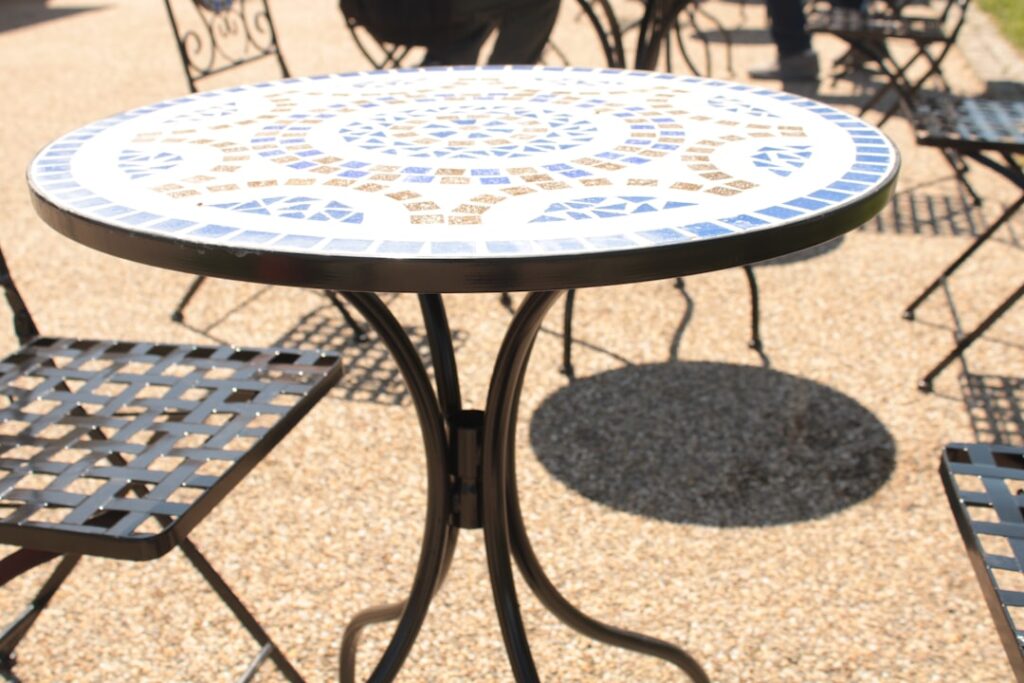
Beyond practicality, tile adds visual interest. Patterned Mediterranean-style tiles, solid earth tones, or mosaic designs turn a plain table into a focal point on the patio. The combination of a sturdy metal or wood frame with a tiled top gives you a table that is both functional and decorative.
Common Tile and Frame Materials
The performance of a tile top patio table depends on what the tiles and frame are made from:
- Ceramic tile: Affordable and colorful, but can crack in hard freezes if water seeps into the grout and expands.
- Porcelain tile: Denser and more weather-resistant than standard ceramic, a better pick for climates with freezing winters.
- Natural stone (slate, travertine, granite): Extremely durable and elegant, though heavier and usually more expensive.
- Mosaic glass: Beautiful and reflective, but more fragile and better suited to decorative accent tables.
For frames, powder-coated aluminum resists rust and stays lightweight, wrought iron is heavy and stable but needs occasional rust treatment, and treated wood looks classic but demands regular sealing.
Sizing and Seating
Match the table size to your space and how you entertain. A small bistro tile table around 24 to 30 inches across seats two and fits a balcony or corner. A standard round table of 42 to 48 inches comfortably seats four, while a rectangular table of 60 inches or more handles six to eight for larger gatherings.
Leave at least 36 inches of clearance around the table so chairs can pull out and people can walk past comfortably. If you plan to use an umbrella, confirm the table has a center hole and pair it with a sturdy weighted base, since outdoor umbrellas catch wind and can tip a light table.
What to Expect on Price
Tile top patio tables span a wide price range based on size, materials, and construction quality. Small ceramic-top bistro tables start around $100 to $200. Mid-size porcelain or stone tables with aluminum or iron frames typically run $300 to $700. Large premium sets with natural stone tops and matching chairs can exceed $1,500.
When comparing options, look closely at how the tiles are set. Quality tables embed the tiles in a recessed metal or concrete pan with proper grout, which protects the edges. Cheaper tables glue tiles to a flat surface, leaving them prone to chipping and water intrusion at the corners.
Caring for Your Table
Routine care keeps a tile top patio table looking new. Wipe the surface with a soft cloth and mild soapy water after meals, then rinse and dry. Avoid harsh abrasives and acidic cleaners like undiluted vinegar on natural stone, which can etch the finish. For stubborn grime in textured tiles, a soft nylon brush works without scratching.
Grout is the weak point on any tiled surface. Seal the grout lines once a year with an outdoor-rated grout sealer to keep water out, which is the single best thing you can do to prevent freeze damage. Clean mildew from grout with a diluted oxygen-based cleaner rather than bleach, which can discolor surrounding tile and metal.
Protecting It Through the Seasons
Weather is the main enemy of outdoor furniture. In regions with cold winters, water trapped in grout can freeze, expand, and crack tiles, so off-season protection matters. A breathable, fitted patio cover sheds rain while letting moisture escape, which prevents the trapped condensation that solid plastic tarps cause.
Whenever possible, store the table in a garage or shed over winter, or at least move it under a covered porch. If it must stay out, tilt or cover it so water drains off rather than pooling on the surface and soaking into grout. Bring lightweight tables indoors during high winds to avoid tip-overs that crack tiles.
Repairing Cracked or Loose Tiles
Even with good care, a tile may eventually crack or work loose. Repairs are manageable for a handy homeowner:
- Remove the damaged tile by carefully chipping out the surrounding grout with a grout saw, then gently prying the tile free.
- Scrape the old adhesive from the recess so the new tile sits flush.
- Set a matching replacement tile with outdoor-rated thinset or a weatherproof construction adhesive.
- Let it cure fully, usually 24 hours, then fill the joints with exterior grout.
- Seal the fresh grout once it dries to lock out moisture.
Keep a few spare tiles from the original purchase, since matching colors and patterns later can be nearly impossible. If multiple tiles are failing or the frame is rusting through, replacement may be more cost-effective than ongoing repairs.
Is It the Right Choice for You
A tile top patio table rewards you with heat resistance, easy cleanup, and lasting style, but it does ask for a little seasonal attention to grout and weather protection. If you want a low-maintenance surface and live in a freeze-prone climate, lean toward porcelain or stone over standard ceramic, and commit to sealing the grout yearly. Do that, and your table will anchor backyard meals and gatherings beautifully for many years to come.
Styling the Table on Your Patio
Once you have chosen a durable table, a few styling choices make it shine. Coordinate the tile colors with your outdoor cushions, planters, and umbrella so the table feels like part of a designed space rather than an afterthought. Earth-toned stone tops pair naturally with greenery and wood furniture, while bright patterned ceramic tops do well as the focal point against neutral chairs and a solid-color umbrella.
Protect the surface during use with simple habits. Coasters and placemats reduce ring marks and scratching from heavy dishes, and a runner down the center adds softness to the hard tile. Keep candles and hot cookware on trivets even though tile is heat-resistant, since direct flame and very hot metal can still discolor grout over time. Small touches like these keep the table looking sharp season after season.
Prefer to explore on your own?
See how new flooring looks in your actual room in seconds — free, no signup.
Try the free Floor Studio →