A toddler’s closet has one design flaw straight from the factory: everything is built for an adult’s reach, which guarantees you will be the one fetching every sock. Smart toddler closet organization flips that by lowering, dividing, and labeling the space so a two- or three-year-old can find, grab, and eventually put away their own clothes. That is not just tidiness for its own sake, it builds independence and cuts the daily dressing battle in half. With a few inexpensive adjustments, you can turn wasted vertical space into a system that works today and adapts as your child grows. Here is how to lay it out.
- Start by Taking Advantage of Double Hanging
- Zone the Closet by Access and Season
- Bins and Baskets Beat Folding
- Make Getting Dressed a Toddler Job
- Corral Shoes and Accessories
- Use Drawer Dividers Inside Dressers
- Plan for Rapid Growth and Rotation
- Maximize a Small or Awkward Closet
- Involve Your Toddler in the System
- Keep Safety in Mind
Start by Taking Advantage of Double Hanging
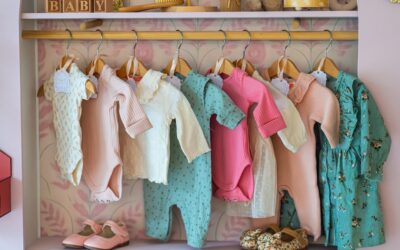
Toddler clothes are tiny, which means a standard closet with one rod at 66 inches wastes an enormous amount of vertical space. The single most effective move is to add a second, lower rod so you double your hanging capacity and put clothes within your child’s reach.
Install the lower rod at roughly 28 to 32 inches from the floor, low enough for a toddler to reach, with the original rod up high for out-of-season or grow-into items you control. Inexpensive tension-mounted or hanging double-rod extenders clip onto the existing rod and require no tools, making this a five-minute upgrade. Suddenly the bottom half becomes the child’s zone and the top half becomes storage.
Zone the Closet by Access and Season
Think of the closet in horizontal bands based on who reaches what. This zoning keeps daily items available to little hands while parent-controlled items stay up high.
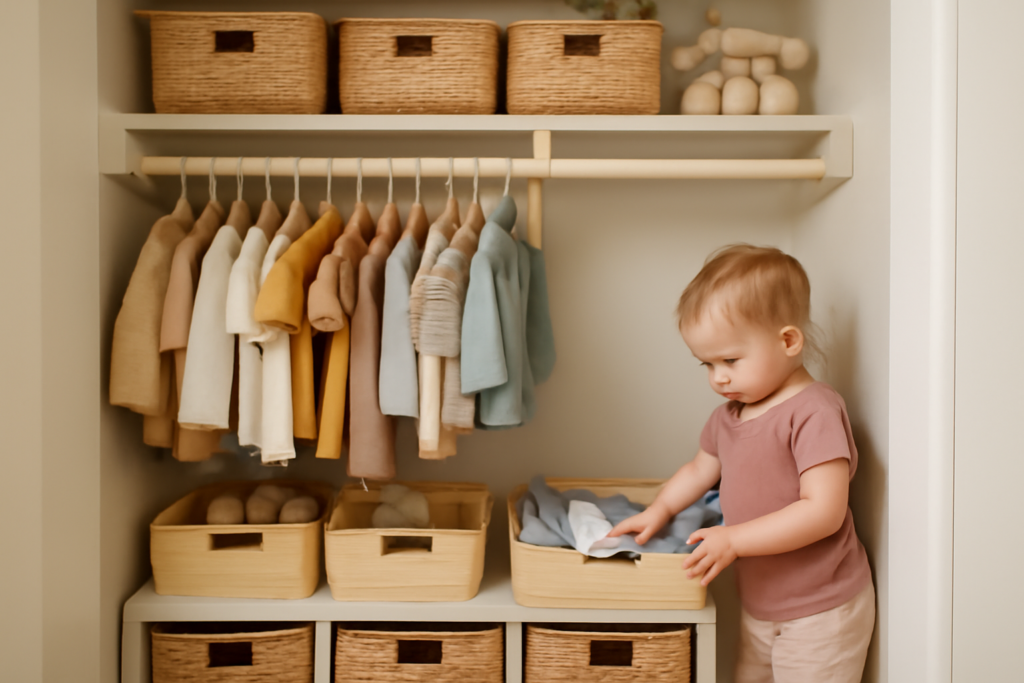
- Low zone (floor to 32 inches): Everyday clothes, the lower hanging rod, and open bins the child can access independently.
- Middle zone (32 to 60 inches): Shelves for folded items you help with, plus current-size overflow.
- High zone (above 60 inches): Out-of-season clothing, next-size-up bins, keepsakes, and anything you do not want handled.
Reserving the high shelf for future sizes is a quiet game-changer, because toddlers outgrow clothes every few months and having the next size staged means you are never caught scrambling.
Bins and Baskets Beat Folding
Toddlers cannot fold, and honestly, neither can most tired parents at the end of the day. Open bins and baskets are the workhorse of a functional toddler closet because they allow drop-in storage that a small child can manage.
Use labeled fabric bins on low shelves or on the closet floor for categories like pajamas, socks, and play clothes. Clear bins let kids see what is inside, while picture labels, a simple photo or icon of socks or shirts, let pre-readers sort on their own. Cubbies from an inexpensive cube organizer fit closet floors perfectly and turn chaos into grab-and-go categories. The goal is to remove folding as a barrier to putting things away.
Make Getting Dressed a Toddler Job
Organization is most powerful when it teaches independence. A few tools turn the closet into a place where your toddler dresses themselves, which is the real payoff of all this effort.
Child-friendly hangers sized small keep clothes from slipping and are easy for little hands to manage. Consider a low hook rail at toddler height for the next day’s outfit or a favorite jacket. Some parents set up a weekly outfit organizer, a hanging fabric shelf with a slot for each day, and fill it on Sunday so the child simply grabs the right day each morning. That single habit ends the daily what-to-wear negotiation and lets a toddler dress with pride.
Corral Shoes and Accessories
Small shoes scatter instantly without a dedicated home. A low, open shoe rack or a simple basket on the closet floor keeps pairs together and within reach, so your toddler can fetch their own sneakers.
For hats, mittens, and hair accessories, a hanging over-the-door organizer with clear pockets keeps small items visible and contained. Hooks mounted low handle backpacks and dress-up costumes. The principle throughout is the same: give every category a defined, reachable spot, and clutter has nowhere to accumulate.
Use Drawer Dividers Inside Dressers
If the closet includes a dresser or built-in drawers, dividers multiply their usefulness. Toddler clothes are small enough that a single drawer can hold many categories if you separate them.
Adjustable drawer dividers or small bins within a drawer keep socks, underwear, and shirts from merging into one tangled pile. File-fold items vertically so your child can see every option at a glance rather than digging through a stack. Labeling the front of each drawer with a picture reinforces where things belong when it is time to put laundry away, turning cleanup into something a toddler can help with.
Plan for Rapid Growth and Rotation
The defining feature of toddler clothes is how fast they are outgrown, so build a rotation system into your organization. Keep only the current size in the accessible low zone, and stage the next size up in a labeled bin on the high shelf.
Every couple of months, do a quick swap: move outgrown items into a donate or hand-me-down bin, promote the next size down to the accessible zone, and pull a fresh next-size bin from storage. Labeling storage bins by size, such as 2T or 3T, makes this seasonal shuffle painless. This habit prevents the closet from silently filling with clothes that no longer fit and keeps only wearable options in front of your child.
Maximize a Small or Awkward Closet
Not every toddler room has a generous closet, and small or oddly shaped spaces need a few extra tricks to work hard. The back of the closet door is prime unused real estate: an over-the-door organizer with clear pockets holds shoes, small toys, hair accessories, or rolled pajamas, all visible and reachable. Command hooks and adhesive strips add hanging spots without drilling into a rental or a tight wall.
Look up, too. The often-wasted space above the top rod can hold a second shelf or stacked labeled bins for keepsakes and next-season clothing. In a narrow reach-in closet, slim rolling carts or stackable drawer units fit where a dresser will not, and they pull out for easy access. If the closet lacks a door or has bifold doors that eat access, consider a simple curtain instead, which lets a toddler reach everything without wrestling a door. The goal in a small space is to use every vertical inch while keeping the child’s daily items in the low, reachable zone.
Involve Your Toddler in the System
An organization system only stays organized if your child understands and buys into it, and toddlers are surprisingly capable when things are set up for them. Keep the number of categories small and obvious, since a two-year-old can manage a bin for pajamas and a bin for socks but will be lost with a dozen finely sorted containers. Picture labels do the heavy lifting here, letting a pre-reader match a sock to the sock bin like a game.
Make putting things away part of a predictable routine, a quick nightly tidy where your toddler drops dirty clothes in a low hamper and returns shoes to their basket. Praise the effort rather than the perfection, because a slightly crooked bin sorted by a proud toddler builds far more lasting habits than a flawless closet arranged only by you. Over months, this participation transforms the closet from a space you maintain into one your child genuinely helps run, which is the whole point of organizing it at their level in the first place.
Keep Safety in Mind
A toddler-accessible closet must also be a safe one. Anchor any freestanding shelving or dresser to the wall with anti-tip straps, since climbing is a given at this age. Avoid heavy items on high shelves that could fall if bumped, and keep small parts, plastic bags, and drawstrings out of reach.
Choose bins and baskets with no sharp edges and hardware that cannot pinch little fingers. If you use a closet with bifold or sliding doors, consider soft-close or finger-guard additions. A well-organized closet invites your toddler to participate, and making it genuinely safe means you can encourage that independence without hovering. Get the layout, the zones, and the safety right, and the closet becomes a quiet everyday win rather than a morning battleground.