
A baby is small, but the amount of stuff that comes with one is astonishing, and most of it ends up in a single closet. A well-planned nursery closet organizer turns a cramped, chaotic space into a system where tiny outfits, diapers, blankets, and gear each have a home. Because babies outgrow clothes every few weeks and their needs change constantly, the smartest nursery closets are flexible and adjustable from day one. Here is how to design one that works from the newborn stage through the toddler years.
- Start by Assessing the Space
- The Case for Adjustable Systems
- Double-Hang for Tiny Clothes
- Closet Dividers Keep Sizes Straight
- Shelving, Bins, and Baskets
- Zone the Closet by Frequency of Use
- Budget-Friendly Versus Custom
- Safety Considerations
- Planning for the Toddler Years
- Making Use of the Closet Doors and Floor
- Seasonal Rotation and Growing Out of Sizes
Start by Assessing the Space
Before buying anything, measure your closet carefully, noting the width, depth, height, and the location of any existing shelf and rod. Nursery closets are usually standard reach-in closets, about 4 to 6 feet wide and 24 inches deep, though some homes have small walk-ins. Note the ceiling height, because babies’ clothes are short and you can often fit two or three hanging levels where an adult closet fits one. Take a quick inventory of what you need to store: hanging clothes, folded clothes, diapers and wipes, bulky items like sleep sacks and blankets, shoes, and keepsakes.
The Case for Adjustable Systems
The single best decision for a nursery is choosing an adjustable organizer rather than a fixed one. A newborn’s needs look nothing like a toddler’s, and an adjustable system lets you raise rods, add shelves, and reconfigure as your child grows. Popular options include:
- Track-based wire systems like ClosetMaid ShelfTrack or Rubbermaid FastTrack, which let you move shelves and rods on a mounted rail.
- Modular tower units with adjustable shelves that create a stack of cubbies beside the hanging space.
- Freestanding closet organizers that need no wall mounting, ideal for renters.
Investing in adjustability means the closet grows with the child instead of needing a redo in two years.
Double-Hang for Tiny Clothes
Baby and toddler clothes are so short that a single hanging rod wastes enormous vertical space. Installing two rods, one above the other, doubles your hanging capacity. Put the upper rod at about 60 to 62 inches and the lower at roughly 30 to 32 inches, leaving room for the short garments on each. Reserve one section for longer items like dresses, coats, and sleep sacks. As your child grows into longer clothes, you can remove the lower rod and raise the shelf.
Closet Dividers Keep Sizes Straight
One of the most beloved nursery closet tools is the hanging size divider. These round or arched labels slip over the rod and mark sections by size, from newborn and 0-3 months up through 24 months and beyond. Because families often receive gifts of clothing in many sizes at once, dividers let you hang everything immediately and grab the right size without digging. They cost only a few dollars and save countless frantic mornings searching for something that fits.
Shelving, Bins, and Baskets
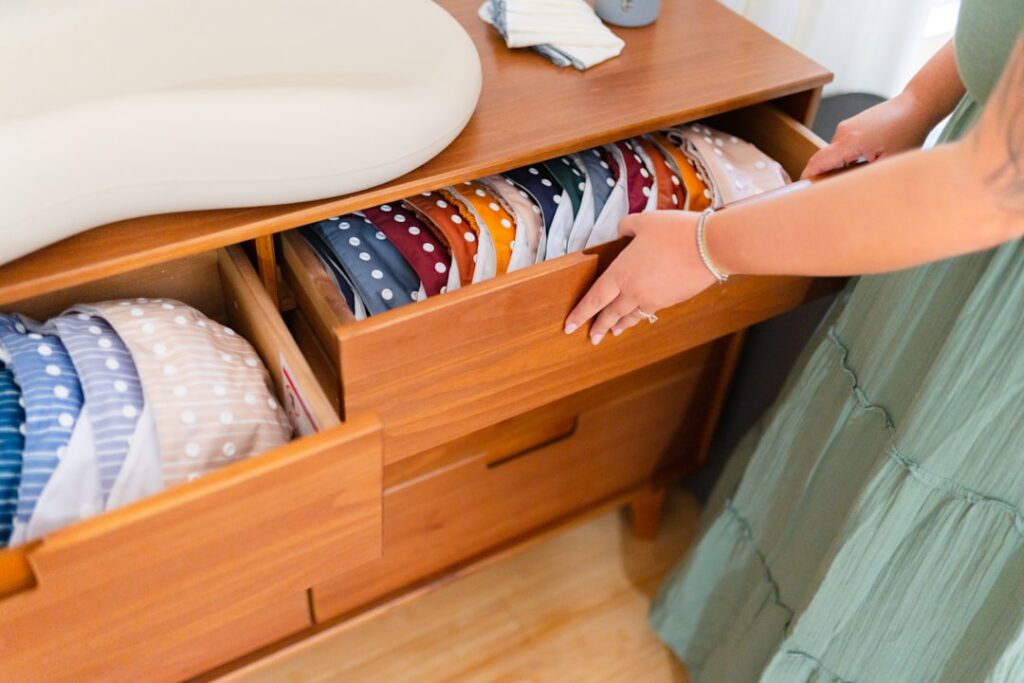
Folded clothes, diapers, blankets, and small accessories store best in bins and baskets on adjustable shelves. Use clearly labeled fabric bins so you and any caregiver can find things fast, and choose soft-sided baskets that will not hurt if they tumble. Group by category: one bin for burp cloths and bibs, one for socks and hats, one for extra crib sheets, one for future-size clothes waiting to be grown into. Clear bins or labels are essential because a tired parent at 3 a.m. should not have to guess. Keep the most-used items, like the current diaper stash and today’s outfits, at the easiest-to-reach height.
Zone the Closet by Frequency of Use
Organize by how often you reach for things. Everyday essentials, current clothes, diapers, and wipes belong at eye and waist level where you can grab them with a baby on your hip. Bulky and occasional items, extra blankets, out-of-season gear, and larger future sizes go on the high shelves. The floor is perfect for a hamper, a diaper caddy, larger toys, or a rolling drawer unit. Keeping the changing supplies within arm’s reach of the closet opening, or even mounting a small shelf just inside, streamlines the endless diaper changes.
Budget-Friendly Versus Custom
You can build a highly functional nursery closet at almost any budget. A basic wire shelf-and-rod kit from a home center runs $50 to $150 and, paired with fabric bins, handles most needs. A mid-range adjustable track system with a tower of shelves lands around $200 to $500. Fully custom built-in closets from a company like California Closets can run $1,000 to $3,000 but offer drawers, hampers, and a finished furniture look. For most families, a smart adjustable kit plus good bins and dividers delivers 90 percent of the benefit at a fraction of the custom price.
Safety Considerations
A nursery closet must be safe as the baby becomes mobile. Anchor any freestanding organizer or tower to the wall with anti-tip brackets, since curious toddlers climb everything. Keep small items, plastic bags, and anything with cords well out of reach on high shelves. If the closet has bifold or sliding doors, consider soft-close hardware or door pinch guards to protect little fingers. And avoid storing anything heavy on high shelves directly above where the child stands or plays.
Planning for the Toddler Years
Design with the future in mind so the closet does not need a complete overhaul. Choose a system you can reconfigure: lower a rod so a toddler can reach their own clothes and start learning to dress themselves, swap small bins for larger ones as toys and clothes grow, and add hooks at child height for backpacks and jackets. The adjustable framework you install for the newborn should carry you all the way to the preschool years with only minor tweaks.
Making Use of the Closet Doors and Floor
The most overlooked storage in any closet is the back of the doors and the floor space below the hanging clothes. Over-the-door organizers with clear pockets are perfect for small items that otherwise get lost, pacifiers, socks, mittens, grooming supplies, and travel-size lotions. On bifold or hinged doors, slim racks hold shoes or extra burp cloths within easy reach. Down at floor level, a rolling drawer cart, a hamper, or stackable bins capture the bulky items that do not belong on shelves. A diaper caddy or a small basket of the current day’s essentials parked on the floor near the opening streamlines changes. Using these two zones effectively can add a surprising amount of capacity to even a small reach-in closet.
Seasonal Rotation and Growing Out of Sizes
Babies move through sizes so quickly that a system for rotating clothes keeps the closet from overflowing. A simple routine prevents the chaos of outgrown outfits mixing with current ones:
- Keep only the current size and the next size up in the prime, easy-reach zone.
- Store larger future sizes, often gifts, in labeled bins on the top shelf until they are needed.
- As clothes are outgrown, move them immediately into a labeled keepsake or hand-me-down bin rather than back onto the rod.
- Do a quick seasonal review to pull out weather-appropriate items and box away the rest.
This rotation, paired with the hanging size dividers, means the closet always shows you what actually fits right now, which is exactly what a sleep-deprived parent needs at dawn.
A thoughtful nursery closet organizer transforms the busiest storage spot in the room from a source of daily frustration into a calm, functional system. Measure carefully, choose an adjustable design, double up the hanging rods for tiny clothes, sort sizes with dividers, and use labeled bins zoned by how often you reach for them. Add anti-tip safety hardware, and you will have a closet that keeps pace with your child from the first onesie to the first day of preschool.


