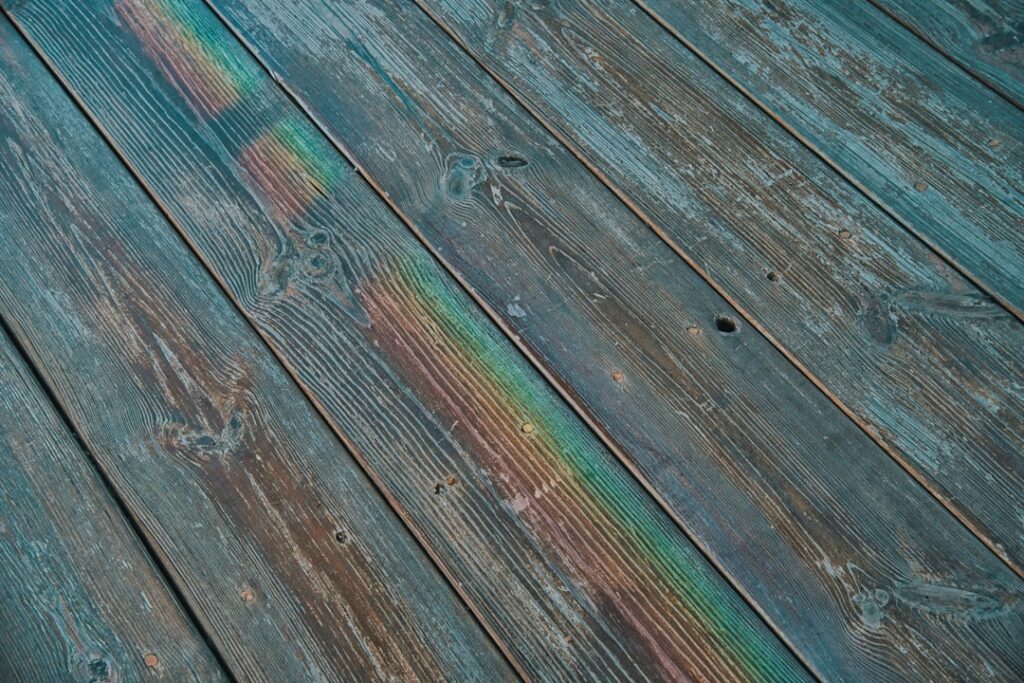
Tongue and groove flooring is the most time-tested interlocking joint system in the flooring industry. Every plank has a protruding ridge (the tongue) on one edge and a matching channel (the groove) on the opposite edge. When planks are fitted together, the tongue slides into the groove, creating a tight, seamless joint that holds the floor together and prevents gaps.
- What Is Tongue and Groove Flooring?
- How the T&G Joint Works
- Types of Tongue and Groove Flooring
- Installation Methods for T&G Flooring
- Tongue and Groove vs Click-Lock
- Subfloor Requirements
- Cost Guide
- Pros and Cons
- Maintenance Tips
- Frequently Asked Questions
- What is tongue and groove flooring?
- Is tongue and groove the same as click-lock?
- Can you install tongue and groove flooring yourself?
- How do you fix gaps in tongue and groove flooring?
- What is the best tongue and groove flooring?
- Can tongue and groove flooring be installed over concrete?
- How much does tongue and groove flooring cost?
This system has been used for centuries in solid hardwood floors and remains the standard for solid wood, engineered hardwood, bamboo, and pine flooring. This guide explains how tongue and groove flooring works, the types available, installation methods, how it compares to modern click-lock systems, cost, and what to consider before buying.
What is tongue and groove flooring?
Tongue and groove (T&G) flooring refers to any flooring plank milled with an interlocking edge profile. One long edge and one short end have a protruding ridge (the tongue), while the opposite long edge and short end have a corresponding groove. During installation, the tongue of one plank inserts into the groove of the adjacent plank, locking them together.
This milling profile serves multiple purposes:
- Alignment: Planks sit flush and level with each other.
- Stability: The interlocking joint resists lateral movement and prevents planks from shifting apart.
- Moisture barrier: The tight joint reduces gaps where moisture and debris can penetrate.
- Structural integrity: The joint distributes foot traffic loads across multiple planks rather than concentrating stress on a single board.
Tongue and groove joints are found on virtually all solid hardwood flooring, most engineered hardwood, bamboo flooring, pine/softwood flooring, and some specialty products like reclaimed wood planks.
How the T&G Joint Works
The tongue is typically milled to be approximately one-third the thickness of the plank. On a standard 3/4-inch thick hardwood board, the tongue extends about 1/4 inch from the edge, and the groove is cut to a matching depth of 1/4 inch.
Joint anatomy:
- Tongue: A continuous ridge running the full length of one side and one end of the plank.
- Groove: A continuous channel on the opposite side and opposite end, exactly sized to receive the tongue.
- Shoulder: The flat surface above and below the tongue/groove that sits flush when joined.
When installing, the tongue of a new plank is angled or tapped into the groove of the already-installed plank. Once seated, the joint holds tight. Depending on the installation method, the joint may be secured with nails, staples, glue, or left floating (held only by the friction of the joint plus the weight of the floor).
Types of Tongue and Groove Flooring
Solid Hardwood T&G
The classic. Solid hardwood flooring (oak, maple, hickory, walnut, cherry) is milled with tongue and groove edges from a single piece of wood. It is the most traditional and longest-lasting T&G flooring option.
- Thickness: 3/4 inch (standard), 5/16 inch (thin profile)
- Installation: Nail-down or staple-down (standard); glue-down (thin profile)
- Refinishing: Can be sanded and refinished multiple times (5+ times for 3/4-inch)
- Price: $4 – $12 per sq ft
Learn more in our solid wood flooring guide.
Engineered Hardwood T&G
Engineered hardwood features a real wood veneer top layer bonded to a plywood or HDF core. Most engineered hardwood uses tongue and groove joints, though some newer products use click-lock systems instead.
- Thickness: 3/8 to 3/4 inch total
- Installation: Float, glue-down, or nail-down
- Refinishing: 1-3 times depending on veneer thickness
- Price: $3 – $10 per sq ft
Bamboo T&G
Bamboo flooring is commonly produced with tongue and groove profiles. Strand-woven bamboo is particularly popular for its extreme hardness (Janka 3,000+).
- Thickness: 9/16 to 5/8 inch
- Installation: Nail-down, glue-down, or float
- Refinishing: Limited (1-2 times for strand-woven)
- Price: $2 – $7 per sq ft
Pine and Softwood T&G
Southern yellow pine, heart pine, and eastern white pine tongue and groove boards are popular for rustic, farmhouse, and cabin aesthetics. Softwood T&G is softer and more susceptible to dents than hardwood but has distinctive character and warmth.
- Thickness: 3/4 to 1 inch
- Installation: Nail-down (face-nailed or blind-nailed)
- Refinishing: Multiple times
- Price: $2 – $6 per sq ft
| T&G Type | Hardness | Moisture Resistance | Refinishable | Price (per sq ft) | Best For |
|---|---|---|---|---|---|
| Solid hardwood | High | Low | 5+ times | $4 – $12 | Main living areas, long-term value |
| Engineered hardwood | High | Moderate | 1 – 3 times | $3 – $10 | All levels including basements |
| Bamboo | Very high (strand-woven) | Low to moderate | 1 – 2 times | $2 – $7 | High-traffic areas |
| Pine/softwood | Low | Low | Multiple | $2 – $6 | Rustic, farmhouse, cabins |
Installation Methods for T&G Flooring
Tongue and groove flooring can be installed using three primary methods, depending on the flooring type and subfloor conditions.
1. Nail-Down Installation
The traditional method for solid hardwood T&G flooring. A pneumatic flooring nailer drives cleats or staples through the tongue at a 45-degree angle (blind nailing), hiding the fastener under the next plank’s groove.
- Best for: 3/4-inch solid hardwood over plywood subfloor
- Subfloor required: Plywood or OSB (minimum 3/4-inch), wood-framed
- Not for: Concrete subfloors
- Tools: Pneumatic flooring nailer, mallet, tape measure, saw
2. Glue-Down Installation
Flooring adhesive is spread on the subfloor and planks are pressed into it. The tongue and groove joint aligns the planks while the adhesive provides the primary bond. This method works over both plywood and concrete subfloors.
- Best for: Engineered hardwood, thin-profile solid hardwood, bamboo
- Subfloor required: Concrete (with moisture barrier) or plywood
- Pros: Quiet, solid feel, works over concrete
- Cons: Messy, permanent, difficult to remove
3. Floating Installation
Planks are connected to each other via the tongue and groove joint but not attached to the subfloor. The assembled floor “floats” over an underlayment pad. Glue is sometimes applied in the T&G joint (not to the subfloor) for added stability.
- Best for: Engineered hardwood, bamboo (with tight-fitting T&G or click-lock)
- Subfloor required: Any level, smooth subfloor with underlayment
- Pros: Fastest installation, no adhesive mess, easier to remove
- Cons: Can feel hollow, may produce more sound without proper underlayment
For detailed installation guidance, visit our flooring installation resource.
Tongue and Groove vs Click-Lock
Click-lock (also called snap-lock or click-together) is a modern evolution of the tongue and groove concept. Instead of a simple tongue and groove that slides together, click-lock joints use an engineered profile that snaps into place at a specific angle. Here is how they compare.
| Feature | Tongue & Groove (Traditional) | Click-Lock (Modern) |
|---|---|---|
| Joint mechanism | Slide-in tongue into groove | Angle-and-snap locking profile |
| Installation speed | Moderate | Fast |
| DIY friendliness | Moderate (requires nailer or glue) | High (no tools beyond saw) |
| Joint tightness | Very tight (with nails or glue) | Tight (mechanical lock) |
| Can be nailed? | Yes | Generally no |
| Can be glued? | Yes | Usually not necessary |
| Removability | Difficult (if nailed/glued) | Easy (floating) |
| Found on | Solid hardwood, engineered, bamboo, pine | Laminate, LVP, some engineered |
| Durability of joint | Excellent (simple, strong) | Good (can wear with repeated assembly/disassembly) |
| Typical flooring types | Premium hardwood, traditional floors | Laminate, LVP, budget engineered |
Which is better? Neither is inherently superior — they serve different purposes. Traditional T&G is better for nail-down solid hardwood installations where permanence and rock-solid stability are priorities. Click-lock is better for DIY floating installations where speed, ease, and future removability matter. For more on click-lock systems, see our hardwood flooring guide.
Subfloor Requirements
Proper subfloor preparation is critical for tongue and groove flooring performance.
- Flatness: The subfloor must be flat within 3/16 inch over a 10-foot span. High spots cause rocking; low spots create hollow areas.
- Moisture: Test concrete subfloors for moisture (calcium chloride test should read below 3 lbs per 1,000 sq ft per 24 hours). Use a moisture barrier over concrete.
- Cleanliness: Remove all debris, dust, nails, and old adhesive residue.
- Structure: Nail-down T&G requires a structural wood subfloor (3/4-inch plywood or OSB over joists). Glue-down and floating methods work over concrete.
Cost Guide
| T&G Flooring Type | Material (per sq ft) | Installation (per sq ft) | Total Installed |
|---|---|---|---|
| Solid oak hardwood | $4.00 – $8.00 | $3.00 – $6.00 | $7.00 – $14.00 |
| Solid hickory/maple | $5.00 – $10.00 | $3.00 – $6.00 | $8.00 – $16.00 |
| Engineered hardwood | $3.00 – $8.00 | $2.50 – $5.00 | $5.50 – $13.00 |
| Bamboo | $2.00 – $7.00 | $3.00 – $5.00 | $5.00 – $12.00 |
| Pine T&G | $2.00 – $6.00 | $2.50 – $5.00 | $4.50 – $11.00 |
Pros and Cons
| Pros | Cons |
|---|---|
| Proven system used for centuries | Slower installation than click-lock |
| Compatible with nail, glue, and float methods | Requires more skill/tools for nail-down |
| Creates extremely tight, stable joints | Difficult to disassemble once installed |
| Available in all wood flooring types | Tongue can split if planks are forced together |
| Refinishable (hardwood types) | Gaps can develop with humidity changes in solid wood |
| Excellent long-term durability | Higher material cost than laminate or vinyl |
Maintenance Tips
- Keep humidity between 35% and 55%. Wood expands and contracts with moisture changes. Extreme dryness causes gaps between T&G joints; excessive humidity causes cupping.
- Use felt pads under furniture legs to prevent indentation and scratching.
- Clean with a hardwood-safe cleaner and avoid excess water on the floor surface.
- Address squeaks promptly. Squeaking in T&G floors usually means the tongue is rubbing against the groove. Talcum powder or a specialized squeaky-floor repair kit can fix it.
- Refinish when the finish wears. T&G hardwood can be sanded and refinished to look brand new — a major advantage over laminate and vinyl.
Frequently Asked Questions
What is tongue and groove flooring?
Tongue and groove flooring is any flooring with an interlocking edge profile where one side has a protruding ridge (tongue) and the opposite side has a matching channel (groove). When assembled, the tongue slots into the groove, creating a tight, flush joint between planks.
Is tongue and groove the same as click-lock?
No. Tongue and groove is a traditional joint that slides together and typically requires nails or glue to secure. Click-lock is a modern variation that snaps together at an angle and locks mechanically, designed for tool-free floating installation. Click-lock evolved from T&G but uses a more complex engineered profile.
Can you install tongue and groove flooring yourself?
Yes, but the method matters. Floating T&G installation is very DIY-friendly. Nail-down installation requires a pneumatic flooring nailer and moderate skill. Glue-down installation requires careful adhesive application. Click-lock flooring is generally easier for beginners.
How do you fix gaps in tongue and groove flooring?
Small seasonal gaps (1/32 to 1/16 inch) are normal and close when humidity rises. Persistent gaps can be filled with wood filler matched to your floor color. Large gaps may indicate the floor was installed with insufficient acclimation or humidity control is poor.
What is the best tongue and groove flooring?
3/4-inch solid oak hardwood with tongue and groove edges is the gold standard. It lasts 75 to 100+ years, can be refinished many times, and adds significant value to a home. For budget options, engineered hardwood T&G offers a similar look at a lower cost.
Can tongue and groove flooring be installed over concrete?
Solid hardwood T&G should not be nailed to concrete. However, engineered hardwood and bamboo T&G can be glued down or floated over concrete with a proper moisture barrier. Always test the concrete for moisture before installation.
How much does tongue and groove flooring cost?
Costs range from $2 per sq ft (pine T&G) to $12+ per sq ft (premium hardwood). Installed costs run $4.50 to $16 per sq ft depending on the wood species and installation method.
Prefer to explore on your own?
See how new flooring looks in your actual room in seconds — free, no signup.
Try the free Floor Studio →