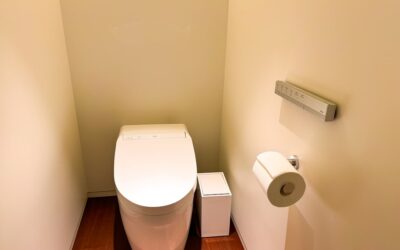
In a small bathroom, a couple of inches of toilet depth decides whether the door swings freely or bumps your knees. A Toto compact toilet is any model in the Toto lineup with a shorter front-to-back depth or narrower footprint than a standard elongated toilet. In practice that means three routes: a round-front bowl, a compact elongated bowl that keeps the longer seat shape in a shorter overall length, or a wall-hung bowl with the tank hidden inside the wall.
Part of our Bathroom Remodeling & Flooring guide — explore the full guide →
Toto is known for flush technology such as its Tornado Flush and Double Cyclone systems and its CEFIONTECT glaze, which is designed to keep the bowl surface smooth and easier to clean. Those features show up across many of its toilets, including the smaller ones, so choosing compact rarely means giving up flush performance.
- Toto Compact Toilet Options and Dimensions
- How to Measure a Small Bathroom for a Compact Toilet
- Tools and Materials
- Installing a Floor-Mounted Compact Toilet
- Round vs Compact Elongated: Which Is Better?
- Other Ways to Make a Small Bathroom Work
- Troubleshooting
- Costs and When to Call a Licensed Professional
- Frequently Asked Questions
The ranges in the table reflect typical figures for each style across the market. Always pull the current spec sheet for the exact model and measure your bathroom before ordering.
Toto Compact Toilet Options and Dimensions
Use the table to pick a style first, then confirm the depth, width and rough-in on the specific model’s sheet.
| Style | Typical depth | Typical width | Rough-in | Bowl shape |
|---|---|---|---|---|
| Standard elongated two-piece (for reference) | About 28 to 31 in | About 17 to 21 in | 12 in common | Elongated |
| Round-front two-piece | About 26 to 28 in | About 16 to 20 in | 12 in; some 10 in versions | Round |
| Compact elongated | About 26 to 28 in | About 16 to 19 in | 12 in common | Elongated, shortened overall |
| One-piece compact | About 26 to 28 in | About 15 to 19 in | 12 in common | Round or elongated |
| Wall-hung with in-wall tank | About 20 to 24 in from finished wall | About 14 to 16 in | Set by the carrier | Elongated |
| 10 in rough-in two-piece | Shorter than 12 in versions by tank position | Varies | 10 in | Round or elongated |
Round-front bowls save roughly 2 in compared with an elongated bowl from the same family; the round Drake II, for example, lists about 26 1/2 in of depth on a 12 in rough-in. Wall-hung systems save the most floor depth because the tank sits inside a framed wall, although the wall itself has to be built out to hold the carrier.
How to Measure a Small Bathroom for a Compact Toilet
Before choosing a model, take four measurements:
- Rough-in. Measure from the finished wall (not the baseboard) to the center of the closet bolts or drain. Most homes are 12 in; older homes and condos may be 10 in or 14 in.
- Front clearance. Measure from the drain center forward to the nearest wall, vanity or door swing. Many local codes require at least 21 in of clear space in front of the toilet, and 30 in is more comfortable. Check your local code.
- Side clearance. Codes commonly require at least 15 in from the drain center to a side wall or fixture. Measure both sides.
- Supply valve location. Note where the water valve comes out of the wall or floor so a narrow or skirted base will not cover it.
Add the toilet’s depth from its spec sheet to your rough-in check, then compare with front clearance. If the remaining space is under the code minimum, you need a shorter style.
Tools and Materials
- Tape measure (a 25 ft tape with a stiff blade helps reach across a tight room)
- Adjustable wrench and open-end wrenches
- Putty knife and rags
- Wax ring or wax-free seal and new closet bolts
- Braided supply line sized to your valve
- Level and plastic toilet shims
- Bucket and sponge
- A compatible toilet seat, if not included
Installing a Floor-Mounted Compact Toilet
- Confirm fit. Match the model’s rough-in to your measurement and check the spec sheet depth against front clearance.
- Shut off the water at the stop valve, flush and sponge the tank and bowl dry.
- Remove the old toilet. Disconnect the supply, remove the nuts, rock the toilet loose and lift it straight up.
- Prepare the flange. Scrape off old wax, inspect for cracks and plug the drain with a rag while you work.
- Set new bolts and seal. Install new closet bolts and the wax ring or seal per the instructions. Skirted models may use a mounting bracket instead.
- Lower the bowl. Set it straight down onto the bolts, press evenly and check for level, shimming as needed.
- Tighten gently. Alternate sides a little at a time. Vitreous china cracks if forced.
- Mount the tank on two-piece models, then connect the supply line.
- Test. Turn on the water, let the tank fill, flush several times and check for leaks at every joint.
Wall-hung toilets are different. The in-wall tank and carrier must be framed, anchored and plumbed before drywall goes up, so they fit remodels better than simple swaps.
Round vs Compact Elongated: Which Is Better?
Round-front bowls are the space saver of choice in tiny powder rooms and half baths used mostly by guests. They are often slightly cheaper and fit standard round seats.
Compact elongated bowls keep the longer seating area that most adults find more comfortable while trimming overall depth, often by moving the tank closer to the wall or reshaping the bowl. They suit primary and kids’ bathrooms where the toilet sees daily use. If you are choosing for a household with older adults, also consider seat height: universal or comfort height models are easier to sit on and stand up from.
Wall-hung options make a small room look larger because the floor stays visible under the bowl, and the seat height can be set during installation. They cost more and need in-wall work, but they are the most compact choice in depth.
Other Ways to Make a Small Bathroom Work
Sometimes the toilet is only part of the problem. A few changes around it can free up as much usable space as switching models:
- Swap to a narrower vanity. A shallow vanity, around 18 in deep instead of the standard 21 in, can add several inches of side or front clearance. A wall-mounted sink frees floor space even more.
- Change the door. A pocket or barn-style door removes the swing zone entirely, which often solves the most common conflict in a tiny bath.
- Pick a skirted or tapered base. Smooth, tapered sides make the toilet look smaller and keep cleaning easy in a tight corner.
- Use wall storage. An over-the-toilet cabinet or recessed niche keeps supplies off the floor.
- Light it well. Bright, even lighting and a large mirror make a small room feel bigger.
Seat height is also worth a look in small rooms. A taller universal height bowl can make getting up easier when there is little room to brace against a wall or vanity. If space is tight on both sides, some homeowners add a grab bar anchored into wall framing for extra support.
Troubleshooting
Door still hits the bowl
Consider a pocket door, reversing the door swing or a wall-hung toilet. A slightly smaller round bowl may also free up the inch you need.
Gap between tank and wall
A 12 in rough-in toilet on a 14 in rough-in leaves a gap. It works but looks odd. Choose a model built for your rough-in, or ask a plumber about an offset flange.
Seat does not fit
Compact elongated bowls may need a specific seat shape. Check that the seat is listed as compatible with your exact model.
Weak flush after install
Confirm the supply valve is fully open, the water level reaches the fill mark and the flapper seals. Clean any debris from the rim and jet openings.
Costs and When to Call a Licensed Professional
Compact two-piece toilets from major brands usually sit in a low-to-mid price range, while one-piece and skirted models cost more. Wall-hung systems are the most expensive once the carrier, in-wall tank and actuator plate are included, plus framing and finish work. Professional installation of a floor-mounted toilet often runs a few hundred dollars; wall-hung installs during a remodel cost considerably more.
Shut off the water and relieve pressure before any plumbing work. Moving a drain, changing rough-in, installing an offset flange or framing for a wall-hung carrier generally calls for a permit and a licensed plumber. If you add an electric bidet seat, the outlet near the toilet should be GFCI protected, and adding a new outlet is a job for a licensed electrician.
Frequently Asked Questions
What is the shallowest Toto small toilet option?
Wall-hung bowls with an in-wall tank take the least floor depth. Among floor-mounted styles, round-front bowls are usually the shallowest. Compare spec sheets for exact depths.
Does Toto make 10 in rough-in toilets?
Yes. Drake and Eco Drake two-piece toilets are sold in 10 in rough-in versions, with model numbers ending in .10 (for example CST744EF.10), at an overall depth of about 28 in. Confirm the current model number before buying.
Is a compact elongated toilet as comfortable as a standard elongated one?
The seating area is similar, so most adults find it comfortable. The overall depth is shorter, mainly through tank and bowl design.
How much space do I need in front of a toilet?
Many codes call for at least 21 in of clear space in front of the bowl, and about 30 in is more comfortable. Check your local code.
Can I replace a standard toilet with a Toto compact toilet myself?
Yes, if the rough-in matches and the flange is sound. Wall-hung models and any drain changes are better left to a licensed plumber.