Travertine looks soft and chalky, but it is a surprisingly heavy, porous stone that reacts to coffee, lemon juice and even some household cleaners. A travertine side table can last a lifetime if you understand one thing up front: whether its natural holes have been filled or left open. That single detail changes how you clean it, how often you seal it and how it handles daily spills.
The quick answer: filled travertine has its pits packed with resin or cement, so the surface is smooth and easier to wipe clean. Unfilled travertine keeps its open pores for a more textured, organic look, but crumbs and liquids settle into the holes. Either type should be sealed with a stone-rated penetrating sealer, cleaned with pH-neutral stone cleaner and protected with coasters. Because a stone table often weighs 50 to 150 pounds, it also needs broad felt pads or a rug pad to avoid marking hardwood, vinyl or tile floors.
- Understanding the Travertine Side Table
- Filled vs Unfilled Travertine
- Tools and Materials for Care
- How to Seal and Clean a Stone Side Table
- Weight, Floors and Rugs
- Alternatives: Limestone, Marble and Concrete
- Troubleshooting Common Problems
- Cost Ranges and When to Call a Pro
- Frequently Asked Questions
Understanding the Travertine Side Table
Travertine is a type of limestone formed around mineral springs. As water evaporated and gases escaped, it left small holes and channels through the stone. Those voids are what give a travertine side table its character, and they are also what make it more absorbent than granite or quartz.
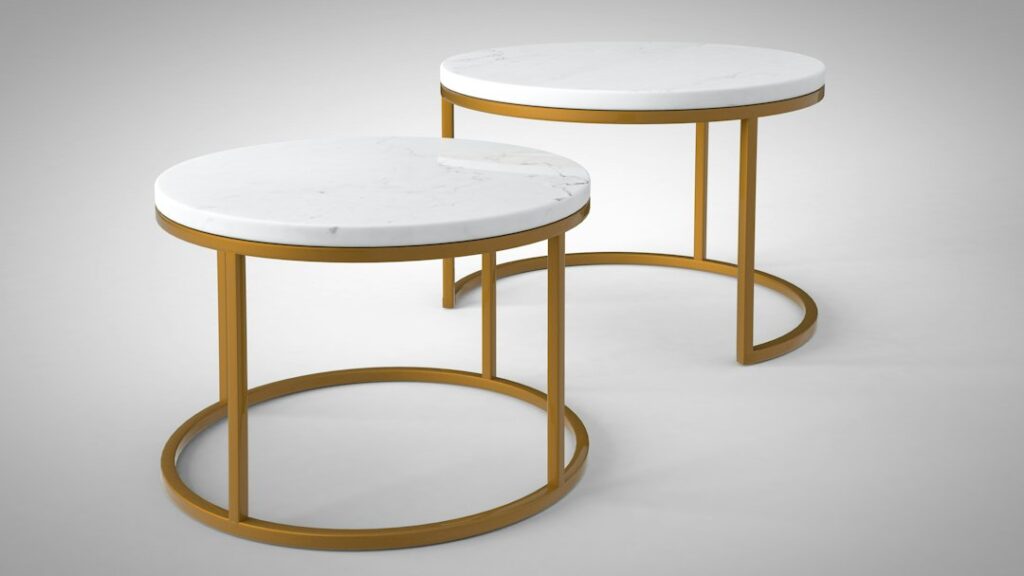
Side tables in this stone usually come in three forms: a solid carved block or drum, a plinth base topped with a slab, or a stone top on a metal or wood frame. Solid drums and pedestal styles are the heaviest. A stone side table with a thin top on metal legs is lighter but concentrates weight on small leg ends. Many shoppers compare a travertine end table with a marble plinth side table, which looks similar but has different care needs.
Filled vs Unfilled Travertine
Filled Travertine
The pits are packed with a color-matched resin, epoxy or cementitious filler and then honed or polished. The result is smooth and practical. Spills sit on the surface long enough to be wiped up, and dust does not collect in holes. Over time, filler can shrink or pop out in small spots, which is normal and repairable.
Unfilled Travertine
The natural holes remain open. The look is more rustic and sculptural, and many designers prefer it for its raw texture. The downside is maintenance: drinks can pool in pits, crumbs lodge in voids and stains can reach deeper into the stone. Unfilled tops need more frequent sealing and a soft brush for cleaning.
Which Should You Choose?
If the table will hold drinks, plants or a lamp you move often, filled travertine is easier to live with. If the table is mostly decorative, holds books and sits in a low-traffic corner, unfilled stone gives more visual impact with manageable care.
Tools and Materials for Care
- pH-neutral stone cleaner (labeled safe for travertine, marble and limestone)
- Penetrating stone sealer rated for calcium-based stone
- Soft microfiber cloths and a soft-bristle brush for unfilled pits
- Coasters and trays with soft bottoms
- Thick felt pads or furniture cups sized to the base
- Rug pad if the table will sit on an area rug
- Poultice powder for oil or organic stains (optional)
Skip vinegar, lemon, ammonia, bleach and general bathroom cleaners. Travertine is calcium carbonate, and acids etch it, leaving dull, rough spots that sealing does not prevent.
How to Seal and Clean a Stone Side Table
- Test absorption. Drip a few drops of water on the top. If the stone darkens within a few minutes, it needs sealing.
- Clean thoroughly. Wash with pH-neutral stone cleaner and let the stone dry fully, ideally 24 hours.
- Apply the sealer. Work in a ventilated room, wear gloves and follow the label. Apply a thin, even coat with a lint-free cloth.
- Wipe off the excess. Remove sealer that has not absorbed within the time on the label, usually 5 to 15 minutes, to avoid a hazy film.
- Cure. Keep drinks and objects off the table for the full cure time, often 24 to 72 hours.
- Repeat as needed. Filled travertine often needs resealing every 1 to 2 years; unfilled stone may need it every 6 to 12 months.
For routine cleaning, dust with a dry microfiber cloth and wipe with a damp cloth plus a small amount of stone cleaner. On unfilled tops, brush the pits gently before wiping so debris does not turn into grime.
Weight, Floors and Rugs
Stone is dense. A small travertine drum around 18 inches in diameter can weigh 60 to 100 pounds, and larger blocks weigh more. That weight is useful because the table will not tip, but it creates real risk for your floors.
On hardwood and engineered wood, a heavy stone base can crush the wood fibers and leave permanent impressions, especially if the base has a small footprint. On luxury vinyl plank, concentrated loads can dent the wear layer. On tile, stone-on-tile contact can scratch glazes if grit gets trapped between them.
- Cover the full bottom of a plinth or drum with felt, not just four small dots.
- For legged tables, use wide felt pads or furniture cups to spread the load.
- Have two people lift the table to move it. Dragging stone across a floor almost guarantees scratches.
- On a rug, use a firm rug pad so the stone does not sink and tilt, and so the rug stays flat enough to avoid trip edges.
- Check the pads every few months. Heavy loads compress felt faster than normal furniture.
Also check that your floor can reasonably handle concentrated weight. Normal residential floors support stone side tables without issue, but very large stone pieces combined with other heavy furniture in one spot are worth discussing with a contractor.
Alternatives: Limestone, Marble and Concrete
Limestone: similar calcium-based makeup and care to travertine but usually with a denser, more uniform surface. It is still sensitive to acids and needs sealing.
Marble: a marble plinth side table offers crisp veining and a polished or honed surface. It is also calcium carbonate, so it etches from acidic drinks just like travertine. Polished marble shows etching more clearly than honed.
Concrete: cast concrete tables mimic stone at a lower cost and are often sealed at the factory. They can crack if dropped and still need sealing, but they resist acids better when the sealer is intact.
Resin or faux stone: lighter and easier on floors, useful for renters or upper-floor apartments. The trade-off is authenticity and long-term appearance.
Troubleshooting Common Problems
- Dull ring from a glass: likely an etch from an acidic drink. Stone polishing powder may help on honed surfaces; deep etches need a stone restoration pro.
- Dark stain: oil or organic material absorbed into the stone. A poultice left under plastic for 24 to 48 hours can draw it out.
- Filler popping out: clean the void and refill with a color-matched stone filler kit, or ask a stone fabricator.
- Table wobbles on the floor: stone bases are rarely perfectly flat. Use adjustable felt pads or shims hidden under the pads.
- Marks on the floor where the table sat: pads have worn through or were never full coverage. Clean the floor, inspect for dents and replace the pads.
Cost Ranges and When to Call a Pro
Smaller travertine and stone side tables often start in the low to mid hundreds, while large carved drums, designer plinths and genuine solid blocks can reach well into four figures. Concrete and faux stone versions are usually less expensive.
A stone restoration professional is the right call for deep etching, cracks through the stone, large chips or stains that do not respond to a poultice. Honing and repolishing require specialized equipment and experience, and doing it badly can leave uneven, cloudy patches that cost more to fix.
Frequently Asked Questions
Is travertine good for a side table?
Yes, if you are comfortable with some maintenance. It is durable and heavy, but it is porous and reacts to acids, so it needs sealing, coasters and pH-neutral cleaners.
How often should I seal a travertine end table?
Filled travertine usually needs sealing every 1 to 2 years. Unfilled stone often needs it every 6 to 12 months. A quick water drop test tells you when it is time.
Can I clean travertine with vinegar?
No. Vinegar, lemon juice and other acids etch travertine and leave dull spots. Use a pH-neutral cleaner made for natural stone.
Will a stone side table damage my hardwood floor?
It can if the weight sits on small, unprotected points. Cover the base fully with thick felt, lift instead of dragging and check the pads regularly.
What is the difference between travertine and marble tables?
Both are calcium-based stones that etch from acids. Travertine is more porous with natural holes, while marble is denser with visible veining and a finer grain.