
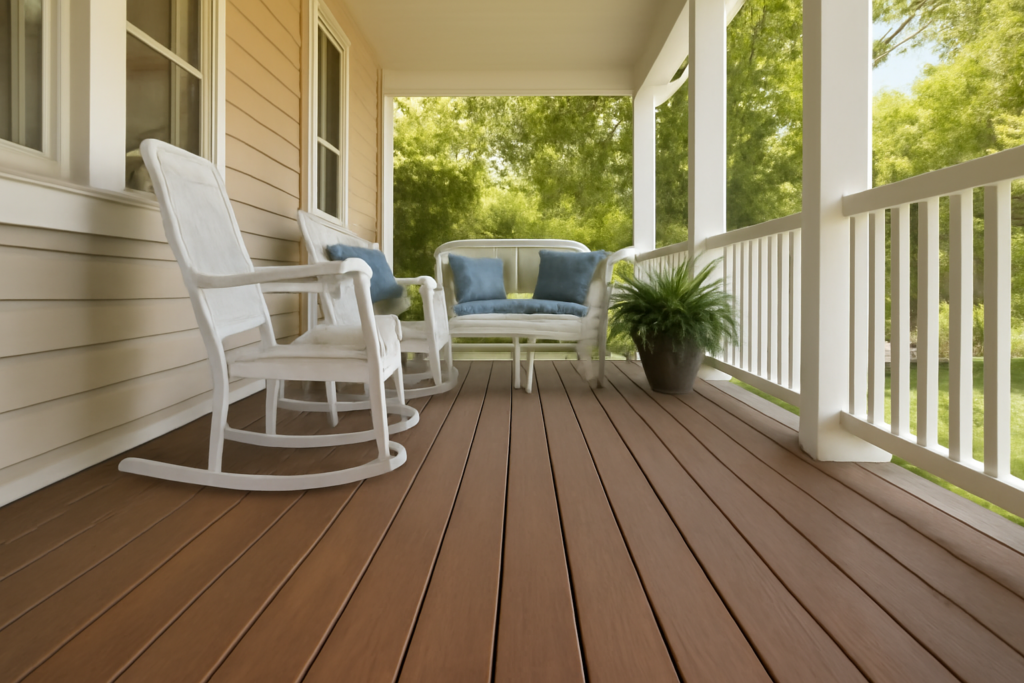
If you dream of a beautiful covered porch without the endless sanding, staining, and splinter patrol that wood demands, Trex porch flooring is worth a serious look. Trex is a well-known brand of composite decking made from a blend of recycled wood fibers and plastic, engineered to resist rot, fading, and the daily wear that punishes traditional lumber. Trex no longer makes a dedicated porch board, but its grooved-edge decking installs on porches with a hidden fastening system, giving you a clean, low-maintenance floor that looks great for decades.
- What Trex Porch Flooring Is
- Key Features and Benefits
- How It Differs From Wood Porches
- Understanding the Cost
- Installation Basics
- Design and Color Options
- Cleaning and Maintenance
- Is Trex Porch Flooring Right for You?
- Planning Your Porch Project
- Longevity and Warranty Expectations
- Trex Tongue and Groove: What Trex Offers for Porches Today
- Final Thoughts on Trex Porch Flooring
What Trex Porch Flooring Is
Trex porch flooring today means standard Trex composite decking installed on a porch. Trex once sold narrower, porch-specific boards, but the company states it no longer manufactures dedicated porch boards, so older porch products may still appear in listings and photos. The decking is made from a core of recycled wood and plastic wrapped in a protective shell that resists moisture, stains, and UV fading. Grooved edges on the sides allow the boards to be joined with hidden fasteners, creating a clean, screw-free surface underfoot.
With your porch floor looking fresh, it’s worth thinking about the finishing touches. A porch swing is a classic addition, and a retractable awning helps protect both the floor and your furniture from sun and rain.
We may earn a commission when you purchase through our links.
Key Features and Benefits
The appeal of Trex porch flooring comes down to a genuinely useful list of advantages:
- Low maintenance: No sanding, staining, sealing, or painting; a periodic wash keeps it looking fresh.
- Durability: Resists rot, insects, warping, and splintering that plague natural wood.
- Fade and stain resistance: The protective shell holds color and shrugs off spills.
- Hidden fasteners: Grooved boards clip into place for a clean, screw-free surface.
- Comfortable feel: A smooth finish that is easy on bare feet.
- Eco-friendly content: Made largely from recycled materials.
How It Differs From Wood Porches
Traditional tongue-and-groove wood porch flooring, such as fir or pine, is beautiful but demanding. It must be painted or sealed regularly, it can rot and splinter, and it needs ongoing upkeep to survive weather. Trex porch flooring trades that maintenance for a slightly higher upfront cost and a composite look and feel. While purists may prefer real wood grain, most homeowners find the trade worthwhile: they get the classic narrow-board porch appearance without the yearly refinishing chores. The composite also stays more stable through humidity swings than many woods, though it does expand and contract with temperature, so follow the gapping guidelines.
Understanding the Cost
Trex porch flooring sits in the mid-to-upper range of porch surfacing options. Material costs for composite porch boards commonly run about 4 to 9 dollars per square foot, with the hidden fastener system and trim adding to the total. Installed, including labor and substructure, a composite porch typically lands in the range of roughly 15 to 30 dollars per square foot depending on your region, the complexity of the porch, and whether the framing beneath needs work. While that is more than basic pressure-treated wood upfront, the savings on stain, sealer, and labor over the years often make it cost-competitive across the life of the porch.
Installation Basics
Installing Trex porch flooring follows a clear sequence, and the hidden fastener system is central to the process:
- Build or verify a solid, level, and properly spaced joist substructure, following the manufacturer’s span guidelines.
- Ensure good ventilation and drainage beneath a covered porch to protect the framing.
- Start the first board along the edge, fastening it as directed.
- Insert hidden fasteners into the grooved edges to connect each board to the next, drawing them tight for a seamless surface.
- Continue board by board, maintaining consistent gaps as specified for expansion.
- Finish the perimeter with matching fascia and trim for a polished look.
Because proper joist spacing and fastening are critical to performance, many homeowners hire an experienced installer or follow Trex’s detailed guidelines closely.
Design and Color Options
One of the quiet pleasures of composite porch flooring is the range of looks available. Trex decking comes in a selection of colors, from warm earthy tones to cooler grays, letting you match your home’s exterior and trim. The smooth surface gives a refined, traditional porch appearance, and coordinating fascia and trim pieces complete the design. Because the color runs through the protective shell, it stays consistent without the repainting that wood requires, so the porch you install is very close to the porch you will enjoy years later.
Cleaning and Maintenance
Keeping Trex porch flooring looking its best is refreshingly simple:
- Sweep regularly to remove dirt, leaves, and debris.
- Wash periodically with soap and warm water and a soft-bristle brush.
- Rinse off spills promptly, though the stain-resistant shell gives you time.
- Avoid harsh abrasives and follow the manufacturer’s cleaning guidance for tougher marks.
- Clear debris from between boards so water drains and airflow stays healthy.
That is the whole routine, no annual sanding or refinishing, which is exactly why so many homeowners choose composite in the first place.
Is Trex Porch Flooring Right for You?
Composite porch flooring makes the most sense for homeowners who value long-term convenience and durability over the lowest upfront price. If you are tired of scraping and repainting a wood porch, or you want a covered porch surface that looks good with minimal effort for decades, Trex is a strong fit. If you have a tight budget and do not mind ongoing maintenance, treated wood may cost less initially. Consider your climate, how much upkeep you are willing to do, and how long you plan to enjoy the porch when weighing the decision.
Planning Your Porch Project
A successful Trex porch flooring project starts long before the first board goes down, with careful planning of the structure and layout beneath it. Because composite boards rely on a properly built substructure to perform, the framing and joist spacing must follow the manufacturer’s guidelines for the decking line you choose. A covered porch also needs adequate ventilation and drainage underneath so moisture does not become trapped against the framing, which is essential for the longevity of the whole assembly. Measuring the space accurately and ordering the right quantity of boards, hidden fasteners, fascia, and trim up front prevents mid-project delays.
It is also worth thinking through the direction the boards will run, since this affects both appearance and how the porch sheds water. Straight, parallel boards give a classic look, while a border or picture-frame edge adds a refined finishing touch. Plan for these elements before you begin:
- Substructure: build framing and joist spacing to the manufacturer’s specifications.
- Ventilation: ensure airflow and drainage beneath a covered porch.
- Board direction: decide on layout and any border for looks and drainage.
- Materials list: order boards, hidden fasteners, fascia, and trim together.
- Local code: check permit and railing requirements for your porch.
Investing time in this planning stage ensures the finished porch not only looks great but performs the way composite is designed to, giving you decades of low-maintenance enjoyment from a structure built right from the ground up.
Longevity and Warranty Expectations
One of the strongest arguments for Trex porch flooring is how long it lasts with so little effort, and understanding what to expect helps you weigh the upfront investment. Composite porch boards are engineered to resist the rot, insect damage, warping, and splintering that shorten the life of natural wood, so a properly installed composite porch can look good and perform for decades rather than needing the periodic overhauls a painted wood floor demands. Manufacturers typically back their composite products with substantial limited warranties covering fade, stain, and structural performance, which reflects their confidence in the material and gives homeowners added peace of mind. To keep any warranty valid, follow the installation guidelines closely, use the specified hidden fasteners and substructure spacing, and maintain the boards as directed with routine cleaning. Because the color and protective shell are built into the board rather than applied as a coating, the porch resists the fading and wear that would force you to refinish wood. That combination of a long service life and warranty backing is a big part of why composite, despite its higher initial cost, often proves to be an excellent long-term value.
Trex Tongue and Groove: What Trex Offers for Porches Today
Trex does not make tongue-and-groove boards. Its current answer for porches is grooved-edge decking installed with hidden fastener clips, and the company states that it no longer manufactures dedicated porch boards, so its standard decking is what goes on porches now. Before ordering, confirm the current lineup with Trex or a local dealer, because older porch-specific products may still turn up in listings and photos.
How Grooved-Edge Boards Differ From True Tongue and Groove
A traditional tongue-and-groove porch floor, usually fir or pine, has a tongue milled on one edge that locks into a groove on the next board, so the boards butt tightly with no gap. Grooved-edge composite boards have a slot on both edges. A hidden clip sits in the slot of one board, screws down to the joist, and catches the slot of the next board. The clip holds the boards to the framing while leaving a small, consistent gap that lets water drain and allows the composite to expand and contract with temperature.
| Feature | Wood tongue and groove | Grooved-edge composite |
|---|---|---|
| Board joint | Interlocking, tight | Clip-fastened, small gap |
| Visible fasteners | Blind-nailed through tongue | None on the surface |
| Drainage | Relies on porch slope | Water drains through gaps |
| Finish upkeep | Paint or seal regularly | Wash only |
| Best fit | Fully covered porches | Covered or open porches |
Getting the Tongue and Groove Look With Composite
If the goal is the classic narrow-board porch appearance, a few choices bring a composite floor closer to it:
- Run the boards perpendicular to the house so the porch sheds water toward the edge.
- Pick a solid, even color rather than a heavily streaked one.
- Add a picture-frame border with matching fascia to finish the perimeter.
- Follow the maker’s gapping and joist spacing exactly, since tightening the gaps to mimic wood can void the warranty.
For a homeowner set on a true interlocking floor, painted wood or a composite or PVC porch product from another maker are the alternatives. For anyone who mainly wants low maintenance and a clean, screw-free surface, grooved-edge decking does the job on both covered and open porches. Check the maker’s current installation instructions for the board you choose before building or adjusting the framing.
Final Thoughts on Trex Porch Flooring
Trex porch flooring delivers the timeless look of a narrow-board porch with none of the sanding, staining, and splinters that come with natural wood. Its composite boards resist rot, fading, and stains, clip together with hidden fasteners for a clean surface, and ask for little more than an occasional wash. The upfront cost is higher than basic lumber, but the years of saved maintenance often even the score. If you want a beautiful, low-maintenance porch that holds up to weather and traffic for the long haul, Trex porch flooring is a smart and satisfying choice.
Prefer to explore on your own?
See how new flooring looks in your actual room in seconds — free, no signup.
Try the free Floor Studio →

