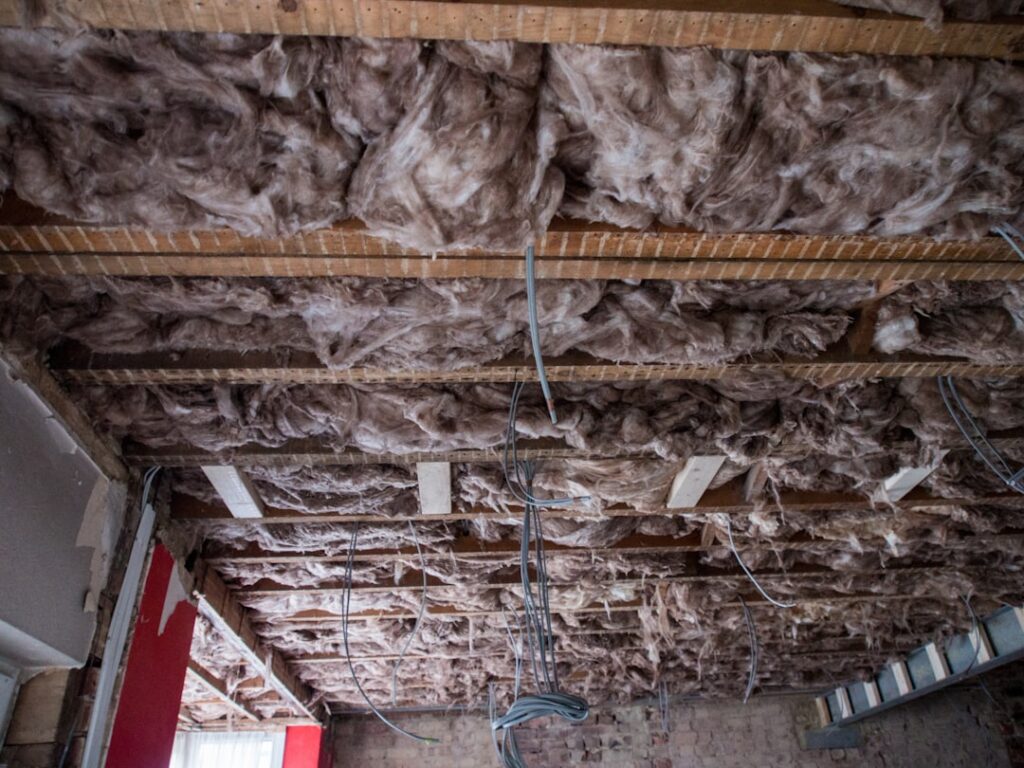
If your home was built before the 1990s, there is a real chance some insulation contains asbestos. Knowing the types of asbestos insulation helps you recognize potential hazards, but recognition is where your hands-on involvement should stop. Asbestos fibers are dangerous only when disturbed, and the safest action is almost always to leave suspect material alone and call a licensed professional. This guide is for awareness, not for DIY removal.
- Why Asbestos Was Used and Why It Is Dangerous
- Common Types of Asbestos Insulation
- Friable vs Non-Friable: Why It Matters
- How to Identify It Safely
- What to Do If You Find It
- Where Asbestos Insulation Hides in a Home
- Renovating an Older Home Safely
- Why DIY Removal Is Never Worth the Risk
- The Bottom Line
Why Asbestos Was Used and Why It Is Dangerous
Asbestos was prized for decades because it resists heat, fire, and electricity while being cheap and durable. That made it a natural fit for insulation. The problem is microscopic: when asbestos-containing material is damaged, cut, or deteriorating, it releases tiny fibers into the air. Inhaling those fibers is linked to serious diseases including asbestosis, lung cancer, and mesothelioma, often decades after exposure. There is no safe level of casual exposure, which is why caution is non-negotiable.
Common Types of Asbestos Insulation
Asbestos showed up in several insulation forms throughout the home. Learning their appearance helps you flag what needs professional testing.
Loose-Fill Vermiculite (Zonolite)
This is the most notorious. Vermiculite insulation, often sold under the Zonolite brand, looks like small, pebbly, gray-brown or silver-gold granules poured loose into attic floors and wall cavities. Much of it came from a mine that was contaminated with asbestos. If you have loose, accordion-like granular insulation in your attic, treat it as asbestos-containing until tested. Do not enter or store items in that attic.
Pipe and Boiler Wraps
Older heating systems frequently used asbestos-based wraps and lagging around pipes, boilers, and ducts. These appear as a chalky white or gray corrugated cardboard-like wrap, paper tape, or a plaster-like coating on heating pipes. As they age, this material becomes brittle and crumbly, which is exactly when it becomes most hazardous.
Block and Batt Insulation
Some block and rigid board insulation around furnaces and in walls contained asbestos. Less common in residential settings than vermiculite or pipe wrap, but still present in some older homes and especially around heating equipment.
Spray-Applied Insulation
Sprayed or troweled-on insulation and fireproofing, used on ceilings, beams, and some structural surfaces, sometimes contained asbestos. It often has a rough, textured, fibrous appearance. This is friable, meaning it crumbles easily and releases fibers readily.
Friable vs Non-Friable: Why It Matters
Professionals classify asbestos material by how easily it releases fibers. Friable material can be crumbled by hand pressure and is the most dangerous because it sheds fibers with the slightest disturbance. Loose-fill vermiculite and aging pipe wrap fall into this category. Non-friable material binds the asbestos in a matrix and is lower risk while intact, but cutting, sanding, or breaking it converts it to a hazard. Either way, you do not want to be the one disturbing it.
How to Identify It Safely
You cannot confirm asbestos by sight alone. Age, location, and appearance only raise suspicion. The only reliable confirmation is laboratory testing of a sample.
- Do not touch, sweep, vacuum, or move suspect material.
- Do not attempt to collect a sample yourself, since sampling itself can release fibers.
- Hire an accredited asbestos inspector to take samples and send them to an accredited lab for analysis.
- Keep family members and pets away from the area until you have results.
What to Do If You Find It
The most important rule: if asbestos insulation is intact and undisturbed, the safest choice is often to leave it in place and have it professionally managed or encapsulated. Disturbing it is what creates danger. If the material is damaged, deteriorating, or in the way of a planned renovation, you must hire a licensed and certified asbestos abatement contractor. Never attempt removal yourself, and never let a general contractor without asbestos certification handle it.
- Stop all work in the area immediately if you uncover suspect material during a project.
- Seal off the room and avoid creating dust.
- Contact a certified abatement professional for assessment and removal.
- Follow your state and local regulations for testing, removal, and disposal.
Where Asbestos Insulation Hides in a Home
Knowing the likely locations helps you stay alert during inspections and renovations without going looking for trouble. Beyond loose attic vermiculite and pipe wrap, asbestos insulation and related materials can turn up in several spots in pre-1990 homes. Around old furnaces and boilers, you may find insulating blankets, cement, and gaskets. Wall cavities sometimes hold loose-fill or batt insulation containing asbestos. Ductwork joints were occasionally sealed with asbestos tape, and some older electrical components used asbestos for heat resistance. Treat any suspect material in these areas as potentially hazardous until a professional confirms otherwise.
Renovating an Older Home Safely
The greatest risk to homeowners comes during renovation, when drilling, sawing, and demolition can disturb hidden asbestos and release fibers. Before any major project in a home built before the 1990s, schedule an asbestos survey by an accredited inspector. This is especially important when opening up walls, removing old insulation, or replacing heating systems. If a survey identifies asbestos in the work area, the material must be professionally removed or properly managed before construction begins. Never let a renovation proceed past suspect material, and stop work immediately if you uncover anything unexpected that resembles the types described here.
Why DIY Removal Is Never Worth the Risk
It can be tempting to save money by bagging up old insulation yourself, but this is one project where DIY is genuinely dangerous and often illegal. Disturbing asbestos without proper containment, equipment, and training releases fibers that can linger in your home’s air and lodge in your lungs, with consequences that may not appear for decades. Licensed abatement professionals use sealed work areas, negative air pressure, HEPA filtration, specialized protective gear, and approved disposal procedures that ordinary homeowners cannot replicate. The cost of professional abatement is small compared to the health stakes and the legal liability of improper handling.
The Bottom Line
Understanding the types of asbestos insulation, from Zonolite vermiculite to crumbling pipe wrap and sprayed coatings, helps you spot a potential hazard in an older home. But identification should lead straight to a phone call, not a renovation. Do not disturb it, do not remove it yourself, test through an accredited lab, and rely on licensed abatement professionals for any handling. When it comes to asbestos, caution is the only responsible approach.