Understanding the different types of basement floor drains helps you choose the right system for your home’s specific water management needs. Whether you’re dealing with occasional condensation, active water intrusion, or planning a new basement bathroom, the drain type you select affects everything from installation cost to long-term maintenance.
Part of our Epoxy, Concrete & Garage Floors guide — explore the full guide →
We’ve been installing and troubleshooting basement drainage systems for over 30 years. This guide walks you through every common drain type, when each one makes sense, code requirements you need to know, and how to keep your drains functioning properly for decades.
Standard Round Floor Drains
The standard round floor drain is the most common of all types of basement floor drains. You’ll find them in the majority of homes built in the last 60 years, typically located near the water heater, laundry area, or center of the basement floor.
How they work: A round drain body (typically 3″ or 4″ diameter) is set into the concrete slab with the grate flush to the floor surface. The floor slopes gently toward the drain (typically 1/8″ to 1/4″ per foot) so water flows to it by gravity. Below the grate, a P-trap holds standing water that creates a seal against sewer gas backflow. The drain connects to the home’s sanitary sewer line or, in older homes, to a storm sewer or dry well.
Best for: General-purpose basement water management. Catching water heater leaks, washing machine overflow, condensation from HVAC systems, and minor water intrusion during heavy rain. They handle moderate water volumes effectively.
Limitations: Limited collection area — the floor must slope toward a single point. Not effective for managing significant water intrusion across a large area. The P-trap can dry out in rarely used drains, allowing sewer gas to enter the basement.
Cost: $150-$400 for the drain assembly. Professional installation in new construction runs $200-$500. Retrofitting into an existing slab costs $500-$1,500 due to concrete cutting and plumbing tie-in work.
Linear (Trench) Drains
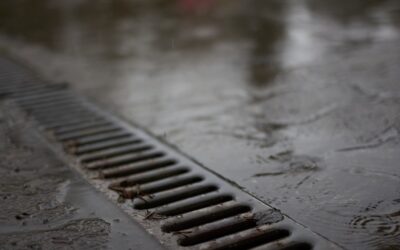
Linear drains, also called trench drains or channel drains, collect water along their entire length rather than at a single point. They’re increasingly popular in finished basements, especially near exterior doors, shower areas, and along foundation walls where water tends to enter.
How they work: A long, narrow channel (typically 3″-6″ wide) is set into the concrete with a grate on top. The channel slopes internally toward an outlet that connects to a drain pipe. Linear drains can span 2 feet to 20+ feet, collecting water across their full length.
Types of linear drains:
- Pre-sloped channels: Built-in slope within the channel body directs water to the outlet. More expensive but ensures proper drainage.
- Flat-bottom channels: Rely on the concrete installation slope for drainage. Less expensive, common in residential applications.
- Modular channel systems: Snap-together sections that can be configured to any length. Popular for retrofit projects.
Best for: Doorway thresholds where water enters from outside. Basement bathrooms and laundry rooms. Along foundation walls in homes with water intrusion history. Workshop areas where water is used for cleaning.
Grate options: Stainless steel, cast iron, ABS plastic, and decorative styles. Grate load ratings range from pedestrian (foot traffic only) to heavy-duty (vehicle-rated). For residential basements, standard pedestrian-rated grates are sufficient and most affordable.
Cost: $15-$50 per linear foot for the channel and grate. Installation adds $20-$40 per linear foot in new construction, or $40-$80 per linear foot for retrofit (includes concrete cutting).
French Drains and Interior Perimeter Systems
French drains are among the most effective types of basement floor drains for managing groundwater intrusion. An interior perimeter French drain system intercepts water at the foundation wall before it reaches the basement floor.
How they work: A trench is cut along the interior perimeter of the basement, typically 12″-18″ deep and 6″-12″ wide, at the base of the foundation wall. Perforated drain pipe (usually 4″ PVC) is laid in the trench on a bed of washed gravel. The pipe collects water that seeps through or under the foundation wall and directs it to a sump pit, where a pump discharges it away from the home.
System components:
- Perforated drain pipe: 4″ PVC or corrugated pipe with holes that allow water to enter
- Washed gravel: 3/4″ clean stone surrounds the pipe, filtering sediment while allowing water flow
- Filter fabric: Geotextile fabric wraps the gravel to prevent fine soil particles from clogging the system
- Drainage board: Dimpled plastic sheeting installed against the foundation wall directs water down to the drain pipe
- Sump pit and pump: Collects water from the drain system and pumps it outside
Best for: Homes with chronic water intrusion through foundation walls or floor-wall joints. High water table situations. Basements being finished where moisture control is critical. Homes where exterior waterproofing is impractical due to landscaping, additions, or driveways against the foundation.
Cost: $3,000-$8,000 for a partial perimeter system. $6,000-$15,000 for a full perimeter system including sump pump. Costs vary based on basement size, access conditions, and whether the basement is finished (finished basements cost more due to wall and flooring removal and replacement).
Sump Pit and Pump Systems
A sump pit isn’t a floor drain in the traditional sense, but it’s the collection point for most basement drainage systems and is often the most critical component in keeping a basement dry.
How they work: A pit (typically 18″-24″ diameter, 22″-36″ deep) is cut into the basement slab and lined with a perforated or solid sump basin. Water from floor drains, French drains, or natural groundwater seepage collects in the pit. A submersible sump pump activates when water reaches a set level and discharges it through a pipe to the exterior, away from the foundation.
Sump pump types:
- Pedestal pumps: Motor sits above the pit, pump extends down into the water. Less expensive ($80-$200), easier to service, but louder and less powerful. Suitable for low to moderate water volume.
- Submersible pumps: Entire unit sits in the pit below water level. Quieter, more powerful, handles larger volumes. $150-$500 for quality residential units.
- Battery backup pumps: Secondary pump that runs on battery power during electrical outages — exactly when you need it most during storms. $200-$500 for the backup unit.
- Water-powered backup pumps: Uses municipal water pressure to operate during power outages. No battery maintenance. $200-$400 for the unit, but uses water during operation.
Best for: Every basement with any drainage system should have a sump pit. They’re the collection and discharge point for French drains, they provide backup drainage when floor drains are overwhelmed, and they’re required by code in many jurisdictions for new construction.
Cost: $500-$1,500 for a basic sump pit and pump installation. $1,000-$3,000 for a system with battery backup. Adding a sump to an existing basement requires cutting and removing concrete, excavating the pit, and running a discharge line — typically $800-$2,000 for the installation work alone.
Drain Materials Compared
The material your drain is made from affects durability, cost, and maintenance requirements for all types of basement floor drains.
Cast iron: The traditional standard. Extremely durable (50-100+ year lifespan), handles heavy loads, and resists impact. Cast iron drains are found in homes built before the 1970s and remain a premium choice today. Downside: heaviest option, most expensive ($50-$150 per drain body), and can rust over time in constantly wet conditions.
PVC (polyvinyl chloride): The modern standard for residential construction. Lightweight, corrosion-proof, affordable ($20-$60 per drain body), and easy to work with. PVC drains won’t rust, corrode, or degrade from typical basement chemicals. Lifespan: 50+ years.
ABS (acrylonitrile butadiene styrene): Similar to PVC in performance and cost. Black in color (vs PVC’s white). Common in western US and Canadian construction. Some jurisdictions prefer PVC over ABS, so check local codes.
Stainless steel: Used primarily for grates and covers rather than drain bodies. Attractive, sanitary, and durable. Common in finished basements where appearance matters. $30-$100+ for stainless grates depending on size and style.
Installation Basics
Installing basement floor drains ranges from straightforward (new construction) to complex (retrofit into existing slabs).
New construction installation: Drains are positioned before the slab is poured. The drain body is set on the compacted gravel sub-base, connected to the drain pipe, and the concrete is poured around it. The finisher slopes the surrounding concrete toward the drain. This is the easiest and cheapest time to install any drain type. Cost: $200-$500 per drain point.
Retrofit installation: Adding a drain to an existing slab requires:
- Marking the drain location and pipe route
- Cutting concrete with a concrete saw (creates significant dust — use wet cutting)
- Removing concrete and excavating the trench for drain pipe
- Installing the drain body and connecting pipe
- Tying into the existing sewer line, sump pit, or creating a new discharge point
- Backfilling with gravel, pouring new concrete, and finishing the surface
Retrofit work costs 2-3 times more than new construction installation due to the concrete cutting, excavation, and patching involved. Expect $500-$1,500 per drain point for a standard round drain or $40-$80 per linear foot for a trench drain.
Critical installation detail: The concrete floor must slope toward the drain at 1/8″ to 1/4″ per foot. This seems minor, but a flat floor around a drain causes standing water that never reaches the drain opening. Professional installers use laser levels to set precise slopes.
Building Code Requirements
Building codes govern most aspects of basement floor drain installation. Here are the requirements you need to know for all types of basement floor drains.
Trap requirements: Every floor drain connected to a sanitary sewer must have a P-trap to prevent sewer gas from entering the living space. The trap must hold a minimum 2″ water seal. Trap primers (automatic devices that add water to the trap periodically) are required by code in many jurisdictions to prevent the trap from drying out.
Backflow prevention: Many codes require a backwater valve on basement floor drains to prevent sewage from backing up into the basement during sewer overflows. This is especially important in areas prone to heavy rain or combined sewer systems. A backwater valve costs $100-$300 installed.
Connection points: Floor drains can connect to the sanitary sewer (most common for interior drains), storm sewer (for some exterior-connected systems), or a sump pit (for French drains and groundwater management). Mixing storm water and sanitary connections is prohibited in areas with separated sewer systems.
Cleanout access: Codes require accessible cleanout fittings within a specified distance of each drain. This allows for drain clearing and inspection. Don’t bury cleanouts under finished flooring — you’ll regret it the first time you need to clear a clog.
Permits: Most jurisdictions require a plumbing permit for new drain installation or modification. Permit costs range from $50-$300. The permit process typically includes a plan review and one or two inspections (rough-in and final).
Maintenance and Clog Prevention
Regular maintenance keeps all types of basement floor drains functioning when you need them most — during a water emergency.
Monthly maintenance:
- Pour a gallon of water into rarely used floor drains to refill the P-trap and maintain the sewer gas seal. This takes 30 seconds and prevents that rotten egg smell from developing.
- Remove the grate and inspect for debris buildup. Hair, lint, sediment, and small objects accumulate over time.
Quarterly maintenance:
- Clean the drain grate and visible trap area with a brush and mild cleaner
- Check sump pump operation by lifting the float switch manually and verifying the pump activates and discharges properly
- Test battery backup systems (if equipped) by disconnecting main power and triggering the backup pump
Annual maintenance:
- Have drain lines professionally snaked or jetted if you notice slow drainage
- Inspect sump pit for sediment buildup — remove accumulated debris
- Check discharge lines for obstructions, freezing damage (in cold climates), or disconnections
- Verify backwater valves are functioning by checking the flap operation
Clog prevention tips:
- Install hair catchers on drains near laundry areas
- Never pour grease, paint, or concrete washout down floor drains
- Keep the area around floor drains clear of storage and debris
- Install lint traps on washing machine discharge hoses
- Consider enzyme-based drain maintenance products quarterly to break down organic buildup
Frequently Asked Questions
Do all basements have floor drains?
No. Homes built before the 1950s often lack basement floor drains entirely. Modern building codes in most jurisdictions require at least one floor drain in basements with plumbing fixtures (laundry, bathroom, water heater). Even where not code-required, a floor drain is strongly recommended for any finished or semi-finished basement to prevent water damage from appliance failures or minor flooding.
Why does my basement floor drain smell?
The most common cause is a dried-out P-trap. When the water in the trap evaporates (common in drains that rarely receive water), sewer gas flows freely into the basement. The fix is simple: pour a gallon of water down the drain to refill the trap. If the smell persists after refilling, you may have a cracked or missing trap, a broken sewer line, or a failed backwater valve — call a plumber.
Can I cover a basement floor drain with flooring?
You should never permanently cover a floor drain. If you’re finishing your basement, use a flush-mount drain cover that sits level with the finished floor, or frame the flooring around the drain with an accessible panel. Many homeowners place furniture or rugs over drains — this is acceptable as long as you can quickly access the drain in an emergency. Building codes typically require floor drains to remain accessible.
How much does it cost to install a basement floor drain?
In new construction, a standard floor drain costs $200-$500 installed. Retrofitting a drain into an existing concrete slab costs $500-$1,500 for a standard round drain or $2,000-$5,000 for a linear drain system. A full French drain perimeter system runs $6,000-$15,000. Costs vary significantly by region and project complexity.
What size floor drain do I need for a basement?
Most residential basements use a 3″ or 4″ floor drain. A 3″ drain handles typical residential water volumes (appliance leaks, minor seepage, condensation). A 4″ drain provides more capacity for areas with higher water risk or where code requires it. Laundry areas and basement bathrooms typically require a minimum 2″ drain by code, though 3″ is standard and recommended for better flow capacity.
Prefer to explore on your own?
See how new flooring looks in your actual room in seconds — free, no signup.
Try the free Floor Studio →