Walking into the plumbing aisle at any home center confronts you with hundreds of options and only a handful of clear labels. Knowing the common types of faucets, how they differ mechanically, and which styles fit which rooms cuts the selection process from overwhelming to straightforward. This guide covers valve mechanisms, mount configurations, room-specific styles, and the maintenance factors that determine whether a faucet lasts 5 years or 25.
Four Valve Mechanisms Explained
Under every faucet spout sits a valve that controls the water. There are only four mechanism types, and understanding them saves both money and future headaches.
- Ceramic disc: Two ceramic discs slide across each other to control flow and temperature. Nearly leak-proof, rated for 500,000 cycles. The best choice for any new faucet. Found in every premium brand.
- Cartridge: A sealed cartridge lifts and rotates to mix hot and cold water. Reliable, easy to replace for $15-$30 when it eventually wears. Common in mid-range faucets.
- Ball valve: A rotating hollow ball controls temperature and flow. Classic single-handle design from Delta and Peerless. Rebuild kits are cheap but include multiple O-rings that can leak.
- Compression: Old-school design using rubber washers that press against seats. Found only in budget two-handle faucets and outdoor spigots now. Expect to replace washers every few years.
Kitchen Faucet Styles
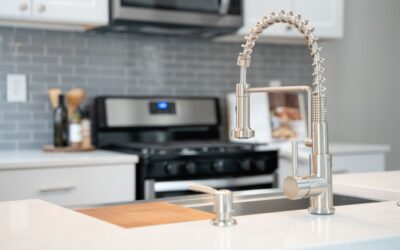
Kitchen faucets get used more than any other plumbing fixture. The tall-arched pull-down spray head is the most common modern design, offering easy pot filling and a directable spray for cleaning vegetables or rinsing the sink. Pull-outs with a shorter neck suit smaller sinks and double-bowl configurations. Commercial-style spring faucets bring professional aesthetics and heavy-duty hoses to serious home cooks.
Touchless faucets activate with a hand wave or body tap and are ideal for messy cooks. Expect to pay $250-$550 for quality touchless units from Moen MotionSense, Kohler Touchless, or Delta VoiceIQ. Battery life is typically 18-24 months.
Bathroom Faucet Styles
Bathroom faucets come in three widely used configurations based on sink hole spacing. Centerset faucets have a single base with two handles and a spout, designed for three-hole sinks with 4-inch spacing. Widespread faucets separate the spout and handles across three holes with 8-inch or greater spacing, creating a classic look. Single-hole faucets use one handle and one hole, common in modern minimalist bathrooms.
Wall-mount faucets project from the wall behind the sink and require rough-in plumbing during a remodel. They create a dramatic look with vessel sinks but need precise installation to hit the right height and projection over the sink basin. Budget $150-$500 for quality bathroom faucets; anything under $80 typically uses plastic internals that fail within five years.
Tub and Shower Faucets
Shower faucets divide into pressure-balance valves and thermostatic valves. Pressure-balance valves adjust to maintain consistent temperature when other fixtures demand water, preventing the cold shock when someone flushes a toilet. Thermostatic valves add the ability to set a specific temperature that stays constant regardless of incoming pressure, which is especially valuable for households with kids or elderly residents.
Single-handle tub fillers are standard in most bathrooms, while freestanding tub fillers rise from the floor on a tall column and pour into a soaking tub. Freestanding fillers start around $600 and can reach $3,000 for premium finishes. Rough-in plumbing must be installed during construction because the supply lines run through the floor.
Outdoor and Utility Faucets
Outdoor hose bibs are usually simple compression valves with a threaded end for garden hoses. Frost-free hose bibs extend the valve stem 6-14 inches into the heated interior wall so the shut-off happens beyond the exterior sheathing, preventing burst pipes in freezing weather. Upgrading to a frost-free bib is a $30 part that prevents hundreds of dollars in water damage in cold climates.
Utility sink faucets in laundry rooms and basements are stripped-down two-handle designs with long swinging spouts. Commercial-grade versions have an attached spray or threaded outlet for hoses. Expect $40-$120 for quality utility faucets that will survive years of rough use.
Finish Options and Their Longevity
Faucet finishes define the room aesthetic and vary widely in durability. Chrome is classic and cheapest, easy to clean but shows water spots. Brushed nickel hides fingerprints and water spots while offering a softer look. Matte black has surged in popularity since 2018 for modern kitchens and bathrooms. Brushed gold, polished brass, and champagne bronze work beautifully with warm palettes and traditional designs.
Look for PVD (physical vapor deposition) coatings in the product specs. PVD bonds the finish at a molecular level and resists scratching, tarnishing, and chemical cleaner damage for decades. Cheap electroplated finishes chip and peel within 5-10 years, especially around the handles where daily use creates wear.
Single-Handle vs. Two-Handle Operation
Single-handle faucets control both temperature and flow with one lever, allowing one-handed operation with wet or dirty hands. Two-handle faucets separate hot and cold, offering precise temperature control and a traditional aesthetic. Single-handle designs dominate modern kitchens and bathrooms for practical reasons. Two-handle widespread faucets suit classic and farmhouse bathrooms where the separated handles become part of the design.
Bridge faucets connect the two handles through a horizontal pipe above the deck and create a distinctive apothecary look. Expect $300-$1,200 for quality bridge faucets from brands like Kohler Artifacts, Rohl Country, and Brizo Tresa.
Installation Essentials
Every faucet replacement follows the same basic sequence. Shut off the hot and cold supply valves. Disconnect the old faucet from below with a basin wrench. Clean the deck or wall mounting surface. Install the new faucet following the manufacturer’s gasket or silicone instructions. Reconnect the supply lines with thread seal tape on any NPT threads. Turn the water back on slowly and flush the lines for 30 seconds before reinstalling the aerator or spray head.
Budget a full two hours for a first-time DIY install. Keep a bucket and old towels under the sink because residual water always drips. A basin wrench is the one specialty tool worth buying at $15, because standard wrenches simply cannot reach the mounting nuts on most modern faucets.