The classic look of a separate hot and cold control never really goes away. A 2 handle kitchen faucet gives you precise temperature control, a traditional or transitional look that suits many kitchens, and, when a cartridge wears out, the ability to fix one side without touching the other. This guide covers how these faucets are built, how to match one to your sink, what they cost, and how to install a replacement yourself in an afternoon.
Part of our Kitchen Remodeling guide — explore the full guide →
- How a Two-Handle Faucet Works
- Valve Types: What Is Under the Handle
- Match the Faucet to Your Sink's Mounting Holes
- Spout Styles and Reach
- Finishes and Durability
- What a Two-Handle Kitchen Faucet Costs
- Installing a Two-Handle Faucet Yourself
- Common Mistakes to Avoid
- Maintenance and Repairs
- Two-Handle vs Single-Handle: Which Suits You
- Frequently Asked Questions
How a Two-Handle Faucet Works
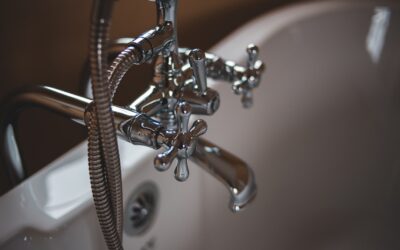
Unlike a single-lever faucet that mixes hot and cold in one valve, a two-handle model has an independent valve under each handle. You set flow and temperature by adjusting both, then leave them until you want a change. Each handle controls a cartridge or valve that opens and closes as you turn it. Because the two sides are separate, a drip on the cold side can be fixed by replacing just that cartridge, which keeps repairs simple and cheap.
The trade-off is that quick temperature tweaks with one hand full are harder than with a single lever. Many homeowners still prefer the two-handle layout for its symmetry, its period-correct look in traditional and farmhouse kitchens, and the fine control it offers.
Valve Types: What Is Under the Handle
The valve technology inside determines reliability and feel. The four common types are:
- Ceramic disc: the modern standard, with two polished ceramic discs that slide to control flow. Durable, drip-resistant, smooth. Best choice for most buyers.
- Cartridge: a replaceable insert that lifts and turns; easy to service and widely available.
- Compression: the old-school rubber-washer design found in decades-old faucets. Cheap but prone to drips as washers wear.
- Ball valve: more common on single-handle units, rarely used on two-handle kitchen models.
For a new purchase, ceramic disc valves are worth the small premium. They shrug off hard-water grit better than rubber washers and often carry lifetime drip-free warranties from major brands.
Match the Faucet to Your Sink’s Mounting Holes
This is the step people skip and regret. Kitchen sinks come drilled with one, two, three, or four holes. A widespread two-handle faucet needs three holes on 8-inch centers, one for each handle and one for the spout. A centerset or bridge design may span the holes differently. Before you buy, flip the sink or look underneath and count the holes and measure the spacing.
If your new faucet needs fewer holes than the sink has, a matching deck plate or escutcheon covers the extras. If it needs more holes than you have, you will have to drill the sink (easy in stainless, risky in cast iron or fireclay) or choose a different faucet. Always confirm hole count and spacing first.
Spout Styles and Reach
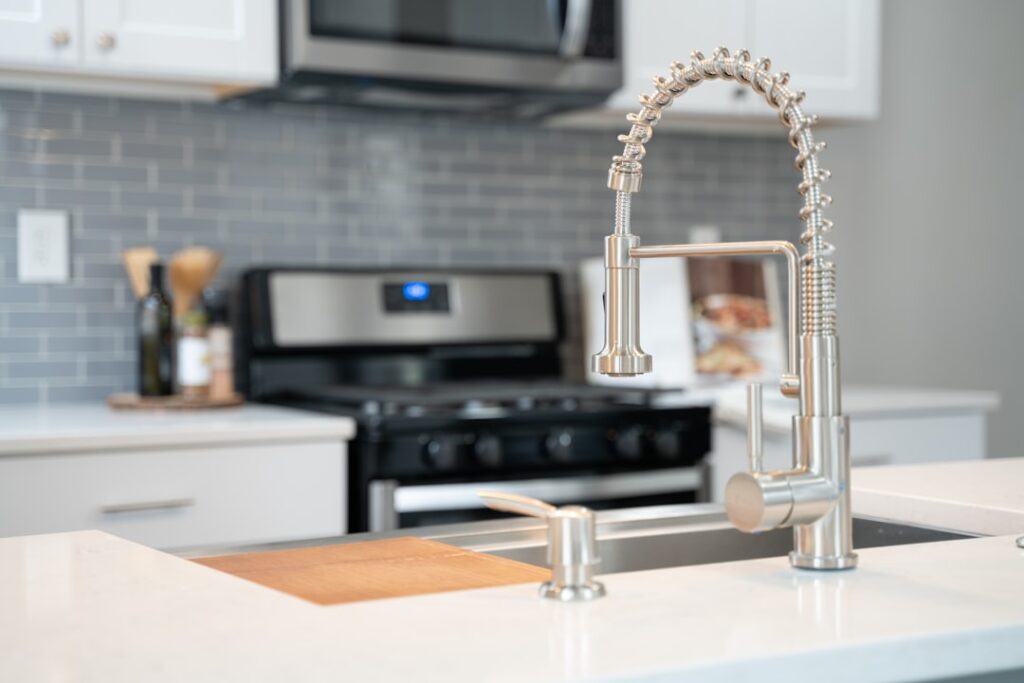
Two-handle faucets come in several spout profiles. A high-arc gooseneck gives generous clearance for filling stockpots but can splash in a shallow sink. A lower, curved spout suits deeper basins and lower-ceiling spaces. A bridge faucet connects the hot and cold lines above the deck in an exposed pipe, a vintage look popular in farmhouse kitchens. Pull-down or side-spray options add versatility for rinsing.
Check the spout reach and height against your sink. The stream should land near the center of the basin, not at the front lip or against the back wall. A spout that is too tall for a shallow sink turns every dishwashing session into a splash fest.
Finishes and Durability
Chrome remains the most affordable and easiest to clean. Brushed or stainless-look nickel hides water spots and fingerprints better and coordinates with stainless appliances. Matte black and brushed gold are on-trend but show hard-water spotting more and can be harder to match later. Look for finishes labeled PVD (physical vapor deposition), which bond the color to the metal and resist scratching and tarnish far better than plated finishes.
What a Two-Handle Kitchen Faucet Costs
- Builder-grade: $50 to $100, basic finishes and cartridges, fine for rentals and quick refreshes.
- Mid-range brand-name: $120 to $250, ceramic disc valves, better finishes, lifetime warranties.
- Premium and designer: $300 to $700, solid brass bodies, bridge or artisan styling, pull-down sprays.
Professional installation adds $150 to $350 depending on your area and whether the shutoff valves or supply lines also need replacing. Many homeowners handle the swap themselves and put that money toward a nicer faucet.
Installing a Two-Handle Faucet Yourself
A straight replacement is a very doable DIY job. Here is the sequence:
- Turn off the hot and cold shutoff valves under the sink and open the faucet to relieve pressure.
- Disconnect the supply lines from the old faucet with a basin wrench; keep a bucket and towel handy for drips.
- Loosen the mounting nuts under each handle and the spout, then lift the old faucet out. Clean the deck of old putty and grime.
- Set the new gasket or a bead of plumber’s putty, drop the new faucet through the holes, and tighten the mounting hardware from below.
- Connect new braided stainless supply lines to the shutoffs, hand-tight plus a quarter turn with a wrench.
- Turn the water back on slowly, check every joint for leaks, and run both sides to flush debris.
The whole job takes one to three hours the first time. A basin wrench is the one tool that makes it far easier by reaching the cramped nuts behind the sink.
Common Mistakes to Avoid
- Buying before counting sink holes and measuring their spacing.
- Overtightening plastic mounting nuts until they crack.
- Reusing old, stiff supply lines instead of installing fresh braided ones.
- Forgetting to remove the aerator to flush debris before first use, which can clog it immediately.
- Skipping the deck plate when covering unused holes, leaving gaps that leak onto the counter.
Maintenance and Repairs
Two-handle faucets are among the easiest to keep running. If one side drips, you almost always just replace that cartridge, a $10 to $30 part. Turn off the water, pop the handle cap, remove the retaining nut or clip, pull the old cartridge, and drop in the replacement. Note the brand and model so you buy the correct one; major makers stock parts for decades. Unscrew and soak the aerator in vinegar once or twice a year to clear mineral buildup and restore full flow.
Two-Handle vs Single-Handle: Which Suits You
Before committing, it helps to weigh the layouts honestly. A single-handle faucet lets you adjust flow and temperature with one hand, which is convenient when your other hand is full of a pot or a dish, and it needs only one deck hole. A two-handle faucet offers finer temperature control, a symmetrical traditional look, and simpler repairs because each side is independent. If one cartridge drips, you service only that side. Many buyers choose two-handle models specifically for farmhouse, transitional, and classic kitchens where the balanced look completes the design, and because a worn cartridge is a cheap, isolated fix rather than a whole-faucet replacement.
Consider your sink, too. If your sink is already drilled for three holes on 8-inch centers, a widespread two-handle faucet drops right in. If it has a single hole, a single-handle faucet or a two-handle model with a deck plate is the cleaner fit. Matching the faucet to the existing sink saves you from drilling or covering holes awkwardly.
Frequently Asked Questions
Shoppers researching a 2 handle kitchen faucet raise a handful of recurring questions, answered here.
How many holes does a two-handle faucet need?
A widespread two-handle faucet typically needs three holes spaced on 8-inch centers, one for each handle and one for the spout. Always count your sink’s holes and measure the spacing before buying, and use a deck plate to cover extras if needed.
Why does only one handle drip?
Because each side has its own valve, a drip usually means that one cartridge is worn. Replace just that cartridge, a $10 to $30 part, rather than the whole faucet. Turn off the water, pull the handle and cartridge, and drop in the correct replacement.
Are ceramic disc valves worth it?
Yes. Ceramic disc valves resist hard-water grit and drips far better than old rubber-washer designs and often carry lifetime drip-free warranties. They are the best choice for reliability and smooth operation.
Can I install one myself?
A straight replacement is a doable one-to-three-hour DIY job. Shut off the supply valves, disconnect the old faucet with a basin wrench, set the new one, connect fresh braided lines, and check for leaks.
A two-handle kitchen faucet pairs timeless style with genuinely easy repairs. Match it to your sink’s holes, choose ceramic disc valves and a PVD finish, and you will get a decade or more of reliable, drip-free service, plus the satisfaction of a fix that costs a few dollars instead of a service call.