Single-handle faucets get all the attention these days, but a double handle kitchen faucet still wins for anyone who values precise temperature control and a classic, symmetrical look at the sink. With separate hot and cold controls, you dial in exactly the water temperature you want and enjoy a timeless design that suits traditional and transitional kitchens beautifully. Choosing the right double handle kitchen faucet comes down to your sink’s hole configuration, the spout style, the finish, and the valve quality inside. This guide covers each factor so you buy one that fits and lasts.
Part of our Kitchen Remodeling guide — explore the full guide →
Why Choose Two Handles
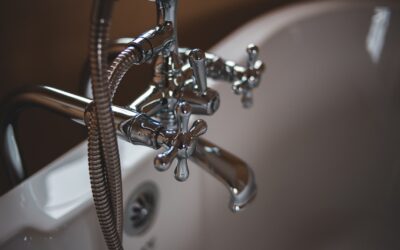
The appeal starts with control. Two handles let you set hot and cold independently, so you can fine-tune temperature more precisely than a single lever that blends both at once. For people who like a specific warmth for washing hands or rinsing dishes, that separate adjustment is a genuine daily convenience. There is also the classic symmetry: a widespread faucet with matching handles flanking a central spout has a balanced, formal look that anchors a traditional kitchen. That balanced proportion is why designers reach for two-handle faucets in period homes, farmhouse kitchens, and any space where a single sleek lever would look out of character. Paired with a matching soap dispenser and a coordinated side sprayer, the set reads intentional and complete rather than utilitarian.
There is a practical maintenance angle too. Because each handle controls its own valve cartridge, a drip on the hot side can often be fixed by replacing just that cartridge, and each side wears independently. The trade-off is that you use two hands to adjust temperature, which is slightly less convenient than flicking a single lever, especially when your hands are full or messy.
Match the Faucet to Your Sink Holes
This is the make-or-break detail. Sinks and countertops are pre-drilled with a set number of holes, and your faucet must match, or you cover extra holes with a deck plate. Count your holes before shopping.
- Three-hole, 8-inch widespread: the classic double-handle layout, with the spout and two handles as separate pieces spaced 8 inches apart. Elegant and flexible in placement.
- Three-hole, 4-inch centerset: the spout and handles mount on a single base plate spanning 4 inches. Common on smaller or older sinks.
- Bridge faucet: the handles and spout connect via an exposed bridge above the deck, a vintage-inspired look that also uses two or three holes.
If your sink has more holes than the faucet needs, a matching deck plate (escutcheon) covers the extras. If it has fewer, you may be limited. Always confirm the faucet’s hole requirement and spacing against your sink before buying.
Spout Styles and Reach
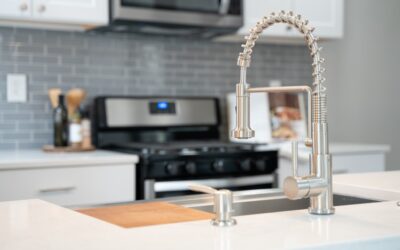
The spout shape affects both looks and function. A high-arc gooseneck spout gives generous clearance for filling tall pots and washing large pans, and it makes a bold visual statement. A lower, curved spout is more understated and fits under cabinets with low clearance. Consider the spout reach too, meaning how far it extends over the sink. For a large single-bowl sink, you want the stream to land near the center, not at the front edge.
Some double-handle faucets include a pull-down or pull-out sprayer integrated into the spout, combining the precise temperature control of two handles with the convenience of a retractable sprayer. Others pair with a separate side sprayer mounted in a fourth hole. Decide whether you want spray functionality, since it affects the hole count and style.
Finishes and How to Choose
Finish sets the tone and affects upkeep. The common choices:
- Chrome: affordable, durable, and easy to clean, though it shows water spots and fingerprints.
- Brushed or stainless nickel: the practical favorite, hiding spots and fingerprints well and coordinating with stainless appliances.
- Matte black: modern and striking, though it can show water spots and dust in some finishes.
- Brushed brass or gold: warm and increasingly popular for traditional and transitional kitchens.
- Oil-rubbed bronze: a rich, dark finish that suits rustic and traditional designs.
Coordinate the faucet finish with your cabinet hardware and, ideally, the sink and lighting. Matching finishes across the kitchen create a pulled-together look, while a deliberate contrast, like matte black on a white sink, can be a design feature.
Valve Quality Is What Lasts
The prettiest faucet drips and fails if the internal valves are cheap. Look for ceramic disc cartridges, which resist wear and the mineral buildup that causes drips far better than old rubber-washer compression valves. A quality ceramic cartridge can last many years and is the single best predictor of a leak-free faucet.
Solid brass construction in the body is another mark of durability, resisting corrosion better than zinc alloy or plastic internals. When comparing models, favor brass bodies and ceramic cartridges even if they cost a little more, because the difference shows up as reliability over the faucet’s life. Check the warranty too; better manufacturers back their faucets with long or lifetime warranties on the finish and function.
Installation Considerations
Installing a double-handle faucet is a manageable project for a handy homeowner, though it involves a few more connections than a single-handle unit. The general process:
- Shut off the hot and cold supply valves under the sink and disconnect the old faucet.
- Clean the deck, then set the new spout and handles through the appropriate holes, adding the deck plate if used.
- Secure the mounting hardware from below, keeping everything aligned and level.
- Connect the hot and cold supply lines to their respective valves, using new braided stainless supply lines if the old ones are worn.
- Turn the water back on, remove the aerator, and run the faucet to flush debris before checking every connection for leaks.
Working in the cramped space under a sink is the hardest part, and a basin wrench makes the mounting nuts far easier to reach while a headlamp frees both hands in that dark cabinet. Lay down a towel to catch drips and keep a small bucket handy for the water still sitting in the old supply lines. If you find corroded shutoff valves or you are not comfortable with the supply connections, a plumber handles a faucet swap quickly. Follow the manufacturer instructions for the specific model, since mounting systems vary.
Cost and Value
Double-handle kitchen faucets span a broad range. Basic models start around $60 to $120, mid-range faucets with brass bodies, ceramic cartridges, and quality finishes run $150 to $350, and premium designer and bridge faucets reach $400 to $800 or more. For most kitchens, a mid-range faucet from a reputable brand with a solid warranty hits the value sweet spot, giving you durable valves and a finish that holds up without paying for a designer name.
Do not judge by price alone. A well-built $200 faucet with ceramic cartridges will outlast a flashy $120 unit with plastic internals. Read the specs, confirm the hole configuration, and prioritize valve quality. Check the spout height and reach against your window sill too, since a tall gooseneck can hit a low sill behind the sink. And confirm the faucet includes a matching deck plate if your sink has more holes than the faucet uses, so you are not scrambling for a cover after the box is open.
Is a Double-Handle Faucet Right for You?
Choose two handles if you value precise temperature control, love the classic symmetrical look, and are furnishing a traditional or transitional kitchen. Lean single-handle if one-hand convenience with wet or full hands matters most and you prefer a streamlined modern profile. Neither is wrong; it is a matter of how you use the sink and the style you want.
Consider who uses the sink, too. Two-handle faucets ask for a bit more dexterity, so if someone in the household has arthritis or limited grip, look for lever handles rather than cross or knob handles, since levers turn with a push of the wrist or forearm. Widespread lever handles are the most accessible version of this style and still deliver the classic symmetrical look.
Finally, plan for the long haul. Keep the model number and finish name in a drawer or a phone note, because when a cartridge eventually wears and starts to drip, ordering the exact replacement is far easier with that information in hand. Most reputable brands stock cartridges for many years, and swapping one is a 20-minute job that saves you from replacing the whole faucet. That serviceability is one of the quiet advantages of a quality two-handle design over a sealed, disposable unit.
Whatever you decide, match the faucet to your sink’s hole configuration, pick a finish that coordinates with your kitchen, and insist on a brass body with ceramic cartridges. Get those right and a double handle kitchen faucet delivers precise control, timeless style, and years of reliable, drip-free service at the heart of your kitchen.