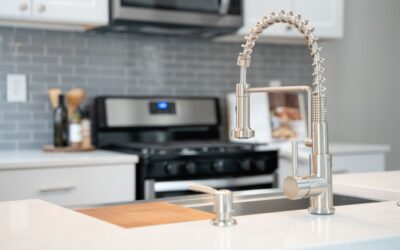
Most modern kitchen faucets put the mixing handle right on the spout body, so a lot of homeowners are surprised when they want the classic split configuration and can’t find it in the usual aisle. A kitchen faucet with separate handle mounts the control lever apart from the spout, either as a two-hole set with one remote handle or a traditional widespread three-hole design with hot and cold handles flanking the spout. This layout is prized for its clean, symmetrical look and its practicality when a spout body is too crowded for an integrated lever. Here’s how these systems work, when they make sense, and what to check before you buy.
Part of our Kitchen Remodeling guide — explore the full guide →
- What a Kitchen Faucet with Separate Handle Really Means
- Why Choose a Separate Handle Design
- Two-Handle vs Single-Handle-Remote
- Sink and Countertop Hole Requirements
- Installation and Plumbing Notes
- What to Look For in Quality
- Bridge Faucets: A Distinctive Separate-Handle Style
- Repairs and Long-Term Ownership
- Is a Separate-Handle Faucet Right for You?
What a Kitchen Faucet with Separate Handle Really Means
The term covers two distinct setups, so it helps to be precise. The first is a single-handle-remote configuration: a pull-down or pull-out spout in one hole and a separate single lever in another, connected below the deck. You still mix temperature with one lever, but it lives beside the spout rather than on it. The second is a true widespread or bridge faucet: separate hot and cold handles on either side of a central spout, the classic look you see in farmhouse and transitional kitchens. Both leave the spout uncluttered, which is the main reason designers reach for them, especially with tall gooseneck spouts or commercial-style faucets where a body-mounted handle would look awkward.
Why Choose a Separate Handle Design
There are real functional reasons beyond aesthetics. When you have a very tall spring-style or commercial faucet, the spout is often too slim to carry a lever, so the handle goes to the side. Separating the handle also gives you more precise, tactile control; two-handle widespread faucets let you dial in exact hot-cold blends the way you would in a bathroom. And ergonomically, a side-mounted single lever is easy to bump on or off with a wrist or forearm when your hands are full or messy, which many home cooks prefer over reaching over a hot pot to a body-mounted handle.
The look is the other half of the appeal. A widespread three-hole faucet reads as classic and substantial, pairing naturally with apron-front sinks and traditional cabinetry. A remote single handle beside a sleek gooseneck gives a modern, editorial look. Either way, the spout stays clean and sculptural.
Two-Handle vs Single-Handle-Remote
Deciding between the two styles comes down to how you like to control water and the look you’re after.
- Two handles (widespread): Separate hot and cold. Best for classic kitchens and anyone who likes precise temperature control. Requires reaching for two handles to set a blend, which is slightly slower.
- Single-handle remote: One lever mixes temperature and flow in a single motion. Faster one-hand operation, cleaner modern look, but you sacrifice the symmetrical hot-and-cold aesthetic.
Households with kids sometimes prefer the single-lever remote for speed and simplicity, while those chasing a period-correct or upscale traditional kitchen lean toward two handles. Neither is objectively better; it’s a workflow and style call.
Sink and Countertop Hole Requirements
This is the make-or-break detail, and it’s where people get tripped up. Count and measure your existing holes before shopping. A separate single-handle remote setup needs at least two holes. A widespread three-handle faucet needs three holes, and the spacing matters; widespread sets are adjustable, typically accommodating 8 to 16 inches between the outer holes, while a fixed centerset spans 4 inches, which is more of a bathroom dimension. If your sink is pre-drilled for four holes, plan to fill the extra with a soap dispenser, an air gap for the dishwasher, or a filtered-water tap.
If your current faucet is a single-hole model and you want to switch to a separate-handle design, you may need to drill additional holes in a stainless sink or the countertop, which is doable but adds labor. Conversely, going from a three-hole to a single-hole faucet requires a deck plate to cover the unused holes. Match the faucet’s hole requirement to your sink before you fall in love with a model.
Installation and Plumbing Notes
Separate-handle faucets are more involved to install than an all-in-one because there are more connections beneath the deck. A widespread faucet, for instance, connects the two handle valves to a central spout with supply tubes or a bridge, and each valve has its own mounting nut. Give yourself extra time and clearance under the sink. Key steps include shutting off the supply valves, setting each component with its gasket, connecting hot to the hot valve and cold to the cold, joining the mixing tees or spout supply, and checking every joint for leaks under pressure.
Because there are more fittings, there are more potential leak points, so hand-tighten then snug connections carefully and run water for a few minutes while watching underneath. If your under-sink space is tight or your shutoffs are corroded, a plumber typically charges $200 to $450 for a widespread install, more than a single-hole swap because of the added complexity.
What to Look For in Quality
The durability fundamentals mirror any good faucet. Choose a solid brass body over zinc for corrosion resistance, ceramic disc cartridges in each valve for smooth, long-lasting operation, and braided stainless supply lines. On two-handle models, matching, smooth-turning cartridges in both valves matter because a stiff or drippy handle stands out more when it has a twin right next to it. Confirm the finish is PVD if you want long-term scratch and tarnish resistance, and read the warranty; lifetime coverage on function and finish signals a faucet built to last.
Bridge Faucets: A Distinctive Separate-Handle Style
Worth singling out is the bridge faucet, a subcategory of the separate-handle family that has surged in popularity for farmhouse and traditional kitchens. In a bridge design, the hot and cold handles connect to the spout through an exposed horizontal tube, or “bridge,” that sits above the deck rather than hidden below it. The result is a vintage, almost industrial look reminiscent of early-1900s kitchens, and it makes a strong style statement over an apron-front sink. Bridge faucets typically require two or three holes depending on the model, and many include a separate side sprayer. Because the plumbing is partly exposed and decorative, the finish quality matters even more; the bridge tube is a focal point, so a durable PVD finish keeps it looking sharp. They tend to cost more than standard faucets and can be slightly fussier to clean around the exposed connections, but for the right kitchen the payoff in character is substantial.
Repairs and Long-Term Ownership
Living with a separate-handle faucet is straightforward, but the multi-valve design changes how you service it. The upside is that if one handle develops a drip, you often replace just that valve’s cartridge rather than the whole faucet, and each side is independent. The downside is there are two cartridges to potentially maintain on a two-handle model instead of one. Keep the brand and model number recorded so you can order the exact matching cartridge; European and widespread faucets sometimes use proprietary parts. When a handle gets stiff or drippy, shutting off the supply and swapping the ceramic cartridge is usually a 30-minute job with basic tools. Because there are more under-deck connections, check them for weeping once a year, especially on widespread and bridge models with their extra supply tubes. Choose a reputable brand with good parts availability up front, and a separate-handle faucet can serve reliably for a decade or more with only minor upkeep.
Is a Separate-Handle Faucet Right for You?
A kitchen faucet with separate handle is the right pick when you want a clean spout, precise control, or a classic widespread look, and when your sink or counter already has, or can accommodate, the holes it needs. It rewards a bit of extra installation effort with a distinctive, upscale result and ergonomic control that many cooks come to prefer. If you value the absolute simplest install and one-hole minimalism, a body-mounted single-handle faucet is the easier road. But for the many homeowners chasing either a traditional aesthetic or the tactile satisfaction of dedicated controls, the separate-handle layout is a design choice that pays off every time you turn on the tap.