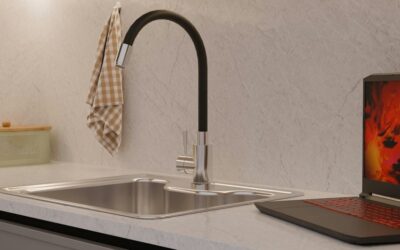
A one handle kitchen faucet controls both water temperature and flow with a single lever, making it the most popular style in modern kitchens. With one hand, or even a wrist or elbow when your hands are full, you can turn the water on, adjust the temperature, and shut it off, which is why single-handle designs have largely replaced two-handle setups over the sink.
Part of our Kitchen Remodeling guide — explore the full guide →
This guide explains how these faucets work, the features worth comparing, installation basics, cost, and how to fix the most common problems.
- How a Single-Handle Faucet Works
- Advantages of a One-Handle Design
- Features to Compare
- Installation Basics
- Cost of a One-Handle Kitchen Faucet
- Common Repairs
- Choosing the Right Faucet for Your Kitchen
- Matching Spout Height to Your Kitchen
- Touch and Touchless Options
- Single-Handle vs. Two-Handle Faucets
- Understanding Cartridges
- Finishes and How They Wear
How a Single-Handle Faucet Works
Inside a one-handle faucet, the lever operates a cartridge, a cylindrical valve that blends hot and cold water and regulates flow. Moving the handle up and down changes volume; swinging it side to side changes temperature by shifting the mix of hot and cold.
Most modern faucets use a durable ceramic-disc cartridge, which resists wear and mineral buildup far better than older rubber-washer designs. When a single-handle faucet drips or gets stiff, the cartridge is almost always the part to service.
Advantages of a One-Handle Design
The single-lever layout offers practical benefits that explain its popularity.
- One-hand operation: Adjust temperature and flow together, handy when your other hand is holding a pot or produce.
- Faster temperature setting: Reach your preferred warmth in one motion instead of balancing two knobs.
- Cleaner look: Fewer parts mean a streamlined profile and fewer crevices to clean.
- Easier installation: One control means simpler plumbing than a widespread two-handle faucet.
- Fewer leak points: A single cartridge reduces the number of seals that can fail.
Features to Compare
Not all single-handle faucets are equal. When shopping for a one handle kitchen faucet, weigh these features against your needs and budget.
- Spout height and reach: A high-arc spout clears tall pots; make sure it fits under your upper cabinets or window.
- Pull-down vs. pull-out sprayer: Pull-down hoses retract into a tall spout; pull-out sprayers pull toward you from a lower spout, better for smaller sinks.
- Spray modes: Many offer stream, spray, and pause functions; some add a powerful boost setting.
- Finish: Chrome, stainless, brushed nickel, matte black, and bronze each wear and clean differently; spot-resist finishes hide fingerprints.
- Touch or touchless: Higher-end models offer touch-activation or motion sensors for hands-free use.
- Valve quality: Look for a ceramic-disc cartridge and a reputable brand with available replacement parts.
Installation Basics
Replacing a faucet is a common weekend project for a handy homeowner. The single-handle style installs through one or a small number of mounting holes in the sink or counter.
- Shut off water: Close the hot and cold supply valves under the sink and open the faucet to release pressure.
- Disconnect the old faucet: Remove the supply lines, loosen the mounting nuts, and lift the old unit out.
- Clean the deck: Wipe away old putty or grime from the mounting area.
- Set the new faucet: Feed the lines and hose through the hole, position the faucet, and secure the mounting nut from below.
- Connect supplies: Attach the hot and cold lines to the correct valves and connect the sprayer hose and weight.
- Test: Turn the water back on, check for leaks, and run the faucet to flush the lines.
Confirm your sink’s hole configuration first. Many single-handle faucets include an optional deck plate to cover extra holes from a previous three-hole faucet.
Cost of a One-Handle Kitchen Faucet
Prices span a wide range based on materials, sprayer type, and technology.
- Budget models: $60 to $130 for a basic single-handle faucet with a standard sprayer.
- Mid-range: $130 to $300 for pull-down designs with better finishes and multiple spray modes.
- Premium and touchless: $300 to $600-plus for touch or motion-sensor models with high-end finishes.
- Professional installation: $150 to $350 if you hire a plumber.
Common Repairs
Because the mechanism is simple, most repairs are DIY-friendly and inexpensive.
- Dripping spout: Usually a worn cartridge; shut off the water, pull the handle and retaining clip, and swap in a matching cartridge.
- Low flow: Often a clogged aerator; unscrew and rinse it, or a clogged pull-down spray head that needs descaling in vinegar.
- Stiff handle: Mineral buildup in the cartridge; cleaning or replacing it restores smooth motion.
- Leaking base: Check the O-rings around the spout and replace if cracked.
Choosing the Right Faucet for Your Kitchen
Match the spout height to your sink and clearance, pick a sprayer style that suits how you work, and choose a finish that complements your hardware. Above all, favor a well-known brand with a ceramic-disc cartridge and a strong warranty, since replacement parts availability determines how long the faucet stays useful.
Matching Spout Height to Your Kitchen
Spout height and reach are among the most important sizing decisions, since they affect both function and whether the faucet even fits your space.
- High-arc spouts: Provide plenty of clearance for filling and washing tall pots and stockpots, but check that they clear an upper cabinet or a window behind the sink.
- Standard-height spouts: Fit under low cabinets and in front of windows, a better choice where overhead clearance is limited.
- Spout reach: Make sure the spout extends far enough over the sink to direct water into the drain area, especially with large or double-bowl sinks.
- Swivel range: A spout that swivels a full range makes a double-bowl sink far more usable.
Touch and Touchless Options
Higher-end single-handle faucets offer hands-free operation, which is genuinely useful when your hands are messy with raw meat or dough. Touch models activate with a tap of the wrist or forearm anywhere on the spout or handle, while touchless models use a motion sensor to start and stop the flow with a wave.
These features add cost and require batteries or a power connection, but they reduce mess and cross-contamination in the kitchen. The single-handle lever still sets the temperature, so you preset a comfortable warmth and then use touch or motion to control the flow. For busy cooking households, the convenience often justifies the premium.
Single-Handle vs. Two-Handle Faucets
It helps to understand why single-handle designs have overtaken the traditional two-handle style at the kitchen sink.
- Convenience: One lever sets temperature and flow in a single motion, versus balancing two separate knobs.
- Hands-full operation: You can bump the lever with a wrist or forearm when your hands are messy.
- Fewer leak points: A single cartridge means fewer seals to fail than two separate valves.
- Cleaning: Fewer parts and crevices to scrub around.
- When two-handle wins: A two-handle faucet offers a classic, symmetrical look and precise separate control, which some traditional kitchens prefer.
Understanding Cartridges
The cartridge is the heart of a single-handle faucet, and knowing the types helps you buy and repair wisely. Ceramic-disc cartridges are the modern standard, using two polished ceramic discs that slide against each other to control water. They resist wear and mineral buildup far better than older ball or rubber-washer designs, which is why quality faucets last for years with only an occasional cartridge swap.
When a faucet drips or the handle stiffens, the cartridge is almost always the culprit. Buying from a major brand ensures you can find an exact replacement cartridge for a modest cost, turning a repair that would otherwise mean a new faucet into a ten-minute fix.
Finishes and How They Wear
Finish choice affects both appearance and upkeep. Each option has its own character and cleaning demands.
- Chrome: Affordable, durable, and easy to clean, but shows water spots.
- Stainless and brushed nickel: Hide fingerprints and spots well; a popular all-around choice.
- Matte black: Bold and modern, though it can show hard-water residue and needs gentle cleaning.
- Bronze and oil-rubbed finishes: Warm, traditional looks that may patina over time.
- Spot-resist coatings: Engineered to resist fingerprints and water marks for lower daily maintenance.
A quality one handle kitchen faucet combines convenience, clean looks, and easy maintenance, making it a smart upgrade for nearly any kitchen. Measure your sink, decide on features, and you can have a smoother, more functional faucet installed in an afternoon.