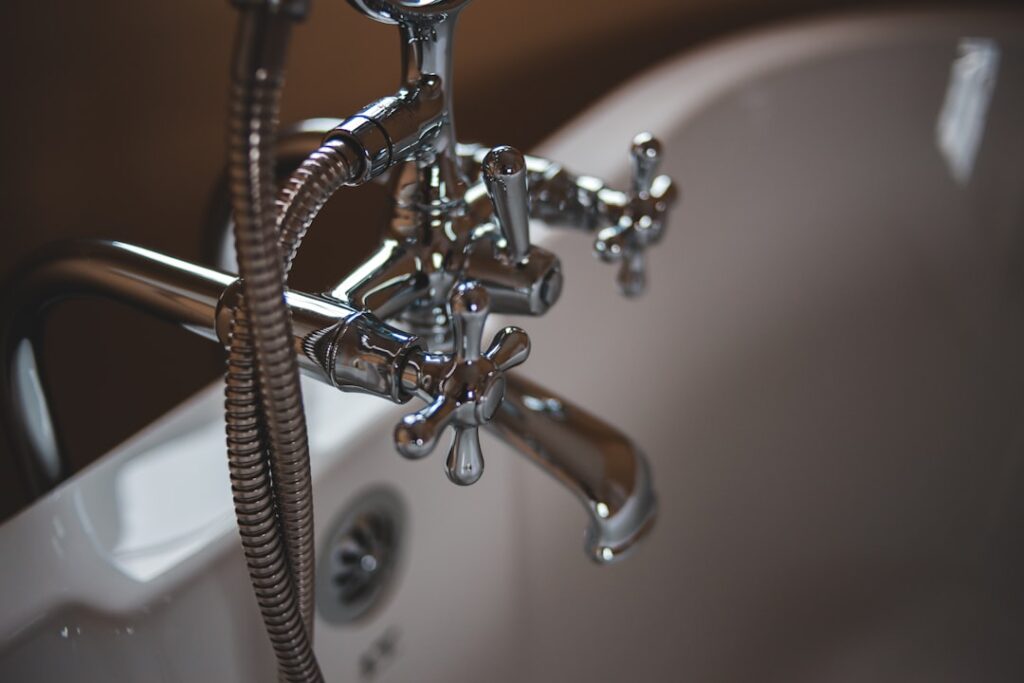
A faucet is the hardest-working fixture in any kitchen or bathroom, touched dozens of times a day, yet most people choose one in five minutes at the store. Picking among the many faucet styles deserves more thought, because the right one matches your sink configuration, your daily habits, and the look of the room. Choose wrong and you end up with a handle that bangs the backsplash or a spout too short to fill a pot. This guide walks through the major styles for both kitchen and bath.
- Why Faucet Style Matters
- Single-Handle Faucets
- Double-Handle Faucets
- Pull-Down and Pull-Out Kitchen Faucets
- Bathroom Faucet Configurations
- Touchless and Smart Faucets
- Bridge and Pot-Filler Faucets
- Finishes and Materials
- Spout Height and Reach
- Installation and Maintenance Tips
- Choosing the Right Faucet for Your Space
Why Faucet Style Matters
Beyond looks, faucet style determines how water flows, how many holes you need drilled in the sink or counter, and how easy the fixture is to use. A faucet with the wrong number of mounting holes simply will not fit your existing sink without an adapter or a new sink. Always count your sink’s pre-drilled holes before you shop, since that single detail rules out many options instantly.
Single-Handle Faucets
The single-handle faucet uses one lever to control both temperature and flow. It is the most popular kitchen style for good reason: you can adjust water with the back of a wrist or an elbow when your hands are full or messy. Installation is simple, and the streamlined look suits modern and transitional kitchens. The trade-off is slightly less precise temperature control compared with separate hot and cold handles.
Double-Handle Faucets
Double-handle faucets use separate controls for hot and cold, giving you fine temperature adjustment and a classic, symmetrical appearance. They suit traditional bathrooms and farmhouse kitchens especially well. The downside is that two handles take two hands and collect a bit more grime where they meet the deck. They also require either a widespread or center-set configuration, which brings us to bathroom layouts.
Pull-Down and Pull-Out Kitchen Faucets
For kitchens, the spray-head styles are workhorses:
- Pull-down: a tall, gooseneck spout with a spray head that pulls straight down into the sink, ideal for filling tall pots and rinsing big dishes
- Pull-out: a lower spout with a spray head that pulls toward you, handy for smaller sinks and filling containers on the counter
Both add reach and flexibility over a fixed spout. Pull-down units dominate larger kitchens, while pull-out designs fit tighter spaces and shallow sinks.
Bathroom Faucet Configurations
Bathroom faucets are defined mostly by how they mount:
- Center-set: handles and spout on a single base, typically for sinks with holes 4 inches apart
- Widespread: separate spout and two handles spaced 8 to 16 inches apart for a custom, upscale look
- Single-hole: one handle and spout in a single hole, clean and minimal
- Wall-mounted: spout and handles installed in the wall above the sink, freeing counter space and easing cleaning
- Vessel: a tall faucet designed to clear the rim of a bowl-style sink that sits on top of the counter
Touchless and Smart Faucets
Touchless faucets use a motion sensor so a wave of the hand starts and stops the flow, which cuts down on germs and wasted water. They need batteries or a nearby outlet for power. Some smart models add voice control and let you dispense an exact measured amount of water. These run more than standard faucets, usually $250 and up, but the hands-free convenience appeals in busy kitchens and homes with young children.
Bridge and Pot-Filler Faucets
Two specialty styles deserve a mention. A bridge faucet connects the hot and cold supplies in an exposed pipe above the deck, delivering a vintage, statement look popular in farmhouse and industrial kitchens. A pot filler is a folding, wall-mounted faucet installed over the range so you can fill heavy stockpots without carrying them across the kitchen. Both are accents rather than necessities, but they add real function for serious cooks.
Finishes and Materials
Style is only half the decision; finish sets the tone and affects upkeep. Popular options include:
- Chrome: affordable, durable, easy to clean, but shows water spots
- Brushed nickel: warm, forgiving of fingerprints and spots
- Matte black: bold and modern, hides water marks but shows dust
- Brushed gold or brass: warm and on-trend, pairs well with white and navy palettes
- Oil-rubbed bronze: rich, traditional, good for farmhouse and rustic rooms
Look for solid brass construction and a ceramic-disc valve, which resists drips far better than older washer designs.
Spout Height and Reach
Two dimensions quietly determine how usable a faucet is day to day. Spout height is the clearance from the deck to the top of the arc, and a taller spout makes filling big pots and washing dishes easier, though it can splash in a shallow sink. Spout reach is how far the water lands from the base; you want it to hit the center of the sink, not the back wall or the front lip. In a kitchen, a high-arc spout with good reach is ideal, while in a tight bathroom a lower profile may suit the space better. Always check the clearance under your upper cabinets before buying a tall spout.
Installation and Maintenance Tips
A few practical pointers save frustration:
- Confirm the number of mounting holes in your sink or counter before ordering
- Look for a faucet with a ceramic-disc cartridge, which outlasts older rubber-washer designs
- Choose a brand that sells replacement cartridges and aerators so repairs stay simple
- Clean the aerator periodically to clear mineral buildup that weakens flow
- Wipe finishes with a soft cloth and mild soap, avoiding abrasive cleaners that scratch
Most drips and weak flow come down to a worn cartridge or a clogged aerator, both inexpensive and easy to swap, which is why buying a repairable faucet pays off over the years.
Choosing the Right Faucet for Your Space
Start with the practical limits: count your mounting holes, measure the clearance under your upper cabinets, and consider how you actually use the sink. From there, let the faucet styles that fit guide you toward a look that suits the room and a finish that matches your other fixtures. Buy quality from a brand that sells replacement cartridges, because a good faucet should last well over a decade with nothing more than the occasional cartridge swap.