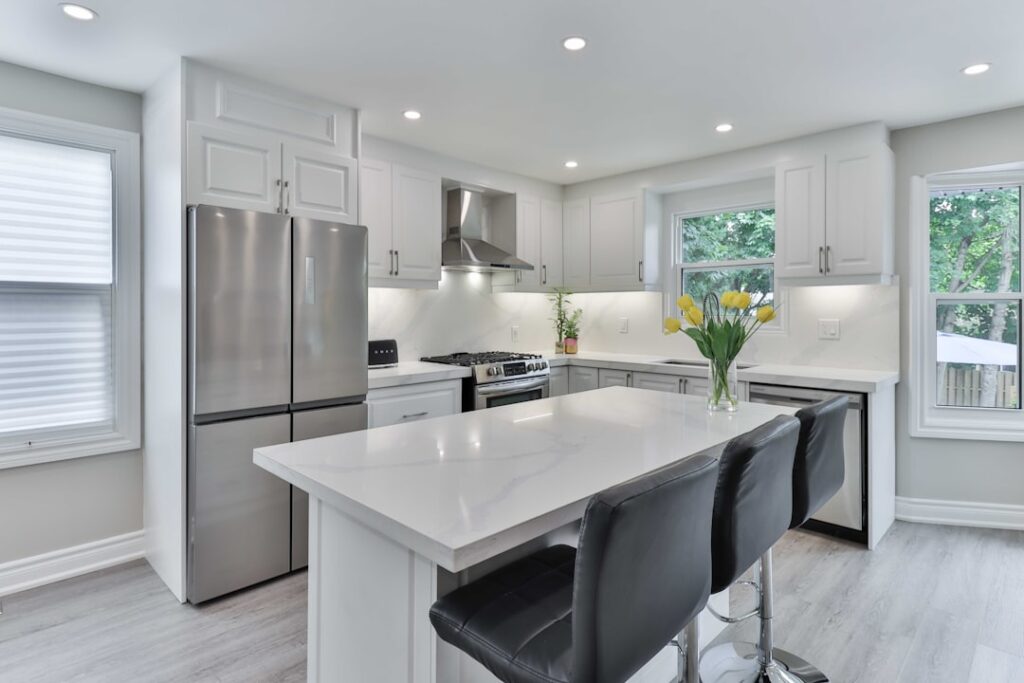
A traditional kitchen never goes out of style. While design trends come and go, the warm wood tones, raised-panel cabinets, and ornamental details that define this style have been popular for decades and continue to hold strong resale value. Whether you are planning a full remodel or updating an existing space, building a traditional kitchen means choosing materials and finishes that emphasize craftsmanship, warmth, and a sense of permanence. This guide walks through every element you need to get it right.
Part of our Kitchen Remodeling guide — explore the full guide →
What Defines a Traditional Kitchen
Traditional kitchens draw from European and early American design. They prioritize symmetry, rich materials, and decorative details over the clean minimalism of modern or contemporary styles. You will notice raised-panel or recessed-panel cabinet doors, crown molding at the ceiling line, furniture-style base cabinets with turned legs or corbels, and warm color palettes built around creams, tans, and deep wood stains.
The overall feel should be welcoming and slightly formal without being stiff. Think of a kitchen that looks like it has been in the home for generations, where the island could pass for a standalone piece of furniture and the range hood has the presence of a fireplace mantel.
Cabinet Styles and Materials
Cabinets set the tone in any traditional kitchen. Raised-panel doors with a center panel that sits higher than the frame are the classic choice. Beaded inset doors, where the door sits flush inside the face frame with a small bead detail, are a higher-end option that signals true custom work.
Wood Species
- Cherry — Deepens in color over time from pinkish-brown to a rich reddish-brown. A top choice for traditional kitchens. $350 to $650 per linear foot for semi-custom cabinets.
- Maple — Tight grain takes paint and stain well. Works for both stained and painted traditional cabinets. $300 to $550 per linear foot.
- Oak — Prominent grain pattern that reads very traditional, especially in medium to dark stains. $250 to $500 per linear foot.
- Alder — Softer wood with a warm tone similar to cherry but at a lower price point. $275 to $475 per linear foot.
For painted cabinets, maple or poplar provides the smoothest finish. If you want a glazed finish where a dark glaze settles into the panel profiles and edges, raised-panel doors in maple or cherry give the glaze plenty of detail to catch.
Countertop Options
Traditional kitchens pair well with natural stone and engineered stone that has movement and depth rather than stark solid colors.
Granite with warm veining in golds, browns, or greens has been a traditional kitchen staple for years and costs $40 to $100 per square foot installed. Marble, particularly Carrara or Calacatta, adds elegance but requires more maintenance and runs $75 to $200 per square foot. Quartz engineered stone in patterns that mimic natural marble or granite gives you the look with less upkeep, at $50 to $120 per square foot installed.
Honed finishes feel more traditional than high-gloss polished surfaces. Ogee or dupont edge profiles on the countertop add a decorative detail that aligns with the style.
Color Palettes That Work
Traditional kitchens lean warm. The most reliable palettes include antique white or cream cabinets paired with warm gray or beige walls, medium to dark stained cherry or walnut cabinets against soft gold or sage walls, and two-tone combinations with a darker island and lighter perimeter cabinets.
Benjamin Moore White Dove OC-17, Sherwin-Williams Alabaster SW 7008, and Farrow and Ball Pointing No. 2003 are all popular choices for painted traditional cabinets. For walls, Sherwin-Williams Accessible Beige SW 7036 and Benjamin Moore Revere Pewter HC-172 complement warm wood tones without competing.
Backsplash and Flooring
Backsplash
Subway tile in a 3×6 inch format with a beveled edge is a safe, classic choice. For a more decorative look, consider a tumbled marble mosaic, a hand-painted ceramic tile behind the range, or a natural stone slab that matches the countertop. Diagonal-set 4×4 inch tiles with a decorative liner accent also read very traditional.
Flooring
Hardwood flooring, particularly oak in a medium stain, is the most common traditional kitchen floor. Widths of 3-1/4 to 5 inches work best. Natural stone tile in travertine or limestone adds formality. Large-format porcelain tile that mimics natural stone is a practical alternative that handles moisture and wear better at $4 to $10 per square foot installed.
Hardware and Fixtures
Small details carry a lot of weight in traditional design. Cabinet hardware in oil-rubbed bronze, antique brass, or brushed nickel with decorative backplates or cup pulls reinforces the style. Pulls for drawers should be 3 to 4 inches in length, and knobs for doors should be 1-1/4 to 1-1/2 inches in diameter.
Faucets with bridge-style designs, cross handles, or gooseneck spouts in matching metal finishes tie the look together. A farmhouse apron-front sink in fireclay or copper makes a strong traditional statement, while a standard undermount stainless sink keeps the focus on the countertop.
Lighting and Layout
Traditional kitchens favor layered lighting. A pair of pendant lights over the island, often in lantern or bell jar shapes, provides task lighting with decorative appeal. Under-cabinet lighting illuminates countertops for prep work. A semi-flush or flush mount fixture with a fabric shade or glass panels serves as the main ambient light.
Layout should emphasize the work triangle between sink, stove, and refrigerator while keeping traffic flow comfortable. Islands in traditional kitchens often feature furniture details like turned legs, arched corbels, and a countertop overhang of 12 to 15 inches for seating. Standard island dimensions run 4 feet by 7 feet or larger, with at least 42 inches of clearance on all working sides.
Budget Ranges and Cost Expectations
A traditional kitchen remodel typically costs more than modern or farmhouse styles because of the cabinetry detail involved. For a mid-range traditional kitchen remodel of a 150 to 200 square foot space, expect to spend $35,000 to $75,000. That covers semi-custom cabinets, granite or quartz countertops, new appliances, tile backsplash, and updated lighting and hardware.
A high-end traditional kitchen with custom inset cabinetry, natural stone countertops, professional-grade appliances, and custom range hood can run $80,000 to $150,000 or more. The biggest cost driver is always the cabinets, which can account for 35 to 50 percent of the total budget. Choosing semi-custom cabinets over full custom saves 30 to 40 percent while still delivering raised panels, glazing, and furniture details.