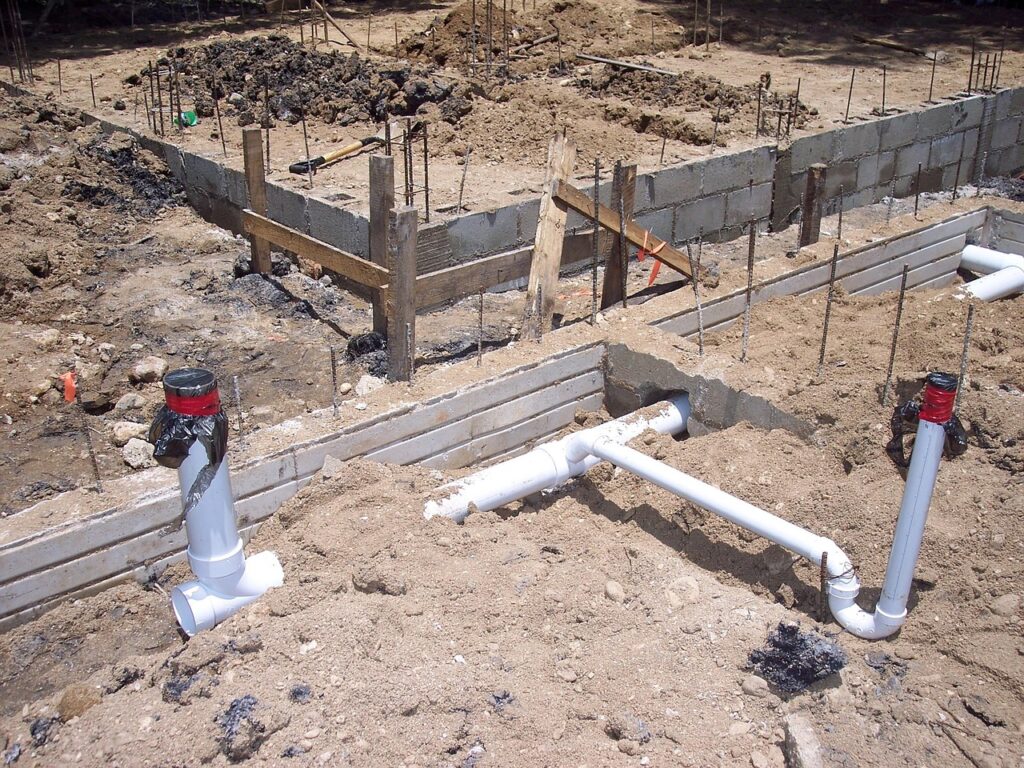
Most homeowners never think about the line carrying waste away from the house until it backs up into a basement floor drain. Underground sewer pipes do quiet, essential work, and when they fail the repair bill often runs into the thousands. Knowing what your line is made of, how deep it sits, and what threatens it puts you in a far stronger position to catch trouble early. This guide walks through the materials, the installation basics, and the common failure points so you can make smart decisions before a problem becomes an emergency.
What Your Sewer Line Is Made Of
The material under your yard depends largely on when the home was built. Older houses commonly used clay or cast iron, while anything plumbed in the last few decades almost always uses plastic. Each material behaves differently over time, and identifying yours helps predict its lifespan.
- PVC (polyvinyl chloride): The modern standard. Smooth-walled, root-resistant, and rated to last 50 to 100 years. White or sometimes green for sewer-rated pipe.
- ABS (acrylonitrile butadiene styrene): Black plastic, common in homes from the 1970s onward. It is solvent-welded in one step and performs well, though some early formulations became brittle.
- Clay (vitrified clay pipe): Used widely before the 1970s. Extremely resistant to chemical corrosion but joined in short sections, which gives roots easy entry points.
- Cast iron: Strong and quiet but corrodes from the inside out over 50 or more years, eventually flaking and narrowing the bore.
- Orangeburg: A tar-and-paper pipe used roughly 1945 to 1972. If you have it, plan to replace it; it deforms and collapses.
Depth and Slope: Why They Matter
Sewer lines have to sit below the local frost line so they do not freeze, which means anywhere from 12 inches in mild southern climates to 6 feet or more in the northern states. Bury depth also protects the pipe from surface loads like vehicles and from accidental shovel strikes during landscaping.
Slope is just as critical. The general rule is a quarter inch of fall per foot of run for pipes 3 inches and smaller. Too little slope and solids settle out instead of being carried along; too much and the liquid races ahead, leaving solids stranded. Both conditions cause clogs, which is why proper grading during installation matters more than almost anything else.
Root Intrusion: The Number One Enemy
Tree and shrub roots seek moisture and nutrients, and a sewer line offers both. They find their way in through tiny joint gaps or hairline cracks, then expand inside the pipe into dense masses that snag toilet paper and grease. Clay and Orangeburg lines suffer the most because of their frequent joints, but even older PVC connections can leak enough to attract roots.
Warning signs include gurgling drains, slow flow that affects multiple fixtures at once, and recurring backups despite repeated snaking. Mechanical augers cut roots back temporarily, but they grow again within months to a couple of years. Foaming root-killer products containing dichlobenil can slow regrowth, and in stubborn cases hydro jetting clears the line more thoroughly. Permanent fixes mean spot repair or pipe lining.
Other Common Failure Points
Roots are not the only threat. Knowing the rest helps you interpret symptoms accurately.
- Bellied pipe: A section that has sagged because the soil beneath it settled, creating a low spot where waste pools.
- Offset or separated joints: Ground movement, freeze-thaw cycles, or nearby excavation can shift sections out of alignment.
- Grease buildup: Cooking fats poured down the drain solidify on pipe walls and trap debris.
- Corrosion: Specific to cast iron, where rust scales restrict flow and eventually perforate the wall.
- Crushing: Heavy equipment or vehicle traffic over a shallow line can collapse it.
Camera Inspection: When It Pays Off
A sewer camera inspection is the single best diagnostic tool available to homeowners. A plumber feeds a flexible cable with a waterproof camera head into the cleanout and watches a live feed of the pipe interior. Many cameras include a locator that pinpoints the depth and position of a defect from the surface, so any digging is precise rather than guesswork.
It is worth the typical cost when you are buying an older home, when backups keep returning after snaking, or before you invest in landscaping or a driveway over the line’s path. An inspection turns a vague problem into a documented one, which also strengthens your position in real estate negotiations or insurance claims.
Repair and Replacement Options
Once a defect is located, you generally have three paths. Traditional dig-and-replace remains the most thorough for collapsed or badly bellied lines, though it tears up the yard. Trenchless methods avoid most excavation: cured-in-place pipe (CIPP) lining inserts a resin-saturated sleeve that hardens into a new pipe within the old one, while pipe bursting pulls a new pipe through while fracturing the old one outward.
Trenchless approaches cost more per foot than open-trench work in some cases, but they often come out cheaper overall once you factor in restoring landscaping, hardscaping, and driveways. Get more than one quote, ask which method each contractor recommends and why, and request the camera footage that justifies the scope of work.
Understanding the Layout of Your System
It helps to know how the pieces fit together before trouble strikes. Wastewater leaves each fixture through branch drains, which feed into a main building drain beneath the house. That main drain exits through the foundation and becomes the sewer lateral, the privately owned line running across your yard to the connection point. Where it ties into the municipal main, or into a septic tank, marks the boundary of your responsibility. In most areas the homeowner owns and must maintain the lateral all the way to the city main, which surprises people facing their first repair bill.
Locating the cleanout is the practical takeaway. This capped access point, usually a short vertical pipe near the foundation or out in the yard, is where a plumber inserts a snake or camera. Knowing where yours is saves time during an emergency and lets you point a technician straight to it. If you cannot find one, an older line may lack an accessible cleanout, which is worth adding during any future repair.
Septic vs. Municipal Considerations
Homes on septic systems face an extra layer of maintenance the same underground pipe carries waste to a tank rather than a city main, and the line and tank both need attention. Roots, bellies, and blockages affect septic laterals just as they do municipal ones, but a clogged line can also signal a full or failing tank. If you are on septic, pair sewer-line awareness with regular tank pumping, typically every three to five years depending on household size, to keep the whole system flowing.
Smart Maintenance Habits
You can extend the life of any sewer line with a few simple practices. Keep grease, wipes labeled “flushable,” paper towels, and feminine products out of the system. Plant trees well away from the line’s path, and choose slow-growing species with less aggressive roots. If your home is older or surrounded by mature trees, a camera inspection every few years catches root regrowth and joint problems while they are still cheap to address.
Underground sewer pipes reward attention. Understanding the material under your yard, respecting proper depth and slope, and acting on early warning signs is the difference between a routine cleaning and a full excavation. When in doubt, a licensed plumber with a camera will tell you exactly what is happening below grade.