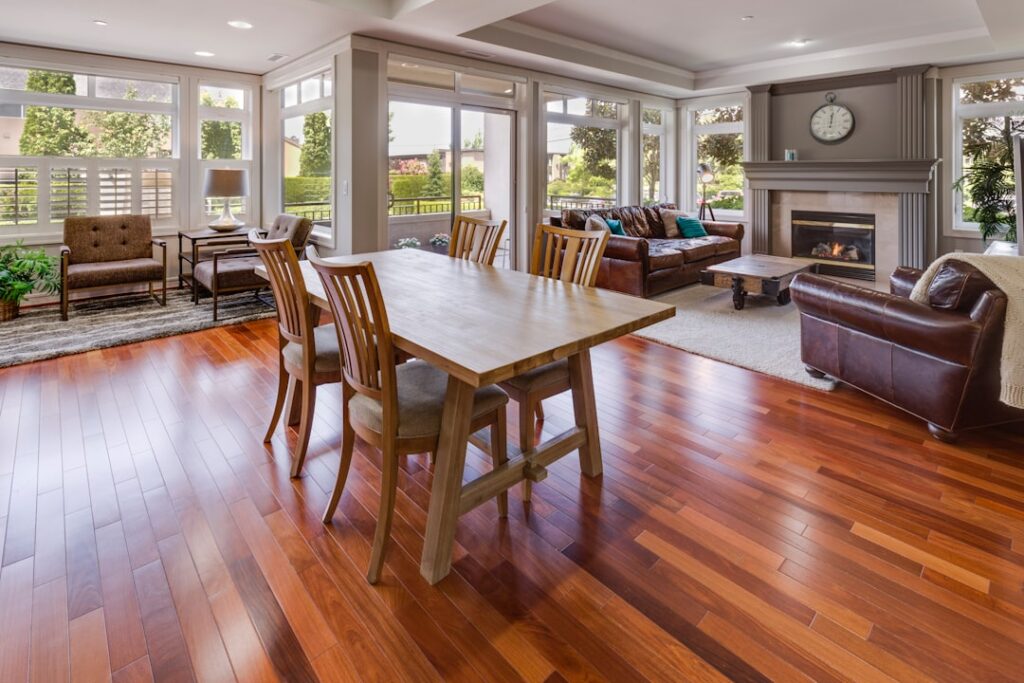
When homeowners want the stability of an engineered plank but the custom look of a job-site finish, unfinished oak engineered flooring is the product that bridges both worlds. It’s a genuine oak veneer bonded to a plywood or high-density fiberboard core, delivered raw so it can be sanded, stained, and sealed in place after installation. I’ve installed both prefinished and site-finished floors for two decades, and the raw engineered oak is a specialty pick that solves specific problems very well while creating a few of its own.
This guide walks through how site-finished engineered oak actually works, where it shines, where it falls short, and what you should budget before you commit. Read the whole thing before you order a single box, because a lot of the disappointment I see on these jobs comes from surprises that were entirely predictable.
What “Unfinished” Really Means Here
Engineered flooring is built in layers. The wear layer on top is real sawn oak, typically 2mm to 6mm thick, glued to a cross-ply core that resists the seasonal expansion and contraction that plagues solid wood. “Unfinished” simply means the manufacturer stopped at the raw wood stage. There’s no factory aluminum-oxide coating, no stain, no UV-cured urethane. What arrives on the pallet is bare oak.
After the planks are nailed or glued down, a finishing crew sands the entire floor flat, applies stain if you want color, then rolls or sprays on two to four coats of polyurethane or a hardwax oil. The result looks and behaves like a solid site-finished floor, but you keep the dimensional advantages of the engineered construction underneath.
The Pros of Site-Finishing Engineered Oak
Custom Stain Color
This is the number-one reason people choose raw over prefinished. You are not locked into a manufacturer’s swatch. Want a specific gray-brown that reads warm in daylight and cool at night? A finisher can mix stains, sample them on your actual boards, and let you approve the color in your own lighting before committing. Prefinished floors give you maybe 20 fixed colors; site-finishing gives you thousands.
A Seamless, Flat Surface
Prefinished planks have micro-beveled edges, those little V-grooves between boards that trap dust and crumbs. Site-finished floors are sanded flat and coated as one continuous plane, so the seams nearly disappear and the surface is smooth underfoot. For a clean, modern look, nothing beats a flat-sanded floor.
Matching an Existing Floor
If you’re extending hardwood into a new addition or feathering into an old floor, raw engineered oak is the only realistic way to get an invisible transition. The finisher stains the new boards to match the aged tone of the existing wood and blends the coats across the seam. Prefinished planks almost never match an older floor exactly.
Stability Over Solid Wood
The cross-ply core makes engineered oak far less prone to cupping and gapping than solid oak, especially over concrete slabs, in basements, or over radiant heat. You get the site-finished aesthetic in places where solid wood would be risky.
The Cons You Need to Weigh
Dust, Odor, and VOCs
Sanding raw wood indoors generates fine dust even with vacuum-assisted equipment, and oil-based polyurethane releases volatile organic compounds while it cures. Expect a strong solvent smell for two to four days and a lingering odor for up to two weeks. Water-based finishes cut the VOCs and odor dramatically but cost more. Plan to vacate sensitive occupants and pets during finishing.
A Longer, Messier Job
A prefinished floor is walkable the moment the last plank is down. A site-finished floor adds two to four extra days: sanding, tack cloth, stain, dry time, then multiple coats with cure time between each. You typically can’t walk on it for 24 hours and shouldn’t move furniture back for several days to two weeks depending on the finish.
Higher Total Cost
You pay for the material and then again for the labor to finish it. That stacks up quickly compared to a prefinished floor you simply install and use.
Thin Veneers Limit Refinishing
This is the big one people miss. A 2mm wear layer can realistically be fully sanded only once, maybe twice in its lifetime, and site-finishing burns one of those sandings right out of the gate. A 4mm to 6mm veneer gives you two to three refinishes. If long-term refinishability matters, spend up for the thickest wear layer you can find.
Installation and Finishing Sequence
Knowing the workflow helps you set realistic expectations. First the boards acclimate in the room for several days so their moisture content balances with the home. Next the crew nails the planks to a wood subfloor or glues them to a slab, checking for a flat surface within about 3/16 inch over 10 feet. Then comes the multi-stage sanding: a coarse grit to level the floor, progressively finer grits, and finally an edger and buffer to reach the walls and corners.
Once the raw wood is sanded smooth, the finisher vacuums and tack-cloths every trace of dust, applies a water-popping pass if staining dark, brushes on the stain, and lets it dry. Only then do the sealer coats go down, sanded lightly between each with a screen. This is why the job runs long. Each of those steps has its own dry window that can’t be rushed without ruining the finish.
What It Costs
Here are realistic 2026 ranges for planning. Material and finishing are separate line items.
- Unfinished engineered oak material: $6 to $14 per square foot, driven mostly by veneer thickness, plank width, and grade.
- Site finishing labor (sand, stain, seal): $3 to $8 per square foot.
- Installation (nail or glue-down): $3 to $6 per square foot.
- Combined turnkey: roughly $12 to $28 per square foot.
For a 300-square-foot room, budget somewhere between $3,600 and $8,400 all-in. Wide planks (7 inches and up), rift-and-quartered grade, and premium finishes push you toward the top of every range.
Is It Right for Your Project?
Choose unfinished engineered oak when you need a specific custom color, want a flat seamless surface, are matching an existing floor, or are installing over a slab or radiant heat where solid wood is risky. Skip it when your priority is speed, a low-mess install, or the lowest possible price. In those cases prefinished engineered oak delivers 90 percent of the look with none of the site-finishing hassle.
One pro tip: always order 10 to 15 percent extra material for waste, and set aside a few full boards as attic stock. Because the color is custom-mixed on site, an exact future patch is nearly impossible without spare planks and the finisher’s stain recipe. Ask your finisher to write down the exact stain formula and coat schedule and keep it with your home records.
Frequently Asked Questions
Can engineered oak really be sanded and stained on site?
Yes, as long as the wear layer is thick enough. Anything 2mm or thicker can be sanded once; 4mm to 6mm veneers handle full site-finishing plus future refinishes. Never sand a veneer thinner than 2mm.
How long before I can use the floor?
Light foot traffic in socks is usually fine 24 hours after the final coat. Wait 3 to 5 days before moving furniture and up to two weeks before laying area rugs, especially with oil-based finish, so the coating fully cures.
Is site-finished more durable than prefinished?
Factory UV-cured aluminum-oxide finishes are generally harder and more scratch-resistant than site-applied coatings. Site-finished floors trade a bit of surface hardness for a custom look and a seamless, repairable surface you can spot-recoat later.
Does unfinished engineered oak work over radiant heat?
It’s one of the better wood options for radiant systems because the cross-ply core resists movement. Confirm the manufacturer approves radiant use, and follow their ramp-up and moisture guidelines closely to avoid gapping.
Bottom line: raw engineered oak is a specialist’s product. When color control, a flush surface, or matching an existing floor drives the decision, it’s worth the extra time and money. When it doesn’t, a good prefinished plank will serve you just as well with far less disruption.
Prefer to explore on your own?
See how new flooring looks in your actual room in seconds — free, no signup.
Try the free Floor Studio →