Two beds can look identical in a photo and last very differently in a real bedroom. What decides it is hidden: the frame under the padding, the fabric weave and how the slats carry the mattress. A good upholstered bed frame pairs a solid hardwood or steel skeleton with a fabric that suits how you live, whether that means a cat that climbs, kids with snacks or a headboard you lean against every night.
If you want a quick answer: pick a performance fabric or a tight-weave polyester if you have pets or children, choose linen or velvet mainly for looks in adult-only rooms, and look for kiln-dried hardwood or metal framing with a center support leg for queen sizes and up. The rest of this article explains why.
What to Look for in an Upholstered Bed Frame
Start with the parts you cannot see. The upholstery is only as good as the structure it wraps. When you compare listings or walk a showroom, check these points:
- Frame material: Kiln-dried solid wood or steel is the sturdiest. Engineered wood panels are common and acceptable for headboards, but rails and legs should be solid.
- Center support: Queen, king and California king sizes need a center rail with one or more legs that reach the floor. Without it, the slats sag.
- Slat spacing: Gaps of about 3 inches or less suit most foam and hybrid mattresses. Wider gaps can void some mattress warranties.
- Padding: High-density foam holds its shape. Thin, low-density foam flattens and shows the frame edges within a year or two.
- Weight capacity: Look for a stated capacity that covers both sleepers plus the mattress.
- Fabric attachment: Neatly stapled and folded corners, straight seams and no puckering signal careful assembly.
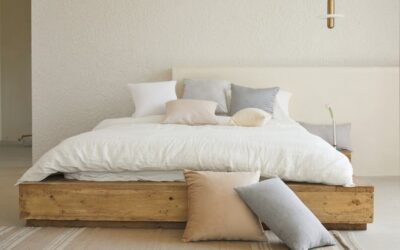
A wood and upholstered bed combines a fabric headboard with exposed wood rails or legs. That hybrid design is often more durable at the foot and sides, where shins and vacuum cleaners hit hardest.
Comparing Upholstery Fabrics
Fabric drives both the look and the lifespan. Here is how the common options behave.
| Fabric | Look and feel | Durability notes |
|---|---|---|
| Linen and linen blends | Relaxed, matte, textured | Wrinkles, stains easily, snags less than loose weaves |
| Velvet | Rich sheen, soft | Shows pressure marks, attracts lint and pet hair |
| Boucle | Nubby, looped, cozy | Loops snag on claws and jewelry |
| Performance polyester | Varies, often smooth | Resists stains and spills, easy to spot clean |
| Faux leather | Sleek, wipeable | Can peel or crack over years, scratches show |
Linen
Linen gives a soft, airy look that suits coastal and neutral bedrooms. Natural linen stains easily and can water-mark if you spot clean too aggressively. Blends with polyester hold up better and wrinkle less.
Velvet
A velvet platform bed feels luxurious, and modern polyester velvets are tougher than older cotton versions. Expect crushing where you lean against the headboard. That patina is part of the look for some people and a flaw for others.
Boucle
Boucle is having a moment, but its loops are easy for claws to catch. It suits guest rooms and adult bedrooms better than homes with cats.
Performance Fabrics
Performance fabrics are woven or treated to repel liquids and resist stains and fading. They are the practical pick for kids’ rooms, pet owners and anyone who eats or drinks in bed. They cost more but often outlast two cheaper beds.
Choosing a Color That Lasts
An upholstered white bed looks crisp in photos but shows every smudge, hair product mark and denim transfer. If you love a light look, pair it with a performance fabric or a removable, washable cover. A grey upholstered bed or gray upholstered bed is the most forgiving middle ground: it hides light dust and pet hair from both dark and light animals. A tan upholstered bed hides crumbs and everyday wear well and warms up wood floors. Charcoal and navy hide stains but show lint and light pet hair.
Tufting Styles and Headboard Height
Tufting adds texture and structure to a headboard. The main styles:
- Button tufting: Buttons pulled into the padding in a diamond or grid. A gray tufted bed with button tufting is a classic look. Buttons can loosen over time, so check that they are anchored through the backing.
- Channel tufting: Vertical or horizontal padded channels. Modern, easy to clean and no buttons to lose.
- Blind tufting: Dimples without visible buttons. Clean look, fewer snag points.
- Plain panel: No tufting, simplest to clean and least likely to trap dust.
A tufted upholstered bed with deep diamond tufting traps crumbs and dust in the folds, so vacuum it regularly with an upholstery tool. A tall upholstered bed headboard, often 50 to 60 inches or more from the floor, makes a statement in rooms with high ceilings and gives excellent back support for reading. In a room with a low ceiling or a window behind the bed, a shorter headboard or a low upholstered bed keeps the space from feeling crowded.
Sizes, Storage and Special Configurations
Upholstered frames come in every standard size. A few notes by size and style:
- Twin: Upholstered twin beds and an upholstered twin bed frame are popular for kids’ rooms and guest rooms. For children, choose performance fabric and a simple panel headboard.
- Full or double: A double upholstered bed fits smaller primary bedrooms and guest rooms. Center support matters less but still helps.
- California king: A california king upholstered bed frame is longer and narrower than a standard king. Measure your doorway and stair turns before ordering; large one-piece headboards can be hard to move.
- Storage: An upholstered bed with drawers or a lift-up gas-strut base adds hidden storage. Check drawer clearance against nightstands and rugs, and make sure lift mechanisms are rated for your mattress weight.
A fabric platform bed skips the box spring entirely. Solid or closely spaced slats support the mattress directly, which lowers overall bed height and simplifies setup.
Durability With Pets and Kids
Pets are hard on upholstery. Cats scratch looped and loose weaves, and dogs track in dirt and oils that darken fabric over time. To extend life:
- Choose tight, flat weaves or microfiber-style performance fabric instead of boucle or loose linen.
- Avoid button tufting if a cat likes to knead the headboard.
- Pick a mid-tone color that matches your pet’s coat.
- Vacuum weekly with an upholstery attachment and use a lint roller between cleanings.
- Consider a frame with a removable, washable cover, or a wood frame with only an upholstered headboard.
For spot cleaning, check the cleaning code on the tag. “W” means water-based cleaners are fine, “S” means solvent only, “WS” allows either, and “X” means vacuum only. Always test a hidden area first.
Assembly Tips and Troubleshooting
- Unbox in the bedroom and lay the headboard on the carton to avoid scuffing fabric.
- Attach rails to the headboard first, finger-tight, then add the footboard or foot rail.
- Install the center rail and adjust its legs so they touch the floor firmly.
- Lay slats, then tighten all bolts fully.
- Add felt pads under legs to protect hardwood or vinyl flooring.
If the frame squeaks, retighten bolts and add a thin felt washer at metal-to-wood joints. If the headboard wobbles, check that it is bolted to the rails with all hardware, not just two bolts. Sagging in the middle almost always means the center legs are not touching the floor.
Typical Price Ranges
Budget flat-pack frames with engineered wood and basic polyester often start around a few hundred dollars for a queen. Mid-range frames with solid wood, better foam and performance fabric usually run several hundred to over a thousand dollars. Custom and designer pieces with hand tufting, premium velvet or natural linen go higher. Delivery with in-room assembly adds to the cost but saves time on heavy king frames.
For most households, an upholstered platform bed frame in a performance fabric with solid framing and a center support leg offers the best balance of comfort, looks and lifespan. Spend on structure and fabric, not on extra tufting details that are hard to keep clean.
Frequently Asked Questions
Are upholstered bed frames durable?
They can be very durable when built on solid wood or steel with center support and covered in a tight-weave or performance fabric. Cheap foam and loose weaves wear out fastest.
What fabric is best for an upholstered bed with pets?
Performance polyester or tight, flat microfiber-style weaves resist claws, hair and stains. Avoid boucle, loose linen and deep button tufting if you have cats.
Do upholstered beds need a box spring?
Most modern upholstered platform beds use slats and do not need a box spring. Check the slat spacing, which should be about 3 inches or less for foam mattresses.
How do you clean an upholstered headboard?
Vacuum weekly with an upholstery tool and spot clean based on the fabric cleaning code on the tag. Test any cleaner on a hidden spot first.
Is velvet or linen better for a bed frame?
Velvet is softer, hides wear better in darker shades and suits formal rooms. Linen looks relaxed and breathable but stains and wrinkles more easily. Blends of either improve durability.