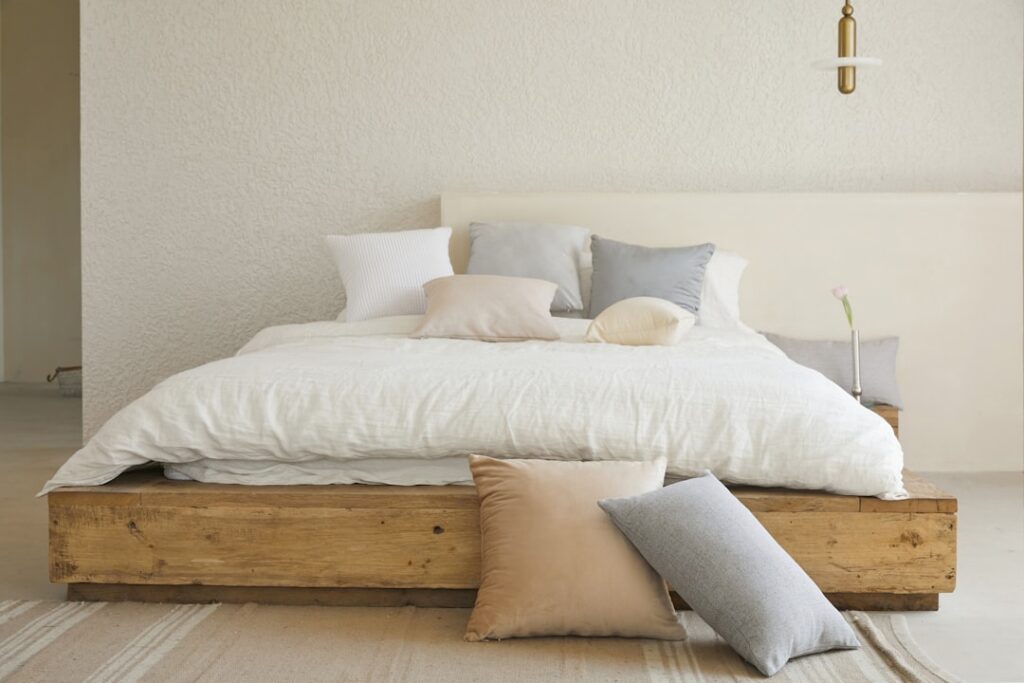
The bed frame is quietly getting shorter. An upholstered floor bed trades the tall legs and box spring of a traditional setup for a low, padded platform that sits close to the floor, wrapped in fabric for softness and a clean, contemporary look. People choose them for different reasons. Some want the airy, minimalist feel of a low profile in a modern bedroom. Parents reach for floor beds to follow Montessori principles, giving a toddler safe, independent access to a real mattress. Whatever the motive, getting the height, support, and materials right makes the difference between a cozy retreat and a bed that feels like a chore.
What an Upholstered Floor Bed Is
At its core, this is a low platform bed with a fabric-covered frame, usually padded over a wood or engineered-wood structure. The defining trait is the low deck height: the mattress support sits anywhere from a couple of inches off the ground to roughly 8 to 12 inches, far lower than a standard bed that puts the mattress top around 24 inches up. Many designs add an upholstered headboard, and some skip the headboard entirely for a true platform look.
Because the platform itself supports the mattress, no box spring is required. That is part of the appeal, fewer components, less height, and a softer profile that reads calm and modern.
Floor Bed Styles to Consider
Not every “floor bed” means the same thing. Match the style to who is sleeping in it:
- True Montessori floor bed: A very low, often frameless or house-frame design that lets a child climb in and out independently. Safety and low height drive the design.
- Low platform adult bed: An upholstered frame 8 to 14 inches tall with a padded headboard, built for grown-up bedrooms.
- Slatted upholstered platform: A frame with built-in slats that hold the mattress and allow airflow underneath.
- Solid-deck upholstered bed: A platform with a solid panel under the mattress; needs extra ventilation attention.
Mattress Fit and Support
The platform deck dictates which mattress works. Slatted decks should have slats spaced no more than about 3 inches apart so a foam or hybrid mattress is fully supported and the warranty stays valid; some manufacturers void coverage over wider gaps. For most upholstered floor beds, a medium-profile foam, latex, or hybrid mattress 8 to 12 inches thick gives the right balance of comfort and a low overall silhouette.
Skip the box spring. These frames are designed to hold the mattress directly. For a child’s Montessori bed, a firmer, thinner mattress that sits low and supports a developing body is usually the better call, and keep the total height modest so a fall to the floor is short.
The Airflow Issue You Can’t Ignore
Sitting low and close to the floor traps moisture, and trapped moisture grows mold under a mattress. This is the single most common complaint with low platform and solid-deck beds. Protect against it from day one:
- Choose a slatted deck over a solid panel when you can, or drill ventilation if the manufacturer allows.
- Add a breathable mattress protector and a slatted or mesh underlayment for solid decks.
- Pull the mattress up to air out every few weeks, especially in humid climates or over carpet.
- Run a dehumidifier or crack a window in damp rooms to keep relative humidity in check.
Safety, Especially for Kids
For a Montessori setup, the low height is the safety feature, but it is not the whole story. Anchor or place the bed away from cords, outlets, and anything climbable. Babyproof the entire room, not just the bed, since a floor bed gives a young child the run of the space. Use rounded, padded edges, which upholstered frames provide naturally, and check that any house-frame structure is sturdy and free of pinch points. Always follow the mattress maker’s age and use guidance for infants and toddlers.
Choosing Upholstery Fabric
The cover decides how the bed wears and cleans. Performance fabrics, polyester blends, and tightly woven microfiber resist stains and wipe down easily, which matters a lot in a kids’ room. Linen and cotton look soft and breathable but soil faster. For homes with pets or young children, look for a fabric with a high abrasion (double-rub) rating and, ideally, removable, washable covers.
Expect a quality upholstered floor bed to run roughly $300 to $1,200 depending on size and build, with simple Montessori frames at the lower end and substantial padded adult platforms higher. Test-feel the fabric in person if you can; you will be sitting against it every day.
Pros and Cons of a Floor Bed
Before you commit, weigh the trade-offs honestly. On the plus side, a floor bed creates a calm, modern, low-profile look, removes the need for a box spring, and gives a young child safe independence in a Montessori setup. The padded frame is soft to lean against and friendly to bumped shins.
The downsides are real. Getting in and out is harder on anyone with knee, hip, or back issues, since you are rising from a low position. Airflow and moisture demand ongoing attention. And the low height puts the mattress closer to floor dust and pets, so cleaning underneath takes a little more effort. Match the bed to who will use it and how mobile they are.
Styling the Room Around It
A low bed changes the proportions of the whole room, so adjust the rest to suit. Hang art and shelves lower than you would over a tall bed so the wall does not feel empty above the headboard. Keep nightstands low-profile to match, and lean toward layered bedding and a few floor cushions, which suit the grounded, relaxed look. A soft area rug under and around the bed warms the space and is especially welcome since you step straight onto it. The result is a calm, cocoon-like room that feels intentional rather than simply short on furniture.
Care and Maintenance
Vacuum the upholstery regularly with a brush attachment to lift dust and pet hair from the seams. Blot spills promptly with a cloth and a fabric-safe cleaner, testing a hidden spot first. Rotate the mattress head to foot every few months for even wear, and lift it to let the deck breathe. Done right, an upholstered floor bed stays clean, dry, and comfortable for years while giving the room that low, modern calm it was bought for.
Prefer to explore on your own?
See how new flooring looks in your actual room in seconds — free, no signup.
Try the free Floor Studio →