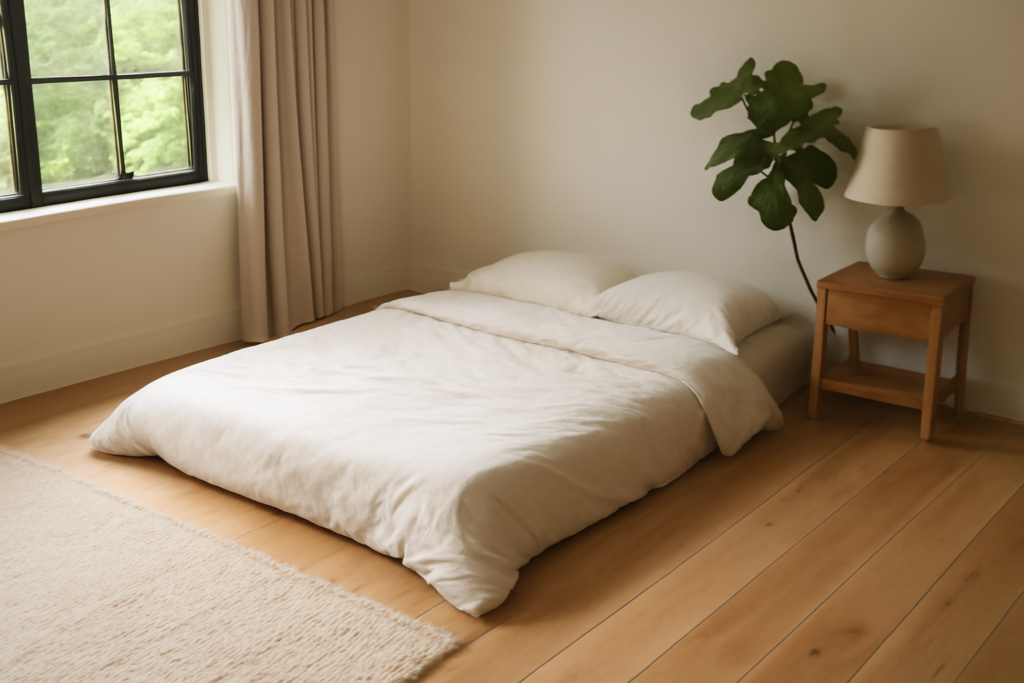
Floor beds for adults have moved well beyond the dorm-room mattress on the carpet. Inspired partly by Japanese-style and Montessori-influenced low sleeping setups, a modern floor bed is a deliberate design choice that creates a calm, minimalist, grounded bedroom. Whether you are after a sleeker look, a smaller footprint, or simply the feeling of a low, cocoon-like bed, this guide covers the real pros, the genuine drawbacks, and how to set one up so it stays comfortable and clean.
What Counts as a Floor Bed
A floor bed places the mattress at or very near floor level, skipping the tall box spring and high frame. That can mean a mattress on a low platform just a few inches off the ground, a tatami-and-futon arrangement, or a mattress resting on a slatted base set directly on the floor. The defining trait is the low profile and the minimal, grounded aesthetic.
This is distinct from simply tossing a mattress on bare floor, which invites moisture and dust problems. A well-designed floor bed still gives the mattress some support and airflow underneath.
The Benefits
- Minimalist, open look: A low bed makes a room feel larger and calmer, with clean sightlines and less visual bulk.
- Lower cost: Skipping a frame and box spring can save a meaningful amount of money.
- Easy entry for some: Getting in and out at floor level can feel grounding and is reachable for people who like a low surface.
- No falling far: The low height removes any worry about rolling off a tall bed.
- Stable and quiet: Without a frame, there are no squeaks or wobble.
The Drawbacks to Consider
A floor bed is not for everyone, and it is fair to weigh the trade-offs honestly. Getting up from floor level is harder on the knees, hips, and back, so it can be tough for older adults or anyone with mobility or joint issues. Being close to the floor also means more exposure to dust, cooler air near the ground, and any drafts.
The biggest practical concern is airflow and moisture. A mattress that sits flush on a solid floor cannot breathe, which can trap body moisture underneath and encourage mold or mildew over time. This is the issue you must design around.
Supporting the Mattress Properly
To keep a floor bed healthy and comfortable, give the mattress something to sit on that allows air to move. Options include:
- A low slatted platform: Just a few inches tall, it provides airflow while keeping the floor-bed look.
- A tatami mat or breathable bed base: Traditional and supportive, designed to let the mattress breathe.
- A moisture-wicking pad or breathable mat underneath: If the mattress must sit very low, a designated breathable base layer reduces trapped humidity.
Whatever you choose, lift and air out the mattress periodically, especially in humid climates, and avoid placing it directly on cold concrete without a moisture barrier and breathable layer.
Choosing the Right Mattress
Most quality mattresses work on a floor bed as long as they have proper support beneath. Foam and hybrid mattresses are popular because they perform well on a flat slatted base. Check the manufacturer warranty, since some require a specific type of foundation or slat spacing to stay valid.
Mattress thickness is partly an aesthetic and comfort call. A thicker mattress raises the sleeping surface and makes getting up a little easier, while a thinner profile keeps the ultra-low, grounded look. Pick based on how easily you want to rise in the morning.
Styling a Floor Bed Bedroom
Floor beds lean naturally into minimalist, Japandi, and bohemian styles. Keep surrounding furniture low to match the proportions, like a low nightstand or a simple basket beside the bed. Layered bedding, a textured throw, and a soft area rug around the bed add warmth and keep the floor-level setup feeling intentional and cozy rather than sparse.
Good lighting at a low level, such as a floor lamp or wall sconce, completes the look and keeps the room from feeling top-heavy.
Keeping a Floor Bed Clean and Healthy
Because a floor bed sits in the dustier zone near the ground, a slightly different cleaning routine keeps it fresh. Vacuum around and under the bed regularly, since dust and allergens settle more heavily at floor level. Wash bedding on a normal schedule, and air out the mattress by leaning it up or lifting it off its base every couple of weeks, especially in humid months, to release any trapped moisture.
If you place the bed over a rug, choose a low-pile, washable option and clean it often. A breathable base layer plus periodic airing is the single most important habit for preventing the mold and mildew that can form when a mattress cannot breathe. Get that right and a floor bed stays as healthy as any raised setup.
Floor Bed Variations to Consider
There is no single “right” floor bed, and a few variations balance the look with practicality. A low platform that raises the mattress just a few inches keeps the grounded aesthetic while easing the rise in the morning and improving airflow. A tatami-and-futon setup leans fully into the Japanese-inspired tradition and rolls away during the day in tight spaces. A slatted base set directly on the floor offers a clean modern look with built-in ventilation.
If you like the idea but want a compromise, a low-profile platform bed gives you most of the minimalist feel with a touch more height. Test how easily you can get up from different heights before deciding, since that daily reality matters more than the photos that inspired the look.
Is a Floor Bed Right for You?
A floor bed suits adults who want a minimalist, budget-friendly, grounded bedroom and who do not struggle to get up from a low surface. If you have joint or mobility concerns, or you live somewhere very humid without a plan for airflow, a traditional low platform bed may be a better compromise. Give the mattress a breathable base, air it out regularly, and a floor bed can be both a stylish statement and a genuinely comfortable place to sleep.
Prefer to explore on your own?
See how new flooring looks in your actual room in seconds — free, no signup.
Try the free Floor Studio →