
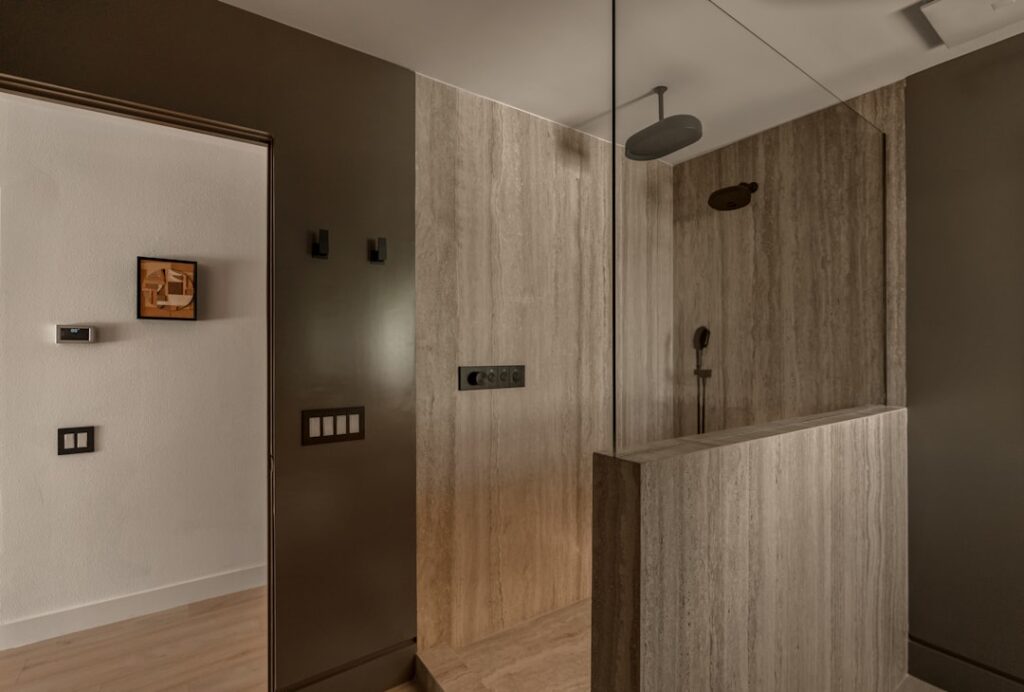
Tall, narrow, and unmistakably modern, the vertical shower niche has become the design-forward alternative to the traditional wide horizontal shelf. Instead of a single low box, a vertical shower niche runs upward as a slim column, often two or three feet tall, giving you tiered storage that fits everything from a tall shampoo bottle to a razor while creating a striking vertical accent line in the shower. It looks custom, it stores more per inch of width, and it plays beautifully with vertical tile trends. This guide covers dimensions, placement, waterproofing, tile design, and cost so your vertical niche is both gorgeous and completely leak-free.
Part of our Bathroom Remodeling & Flooring guide — explore the full guide →
- Why Choose a Vertical Orientation
- Ideal Dimensions
- Best Placement in the Shower
- Framing for a Vertical Niche
- Waterproofing: The Non-Negotiable Step
- Tile Design Ideas
- Cost to Build a Vertical Shower Niche
- Common Mistakes to Avoid
- Coordinating the Niche With Your Shower Design
- Frequently Asked Questions
Why Choose a Vertical Orientation
The classic shower niche is wider than it is tall, but a vertical layout offers real advantages. It fits neatly within a single stud bay, so you rarely need to cut framing, and it stacks storage upward with one or more internal shelves, holding more product without eating into the shower’s usable wall area. Visually, a tall niche draws the eye upward and pairs naturally with vertical subway tile, stacked tile, or slab walls, reinforcing a clean, contemporary aesthetic.
It also puts frequently used items at a comfortable reach on the upper shelf while keeping backups below. For a modern bathroom, the vertical niche often looks more intentional and architectural than a wide horizontal box.
Ideal Dimensions
Because a vertical niche fits between studs, its width is naturally constrained. A single stud bay gives you roughly 14 inches of clear interior width. For height and depth, aim for:
- Width: about 12 to 14 inches, fitting between 16-inch on-center studs
- Height: 24 to 40 inches, tall enough for two or three shelves
- Depth: 3 to 3.5 inches, matching the stud cavity
- Shelves: one or two internal shelves dividing the column into tiers
Size the tallest compartment to your biggest bottle, and keep the top shelf within easy reach, roughly 48 to 66 inches from the shower floor. A niche running too high becomes hard to reach and too low becomes a splash zone.
Best Placement in the Shower
Placement drives both function and looks. Position the vertical niche on a wall out of the direct spray from the showerhead, typically the side wall or the wall opposite the fixtures, so items are not constantly blasted with water. Center it on a clean sightline, such as aligned with the shower valve or a prominent grout joint, so it reads as a deliberate design element rather than an afterthought.
A popular modern move is to place a tall niche directly beside or in line with the shower controls, creating a coordinated vertical composition. Avoid exterior walls when possible to preserve insulation, and never place a niche on a wall carrying plumbing without confirming pipe locations.
Framing for a Vertical Niche
Framing is simpler than a wide niche because you usually work within one stud bay, avoiding cutting load-bearing studs. Add 2x blocking at the top and bottom of the opening to create the header and sill and give solid backing for the waterproofing and tile. Each internal shelf gets its own blocking. Slope every shelf and the bottom sill slightly outward, about 1/8 inch, so water drains back into the shower rather than pooling. That subtle pitch is one of the most important details for a niche that stays dry behind the tile.
Waterproofing: The Non-Negotiable Step
A vertical niche has more shelves, and therefore more horizontal ledges and inside corners, than a simple box, which means more potential leak points. Every corner, seam, and shelf-to-wall transition must be waterproofed meticulously. Use a proven system: a liquid-applied membrane with reinforcing fabric in the corners, a bonded sheet membrane, or a foam board niche with sealed seams.
Preformed foam niche units designed for vertical orientation simplify this enormously, bonding directly into your waterproofing membrane and eliminating many field-formed corners. Whichever route you take, treat each shelf as its own mini shower pan, sloped and sealed, and lap the membrane so water is always directed outward. A leak here rots the wall silently, so this is not the place to economize.
Tile Design Ideas
The vertical niche is a natural showcase, and a few design approaches always look polished:
- Vertical accent tile: Run a slim mosaic or picket tile up the back of the niche to emphasize the vertical line.
- Slab or large-format back: A single piece of stone or porcelain on the back wall eliminates grout lines for a clean, luxe look.
- Continuous field tile: Line the niche in the same tile as the walls, carefully aligning grout joints for a seamless effect.
- Metal trim edges: Finish the front edges with a metal profile in brushed nickel, matte black, or brass to match your fixtures.
Use solid-surface or stone slabs for the shelves themselves to avoid grout joints on the wettest, hardest-to-clean surfaces.
Cost to Build a Vertical Shower Niche
Added during a tile shower installation, a vertical niche is an affordable upgrade. Typical 2026 costs:
- Prefab vertical foam niche: $50 to $150
- Waterproofing materials: $30 to $90 for the niche
- Accent or slab tile: $15 to $80
- Professional labor add-on: $200 to $500 during a shower tile job
All in, adding a vertical niche to a shower you are already tiling runs about $250 to $700. Because it has more shelves and corners than a simple box, labor is slightly higher, but the payoff in storage and style is significant.
Common Mistakes to Avoid
The biggest errors are all about water. Do not build flat or inward-sloping shelves that trap water against the wall. Do not skimp on corner reinforcement in the waterproofing. Avoid placing the niche in the showerhead’s direct spray. And do not make the column so tall that the top shelf is out of comfortable reach or the bottom sits in the splash zone. Plan the tile layout before you build so grout lines align, and your niche will look custom rather than improvised.
Coordinating the Niche With Your Shower Design
A vertical niche is a strong architectural element, so plan it as part of the overall shower composition rather than a standalone feature. One of the most effective moves is to align the niche with another vertical line in the space, such as the shower valve and showerhead riser, the edge of a glass panel, or a run of vertical tile. This repetition of vertical lines makes the whole shower feel intentional and taller, which is especially useful in a smaller bathroom where you want to draw the eye upward.
Think about how the niche interacts with your tile pattern too. If you are running a stacked or vertical tile layout on the walls, a vertical niche reinforces that direction beautifully. If your field tile runs horizontally, a vertical niche provides a pleasing contrast that keeps the design from feeling monotonous. Coordinate the metal trim or edge finish with your fixtures, faucets, and shower door hardware for a pulled-together look; matte black trim with matte black fixtures, or brushed nickel with nickel, reads as custom. Adding a small waterproof LED strip inside the niche is a growing trend that highlights the column and adds a soft glow, turning practical storage into a genuine design feature.
Frequently Asked Questions
How tall should a vertical shower niche be? Commonly 24 to 40 inches with one or two internal shelves. Keep the top shelf within easy reach, around 48 to 66 inches off the shower floor.
Does a vertical niche fit between studs? Yes, that is a key advantage. A single stud bay gives about 14 inches of clear width, so you usually avoid cutting load-bearing studs.
How many shelves should it have? One or two internal shelves work best, dividing the column into tiers for tall bottles up top and smaller items below.
Is a vertical niche harder to waterproof? It has more shelves and corners than a simple box, so there are more seams to seal. Careful corner reinforcement, or a prefab foam niche, keeps it leak-free.
Where should I place it? On a side wall or the wall opposite the showerhead, out of the direct spray, centered on a clean sightline such as the shower valve for a coordinated look.
A vertical shower niche delivers modern style and smart tiered storage in the width of a single stud bay. Slope every shelf, obsess over the waterproofing, choose slab shelves, and align your tile, and you will have a striking, leak-free feature that makes the whole shower feel custom-designed.


