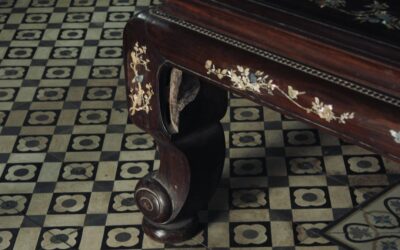
Walk into an 1880s Brooklyn brownstone or a San Francisco Painted Lady and the floor announces the era before you see anything else. Victorian style flooring covers encaustic tile entryways, intricate parquet borders, narrow-plank quarter-sawn oak, and wide pine boards left visible in service rooms. Restoring or replicating these patterns runs $4 to $22 per square foot depending on the material. Modern reproduction tiles and parquet panels have made authentic Victorian looks far more accessible than they were even five years ago, but choosing the right materials still demands knowing what was actually used in the period.
- What Defined Victorian Flooring
- Four Core Materials of the Era
- Pros of Authentic Victorian Restoration
- Cons and Practical Challenges
- Layout Patterns Worth Knowing
- Real Cost for a Restoration Project
- Modern Reproductions That Work
- Subfloor Requirements
- Finish Choices for Authenticity
- Maintenance Routine
- Final Word
What Defined Victorian Flooring
The Victorian era stretched 1837 to 1901, and flooring choices shifted dramatically across those decades. Early Victorian homes used wide pine boards stained dark or painted. Mid-Victorian (1850s to 1870s) introduced industrial-scale parquet production, with elaborate borders, medallions, and contrasting wood species. Late Victorian (1880s to 1900s) brought mass-produced encaustic and geometric tile for entries, halls, and conservatories.
The defining traits across the era are visible craftsmanship, contrasting woods, and patterned tile in transitional spaces between outside and the formal rooms.
Four Core Materials of the Era
Encaustic Cement Tile
Pigmented cement tiles with patterns formed through the body, not painted on. Original tiles from Maw and Co. and Minton survive in many UK and US Victorian entries. Modern reproductions from Original Style, Granada Tile, and Cement Tile Shop run $9 to $22 per square foot.
Quarter-Sawn Oak Strip
2.25 to 3.25 inch wide quarter-sawn white oak shows the prized ray flake pattern that defined Victorian and Craftsman floors. $7 to $14 per square foot for the material.
Parquet Panels
Herringbone, basket weave, Versailles, and Chantilly patterns in oak, walnut, mahogany, and maple. Modern engineered parquet from Lauzon, Du Chateau, and Mirage runs $9 to $18 per square foot.
Wide Pine Plank
8 to 14 inch wide pumpkin or eastern white pine, often left exposed in kitchens and service rooms. Authentic reclaimed pine runs $8 to $15 per square foot.
Pros of Authentic Victorian Restoration
- Resale premium in historically registered districts
- Period-correct match for stained glass, lincrusta wall coverings, and millwork
- Long service life on quality solid materials
- Refinishable on hardwoods, durable on encaustic tile
- Strong storytelling value with provenance documented
Cons and Practical Challenges
Authentic encaustic tile is porous and requires sealing on installation and re-sealing every 18 to 36 months. Acidic kitchen spills can etch unsealed tile. Quarter-sawn oak costs roughly 30 to 50 percent more than plain-sawn equivalents because of milling yield.
Parquet patterns require flat substrates and skilled installers. Pattern matching alone can add 20 to 40 percent to install labor over straight-plank installs. Replacement pieces for damaged sections need to be planned at install with extra material set aside.
Layout Patterns Worth Knowing
Hall and Entry Tile
Black-and-white checkerboard, encaustic borders with star or quatrefoil centers, geometric tessellations. Original Style and Topps Tiles offer historically accurate patterns ready to ship.
Parlor and Dining Hardwood
Narrow strip oak with contrasting walnut or mahogany border 12 to 18 inches from the wall. Sometimes paired with a center medallion under a chandelier.
Library and Study
Quarter-sawn oak in a darker stain, sometimes with a parquet inset under the desk area.
Service Areas and Back Hall
Wide pine plank, sometimes painted in floor enamel, with stenciled borders or center medallions.
Real Cost for a Restoration Project
- 40 sq ft entry, authentic encaustic tile and border: $1,200 to $2,400
- 200 sq ft parlor, quarter-sawn oak with walnut border: $3,200 to $5,800
- 120 sq ft dining room, engineered parquet panels: $1,800 to $3,400
- 300 sq ft hallway and stairs, reclaimed pine plank: $4,500 to $7,800
Modern Reproductions That Work
Encaustic-look porcelain from Daltile, MSI, and Florida Tile costs 30 to 50 percent less than authentic cement tile and requires no resealing. The visual match is convincing at three feet, less so on close inspection. Engineered parquet panels from Mirage Classic, Lauzon Organic 567, and Hakwood install over concrete subfloors that cannot accept nail-down solid parquet. Look for ply-construction parquet with a 4 to 6mm hardwood face for refinishability.
Subfloor Requirements
Authentic encaustic tile needs a flat substrate within 1/8 inch over 10 feet. Use a Schluter DITRA or Custom Building Products CrackBuster Pro uncoupling membrane over concrete or plywood. Quarter-sawn oak nails directly to 3/4 inch plywood subfloor. Engineered parquet requires the same flatness as encaustic tile and either glues down with a urethane adhesive like Bostik Best or floats with a click-lock system on selected modern products.
Finish Choices for Authenticity
Period-correct finishes for hardwood were shellac, varnish, or wax. Modern Bona Traffic HD water-based polyurethane closely matches the satin sheen of historical varnish without yellowing over time. Loba 2K Supra A.T. and Rubio Monocoat hardwax oils also work well, particularly on quarter-sawn oak where the medullary rays show best with a low-sheen finish.
Cement tile finishes use a penetrating sealer like Aqua Mix Sealer’s Choice Gold or Miracle Sealants 511 Impregnator. Apply two coats before grouting, then a third coat after install cures.
Maintenance Routine
- Microfiber dust mop daily
- Damp mop weekly with pH-neutral cleaner appropriate to material
- Avoid acidic cleaners on stone, cement tile, and oxidized finishes
- Felt pads on all furniture legs over hardwood
- Re-seal cement tile every 18 to 36 months
- Re-coat polyurethane hardwood every 8 to 12 years
Final Word
Victorian flooring projects reward research and patience. Match the material to the room’s original use, source quality reproductions when authentic materials are unavailable, and budget for the skilled labor these installations require. A correctly restored Victorian floor adds character and value that no modern floor can replicate, and it will outlast the next half-dozen kitchen remodels above it.
Prefer to explore on your own?
See how new flooring looks in your actual room in seconds — free, no signup.
Try the free Floor Studio →