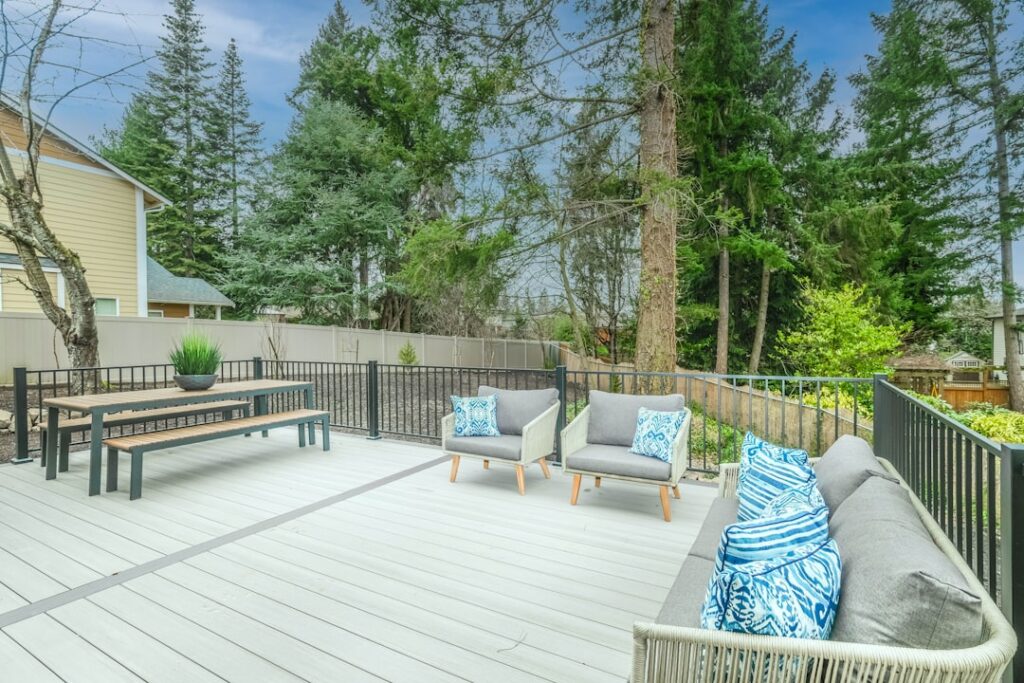
For homeowners who want a low-maintenance outdoor deck that resists rot, splinters, and the endless cycle of staining, vinyl decking boards offer a compelling alternative to traditional wood. Made primarily from PVC, these boards stand up to sun, rain, and foot traffic for decades with little more than an occasional wash.
Part of our Decks & Outdoor guide — explore the full guide →
If you are building a new deck or replacing worn boards, understanding how vinyl decking boards perform, what they cost, and how they install will help you decide whether they are right for your space. This guide covers everything you need to know.
What Vinyl Decking Is
Vinyl decking, sometimes called PVC decking, is made entirely from polyvinyl chloride rather than the wood-plastic blend found in composite decking. Because there is no organic wood content, fully PVC boards are highly resistant to moisture, rot, mold, and insects, and they will not absorb water the way wood does.
Manufacturers shape and texture the boards to mimic wood grain, and many offer multi-tonal coloring for a more natural appearance. The boards are typically hollow or ribbed underneath to reduce weight while maintaining strength, and they are designed to work with hidden fastening systems for a clean surface.
Advantages of Vinyl Decking
The strengths of PVC boards explain their popularity for outdoor living:
- Minimal maintenance: No staining, sealing, or painting required, just periodic cleaning.
- Moisture and rot resistance: Ideal for rainy climates and poolside decks.
- Insect resistance: Termites and carpenter ants have nothing to feed on.
- Splinter-free surface: Comfortable for bare feet and safer for kids and pets.
- Long lifespan: Many products carry lengthy warranties against rot and decay.
For families who would rather enjoy their deck than refinish it every couple of years, these benefits make a strong case.
Drawbacks to Consider
No material is flawless, and PVC decking has tradeoffs. The upfront cost is higher than wood, which is the most common reason buyers hesitate. The boards can also feel and look slightly more plastic than wood up close, though quality has improved significantly.
Heat is another factor: in direct summer sun, darker boards can become hot underfoot, so lighter colors are worth considering for sunny exposures. PVC also expands and contracts with temperature, which makes proper installation gaps essential, and some lower-grade products may fade over many years of intense sun.
What It Costs
Pricing varies by brand and quality, so treat these as estimates. Material costs for vinyl decking boards commonly run about $5 to $13 per square foot, with premium lines higher. Installed costs, including framing, fasteners, and labor, often land in the range of $30 to $60 per square foot depending on deck size, height, and complexity.
While that is more than pressure-treated wood up front, the savings on stain, sealer, and replacement boards over the deck’s life narrow the gap considerably. When budgeting, remember to include the substructure, railings, and hidden fastener systems, which add to the total.
Installation Overview
Vinyl decking installs over a properly built joist structure, much like wood, but with attention to its unique behavior. A typical approach includes:
- Build a solid, level frame with joist spacing that meets the manufacturer’s specification, often 12 to 16 inches on center.
- Account for expansion and contraction by leaving the gaps the manufacturer requires at board ends and sides.
- Use the recommended hidden fastener or clip system for a smooth, screw-free surface.
- Stagger board joints for strength and appearance.
- Install matching fascia, trim, and railing components to finish the edges.
Because expansion gaps and joist spacing are critical to a good result, follow the manufacturer’s instructions closely, and consider hiring a pro for larger or elevated decks.
Maintenance and Care
The low-maintenance reputation is well earned, but vinyl decking still benefits from basic upkeep. Sweep off leaves and debris regularly, and wash the surface a few times a year with mild soap and water or a deck cleaner suited to PVC. Rinse thoroughly to avoid residue.
Address spills and stains promptly, and use a soft brush rather than harsh abrasives that could mar the texture. If you pressure wash, use a low setting and keep the nozzle moving to avoid damaging the surface. Avoid dragging sharp metal furniture, and use protective pads under heavy pieces to prevent scratches.
Vinyl Versus Composite and Wood
Shoppers often weigh vinyl decking against composite and traditional wood, and each has a clear profile. Fully PVC vinyl boards contain no wood fiber, so they are the most resistant to moisture and the lightest in weight, which makes them a top pick for poolside, waterfront, and rainy-climate decks. Composite boards, made from a wood-plastic blend, tend to feel and look a bit more like natural wood and often cost less than premium PVC, but the wood content can make them slightly more prone to moisture issues than pure vinyl.
Pressure-treated wood remains the cheapest option up front and offers an authentic look, yet it demands regular staining, sealing, and the periodic replacement of warped or rotted boards. Over a deck’s lifespan, the maintenance cost and effort of wood can erase its initial savings. If your priority is the lowest possible upkeep and maximum moisture resistance, vinyl leads; if you want a wood-like appearance at a moderate price, composite is appealing; and if budget is the overriding concern and you do not mind upkeep, wood still has a place. Matching the material to your climate, budget, and tolerance for maintenance is the heart of the decision.
Choosing the Right Product
To select well, start by matching the board to your climate and sun exposure, favoring lighter colors and quality brands for hot, sunny decks. Compare warranties, which often cover fade, stain, and structural performance, and request samples to feel the texture and see the color in your own light.
Consider how the boards coordinate with railings, stairs, and your home’s exterior, and confirm the fastening system suits your project. Chosen carefully and installed with proper spacing, vinyl decking boards deliver a beautiful, splinter-free outdoor surface that frees you from the constant maintenance of wood and stays inviting season after season.
Prefer to explore on your own?
See how new flooring looks in your actual room in seconds — free, no signup.
Try the free Floor Studio →