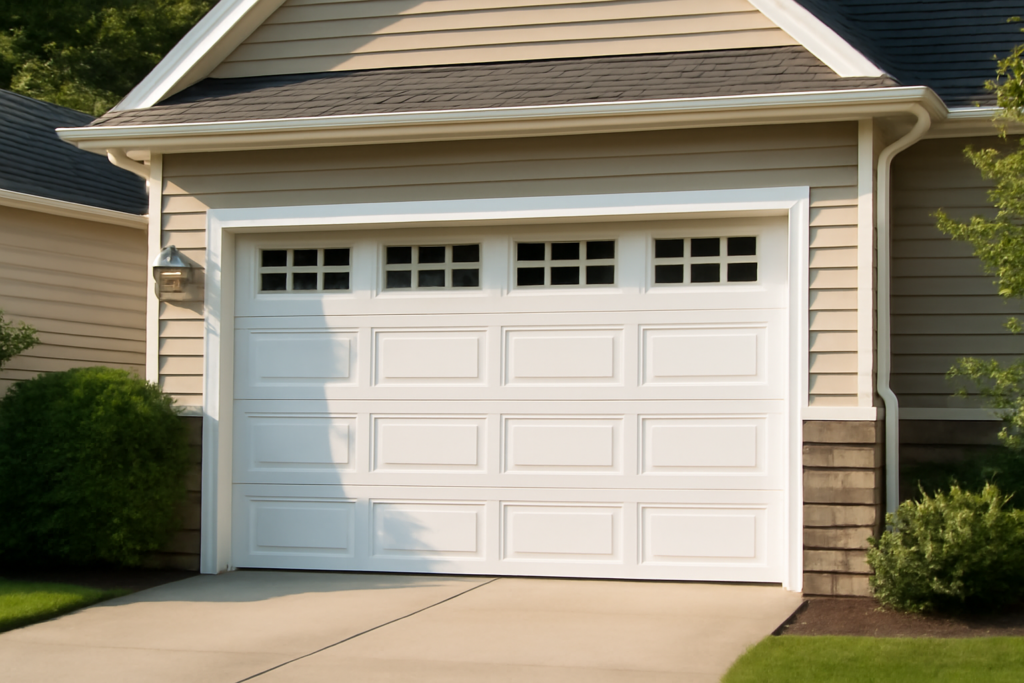
If you have ever dented a steel garage door with a basketball or repainted a peeling wood one, the appeal of a low-maintenance alternative is easy to understand. Vinyl garage doors are built around a tough fiberglass or polymer construction that resists dents, rust, and rot, making them a smart pick for busy families and harsh climates alike. They are not the cheapest option, but their durability and near-zero upkeep often pay off over the life of the door. Here is what you need to know before you buy.
What Are Vinyl Garage Doors
The term covers doors made from durable polymer and fiberglass-reinforced materials, often with a steel frame inside for strength. The vinyl surface is colored throughout or coated, so scratches and scuffs are far less noticeable than chips in painted steel or wood. Many models include foam insulation between the panels, improving energy efficiency and reducing noise.
These doors are sometimes marketed as dent-resistant or impact-resistant doors, and that is their headline strength. The material flexes rather than crumpling on impact, which makes them popular for homes with kids and active driveways.
Key Benefits
- Dent resistance: The flexible surface bounces back from impacts that would crater a steel door.
- No rust or rot: Vinyl will not corrode in coastal salt air or rot in humid climates the way wood can.
- Low maintenance: No painting or staining; an occasional rinse with a garden hose keeps them clean.
- Insulation options: Insulated models help moderate garage temperature, useful for attached garages and workshops.
- Color retention: Quality vinyl resists fading, though darker colors can still lighten over many years of sun.
Drawbacks to Consider
Vinyl garage doors are not flawless. Color and style selection is more limited than steel, and you generally cannot repaint them to a new color later. In very cold climates, the material can become more brittle, and extreme, prolonged sun exposure may eventually fade darker finishes. They also tend to cost more upfront than basic single-layer steel doors.
For most homeowners, those trade-offs are minor compared with the long-term savings on repairs and refinishing, but they are worth weighing if you want a bold custom color or live in an extreme climate.
Cost Expectations
Pricing varies with size, insulation, and hardware, but general ranges help with budgeting. A single-car vinyl door typically runs $700 to $1,500 installed, while a double-car door commonly falls between $1,200 and $3,000 installed. Insulated and decorative models sit at the higher end. Professional installation usually adds $200 to $600 depending on whether old door and opener removal is included.
Compared with premium wood doors that can exceed $4,000 and require ongoing refinishing, vinyl often delivers a strong value over a 15- to 20-year lifespan.
Vinyl vs Steel vs Wood
- Vinyl: Best for dent resistance and zero maintenance; mid-to-upper price; limited colors.
- Steel: Most popular and versatile, widely available, paintable, but dents and can rust if the coating chips.
- Wood: Most beautiful and customizable, but heavy, expensive, and needs regular refinishing.
If your top priorities are durability and forgetting about maintenance, vinyl edges out the alternatives. If you want the widest style selection at the lowest price, steel is hard to beat.
Insulation and R-Value
If your garage is attached to the house, used as a workshop, or sits in a climate with hot summers or cold winters, insulation is worth paying for. Insulated vinyl doors sandwich foam between layers, raising the R-value, which measures resistance to heat flow. A higher R-value means a more stable garage temperature and less energy lost through the door, which can matter if your HVAC ducts or water heater share the space. Insulated doors are also noticeably quieter and more rigid than single-layer models, so they feel more solid in daily use.
For a detached garage used only for parking, basic insulation may be plenty. For an attached or heated garage, prioritize a well-insulated model even at a higher upfront cost.
Styles and Curb Appeal
While vinyl offers fewer colors than steel, manufacturers have expanded design options considerably. You can find raised-panel, flush, and carriage-house styles, along with window inserts and decorative hardware that mimic the look of traditional doors. A garage door often makes up a large share of a home’s street-facing facade, so the style you choose has an outsized effect on curb appeal. Match the door’s panel design to your home’s architecture, and choose window placement that complements your entry and trim.
Choosing a Reputable Installer
Even a great door performs poorly if it is installed badly. Look for an installer who handles the springs, tracks, and opener as part of the job, since garage door springs are under high tension and dangerous to adjust without training. Ask whether old door and opener removal is included, confirm the warranty on both the door and the labor, and get the safety auto-reverse feature tested before the crew leaves. A professional installation protects both the door’s lifespan and your safety.
Maintenance Made Simple
Caring for a vinyl garage door takes minutes a few times a year. Rinse the surface with a hose and wipe stubborn spots with mild soap and water; skip harsh solvents and abrasive scrubbers. Lubricate the rollers, hinges, and springs twice a year with a garage-door-specific lubricant, and test the auto-reverse safety feature regularly by placing an object in the door’s path. Inspect the weatherstripping along the bottom annually and replace it when it cracks.
Climate Considerations
Where you live should influence your choice. In coastal regions, vinyl’s immunity to rust and salt corrosion is a major advantage over steel, which can pit and streak in salty air. In hot, sunny climates, choose a lighter color or a UV-stable finish to limit fading on the sun-facing facade. In very cold northern climates, ask the manufacturer about cold-weather performance, since some materials become more brittle in deep freezes; an insulated model also helps keep the garage and any attached living space more comfortable. Matching the door to your climate extends its life and keeps it looking good.
Is a Vinyl Garage Door Worth It?
For homeowners who value durability and a maintenance-free exterior, vinyl garage doors are a strong choice, especially in coastal, humid, or high-activity settings. They cost more than entry-level steel but reward you with years of dent-free, paint-free service. If you crave a dramatic custom look or a wide color palette, you may prefer steel or wood. For most families wanting a tough, good-looking door they can essentially ignore, vinyl delivers.
Prefer to explore on your own?
See how new flooring looks in your actual room in seconds — free, no signup.
Try the free Floor Studio →