Walk into almost any rental apartment, starter home, or budget-conscious office and you will see the same window covering: rows of slim horizontal slats that tilt open and pull up out of the way. Vinyl mini blinds are the workhorse of American windows, and there is a reason they are everywhere. They are inexpensive, durable, moisture-resistant, and they go up in minutes. They will never be a luxury statement, but for kitchens, bathrooms, rentals, and any room where function and budget matter most, they are tough to beat. This guide covers sizing, options, installation, and care.
What Vinyl Mini Blinds Are
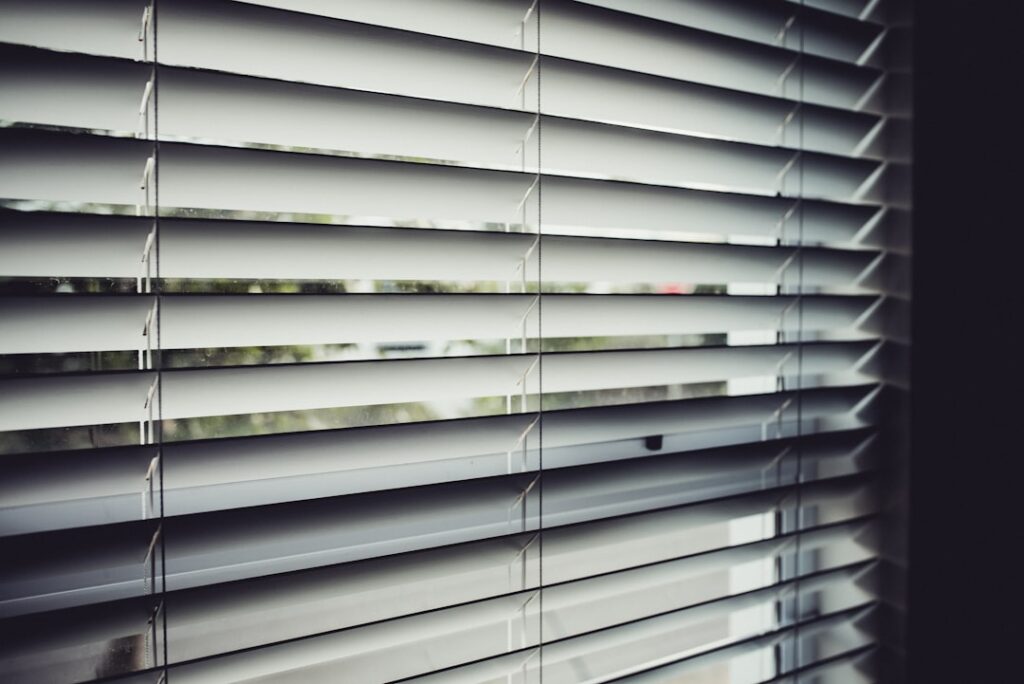
Mini blinds are horizontal blinds with narrow slats, typically 1 inch wide, that tilt to control light and privacy and raise with a cord or wand. The “vinyl” refers to the slat material, a flexible PVC plastic that is lightweight, affordable, and impervious to moisture. They differ from the wider 2-inch faux wood or aluminum blinds, and from the even narrower micro blinds.
That 1-inch slat profile gives a clean, compact look and lets the blinds stack tightly at the top when raised, leaving more of the window clear. The vinyl construction is what keeps the price low and the maintenance minimal.
Why Homeowners Choose Them
The appeal is entirely practical, and for the right room that is exactly the point.
- Affordable: Among the cheapest window coverings available, often under $20 per window.
- Moisture-resistant: Vinyl will not warp, swell, or rot, making it ideal for bathrooms and kitchens.
- Easy to clean: A quick wipe handles dust, grease, and splashes.
- Light control: Tilt the slats for anything from full privacy to bright, filtered light.
- Simple installation: Most go up with a few screws in under 15 minutes.
For landlords furnishing multiple units, families on a budget, or anyone covering a lot of windows at once, the value is hard to argue with.
Measuring for the Right Fit
Accurate measurement is the most important step, and the approach depends on whether you mount the blinds inside the window frame or outside on the wall above it.
Inside Mount
For a clean, built-in look, measure the exact width of the window opening at the top, middle, and bottom, then use the narrowest measurement. Measure the height from the top of the opening to the sill. Most manufacturers automatically deduct a small amount for clearance, so order the exact opening size.
Outside Mount
To block more light or cover a shallow frame, mount outside the opening. Measure the area you want to cover and add 1.5 to 3 inches on each side and on top for better coverage and overlap.
Options to Consider
Even within the budget category there are choices that affect look and function. Standard vinyl mini blinds come in white, off-white, and a handful of neutral colors. Some lines offer cordless lift mechanisms, a worthwhile upgrade for child and pet safety since dangling cords are a recognized hazard.
You can also choose between a cord-tilt and a wand-tilt design, and between routed slats with visible cord holes and routeless slats that block more light for better privacy and darkening. For bedrooms, the routeless or “privacy” option keeps light from leaking through the slat holes.
Installation Basics
Hanging mini blinds is a genuinely easy DIY job requiring only a drill, screws, a pencil, and a level. The process is the same for most brands:
- Hold the headrail in position and mark the bracket locations.
- Screw the mounting brackets into the window frame (inside mount) or wall (outside mount).
- Snap the headrail into the brackets until it clicks.
- Attach the valance clip and slide the decorative valance over the headrail.
- Test the tilt and lift to confirm smooth operation.
If the blinds are slightly too wide for an inside mount, most vinyl blinds can be cut down at home-improvement stores or trimmed with the right tool. Measure twice before any cutting, since the adjustment is permanent.
Cleaning and Maintenance
This is where vinyl really earns its keep. For routine dusting, run a microfiber cloth or a dedicated blind duster along the closed slats, then flip them and repeat. For greasy kitchen blinds or grimy bathroom slats, a damp cloth with a little dish soap wipes them clean, and because vinyl is waterproof you never have to worry about water damage.
For a deep clean, some homeowners take the blinds down, lay them in a bathtub with warm soapy water, rinse, and hang them to dry. Avoid abrasive scrubbers that scratch the finish, and dry the slats before raising the blinds to prevent water spots.
How They Compare to Alternatives
Vinyl mini blinds are not the only game in town, and knowing the trade-offs helps you decide. Faux wood blinds look more upscale and offer wider slats but cost more and add weight. Aluminum mini blinds are sleeker and more durable but can dent and bend. Cellular shades insulate better and look softer but carry a higher price tag.
For pure value, moisture resistance, and ease of care, vinyl wins, which is exactly why it dominates rentals and high-moisture rooms. Reach for them when budget and function lead the decision, and step up to faux wood or fabric shades when appearance is the priority. Picked and installed thoughtfully, vinyl mini blinds deliver reliable, no-fuss light control for years at a price almost any homeowner can absorb.
Where Vinyl Mini Blinds Work Best
Knowing the right rooms helps you spend wisely. Vinyl shines anywhere moisture, grease, or budget is a factor, which covers a surprising amount of the house. They are a natural fit for bathrooms, where humidity would warp wood, and for kitchens, where cooking grease wipes right off the slats.
- Bathrooms: Moisture-proof and easy to wipe clean of steam and splashes.
- Kitchens: Grease and food splatter clean off without staining.
- Rental units and basements: Affordable, durable, and easy to replace.
- Garages and utility rooms: Tough enough for high-use, low-priority spaces.
For formal living rooms, primary bedrooms, and showpiece windows, you may want a richer-looking treatment. But for the practical rooms that make up most of a home, vinyl delivers exactly what you need without overspending.
Lifespan and When to Replace
With normal use, vinyl mini blinds last several years, though they are inexpensive enough that replacing them is no hardship. The most common failure points are the lift cords fraying, the tilt mechanism wearing out, and individual slats cracking or yellowing from sun exposure over time.
South- and west-facing windows take the most ultraviolet punishment, and over years the slats there may grow brittle or fade. When the slats no longer tilt evenly, the cord sticks, or the color has yellowed noticeably, it is usually cheaper and faster to swap in a new set than to repair the old one. Because a replacement runs as little as $15 to $30 per window and installs in minutes, keeping your windows looking fresh is one of the lowest-cost upgrades in the entire house.
Aluminum Mini Blinds: When Metal Is the Better Choice
Aluminum mini blinds look almost identical to vinyl from across the room, but the metal slats behave differently in sun, heat and daily use. They usually cost a little more than the most basic vinyl sets while still sitting well within the budget range, and in certain rooms they outlast plastic by years. Knowing those differences helps you decide which material belongs on each window.
How Aluminum Slats Differ From Vinyl
Aluminum slats are thin, lightly curved strips of metal with a baked enamel or powder finish. That curve gives them stiffness, so they hang flatter and stay straighter over wide windows than flexible vinyl, which can sag over time. Aluminum also does not yellow or turn brittle from ultraviolet exposure, which makes it a strong pick for sunny south and west facing windows where vinyl tends to fade first. Because the material is lighter for its strength, aluminum blinds raise and lower with less effort, a real plus on larger windows. The trade-off is that metal slats can crease or dent if they are bumped, grabbed or caught by a pet, and a bent slat stays bent.
Slat Quality and Finish Options
Not every aluminum blind is built the same. Better sets use a thicker gauge of metal and more slats per foot of height, which improves privacy and helps slats spring back from light contact. Thin, economy slats feel flimsy and kink easily. Finishes range from standard white and neutrals to brushed metallic, matte black and a wide range of colors, plus anti static coatings that help repel dust. Half inch micro slats give a fine, modern look on small windows and doors, while the standard 1 inch slat suits most rooms. A sturdy steel headrail and quality tilt mechanism matter as much as the slats themselves.
Best Rooms for Aluminum
Aluminum shines in sunrooms, home offices, kitchens with strong afternoon light and any window that gets direct sun for hours. It handles humidity well, though in a steamy bathroom, check that the hardware and ladder cords are rated for moisture so nothing corrodes. Many people also like the crisp, slim profile in contemporary rooms. In high traffic spots, such as a window beside a busy doorway or at child height in a playroom, vinyl may survive rough handling better.
Safety and Everyday Care
Choose cordless lift aluminum mini blinds or a wand control model whenever children or pets live in or visit the home. Dangling loops and lift cords are a strangulation hazard, and cordless designs remove that risk while also looking cleaner. If you keep corded blinds, install cord cleats high on the frame and keep cribs, beds and furniture away from the window. For cleaning, dust closed slats with a microfiber cloth and wipe with mild soapy water; avoid harsh scrubbing that can scratch the enamel. Run your fingers gently along each slat rather than gripping it, which prevents creases. If a single slat gets badly bent, many sets allow you to replace it, though a new blind is often just as practical.
Prefer to explore on your own?
See how new flooring looks in your actual room in seconds — free, no signup.
Try the free Floor Studio →