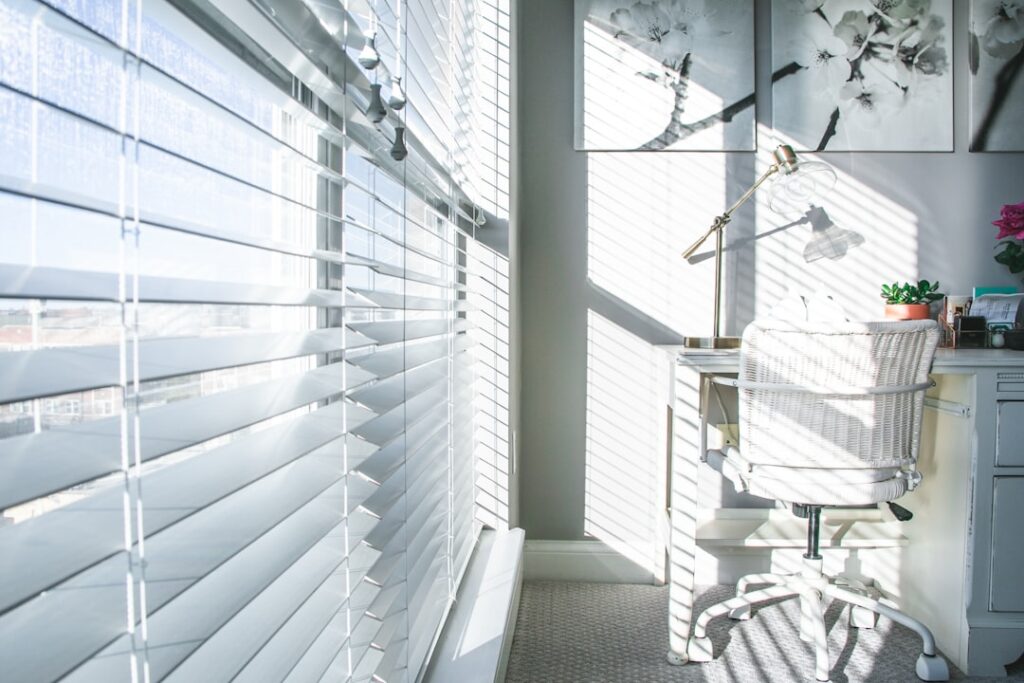
For roughly the cost of a few takeout dinners, you can cover an entire home’s windows with blinds that resist moisture, shrug off sunlight, and wipe clean with a damp cloth. Vinyl window blinds are the workhorse of affordable window treatments, and they have quietly improved a great deal from the flimsy mini-blinds many people remember. Knowing where they shine, and where they fall short, helps you spend your money wisely room by room.
Part of our Windows & Doors guide — explore the full guide →
What Vinyl Blinds Are Made Of
Vinyl blinds are manufactured from PVC, the same durable plastic family used in pipes, siding, and luxury vinyl flooring. The slats are extruded or rolled into thin, flexible strips that resist water, humidity, and fading. Because PVC does not absorb moisture, it will not warp or swell the way real wood can, which makes vinyl a natural fit for bathrooms and kitchens.
You will see vinyl blinds sold as horizontal slat blinds in widths of 1 inch (often called mini-blinds), 2 inch, and 2.5 inch. Vertical vinyl blinds, with long slats that hang from a top track, are common on sliding patio doors and wide windows.
The Real Advantages
Vinyl earns its popularity through a short list of genuine strengths:
- Price: Standard vinyl blinds run $5 to $25 per window for stock sizes, far below faux wood or fabric options.
- Moisture resistance: They tolerate steam and splashes, ideal for bathrooms, laundry rooms, and over kitchen sinks.
- Low maintenance: A wipe with a damp microfiber cloth or a quick dusting keeps them clean. They do not stain or hold odors.
- Light control: Tilting the slats lets you fine-tune privacy and brightness, and closed slats block most direct light.
- Lightweight: Easy to raise, lower, and install, even on large windows.
The Honest Drawbacks
Vinyl is not the right answer everywhere. The thinner slats can feel insubstantial, and 1 inch mini-blinds in particular bend or crease if handled roughly. In windows that get intense, direct afternoon sun, lower-grade vinyl can become brittle or slightly discolor over many years, though quality has improved.
Vinyl also offers little insulation compared to cellular shades, so on a single-pane window in a cold climate it does little to slow heat loss. And while it imitates wood reasonably well from a distance, up close it reads as plastic. For a formal living room or a high-end remodel, faux wood or real wood blinds look more substantial.
Choosing the Right Slat Size
Slat width changes both the look and the function. Narrow slats suit small windows and tight spaces; wide slats suit larger windows and give a cleaner, more open view when raised.
- 1 inch: Best for small windows, rentals, and tight budgets. Stacks compactly but looks busiest.
- 2 inch: The most popular all-around choice, balancing appearance, light control, and view.
- 2.5 inch: Wider, more upscale appearance with fewer slats blocking the view when tilted open.
For sliding doors and floor-to-ceiling windows, vertical vinyl blinds are usually the practical pick since horizontal blinds that wide become heavy and hard to raise.
Measuring and Mounting
Accurate measurement is the difference between a clean fit and a frustrating return. Decide first between an inside mount, which sits within the window frame for a built-in look, and an outside mount, which covers the frame for better light blocking and the illusion of a larger window.
- For an inside mount, measure the width at the top, middle, and bottom of the opening, then use the narrowest measurement. Measure the height at left, center, and right and use the longest.
- For an outside mount, measure the area you want to cover and add 1.5 to 2 inches on each side for overlap.
- Confirm you have at least the minimum frame depth, usually 1.5 inches, for an inside-mount headrail.
Installation takes about 15 minutes per window with a drill and the included brackets. Most home centers also cut stock blinds to your exact width for free.
Cleaning and Care
This is where vinyl truly outclasses fabric and wood. For routine dust, run a microfiber cloth or a closed slat duster across the slats with them tilted nearly flat. For grease in a kitchen or grime in a bath, wipe with a cloth dampened in warm water and a drop of dish soap. Heavily soiled blinds can even be taken down and rinsed in a bathtub, something you would never do with real wood.
Avoid abrasive scrubbers, which scuff the finish, and dry the slats before raising them to prevent water spots. With this care, a set of quality vinyl blinds easily lasts 7 to 10 years.
Cordless and Child-Safe Options
Window-covering safety has changed in recent years, and it is worth factoring into your purchase, especially in homes with young children or pets. Traditional corded blinds pose a strangulation risk, which is why many manufacturers now offer cordless vinyl blinds that raise and lower with a gentle push or pull on the bottom rail, eliminating dangling cords entirely. Wand-tilt mechanisms replace the old tilt cord with a rigid wand that cannot loop around a neck. Cordless versions cost a few dollars more per window but are now widely available even in budget vinyl lines. If you do choose corded blinds for a low-traffic room, use the included cord cleats to wrap and secure the cords well out of a child’s reach. For nurseries and play areas, cordless is the clear, safer choice and well worth the small premium.
Are They Right for Your Home?
If you want dependable, washable coverage for bathrooms, kitchens, kids’ rooms, basements, or a rental, vinyl is hard to beat on value. If you are dressing a formal space, want serious insulation, or crave the heft of real wood, look at faux wood or cellular shades instead, and budget accordingly. Many homeowners mix the two, using vinyl window blinds in utility spaces and upgraded treatments in the rooms guests see most. That blend keeps the budget sensible while putting the right material on every window.
Prefer to explore on your own?
See how new flooring looks in your actual room in seconds — free, no signup.
Try the free Floor Studio →