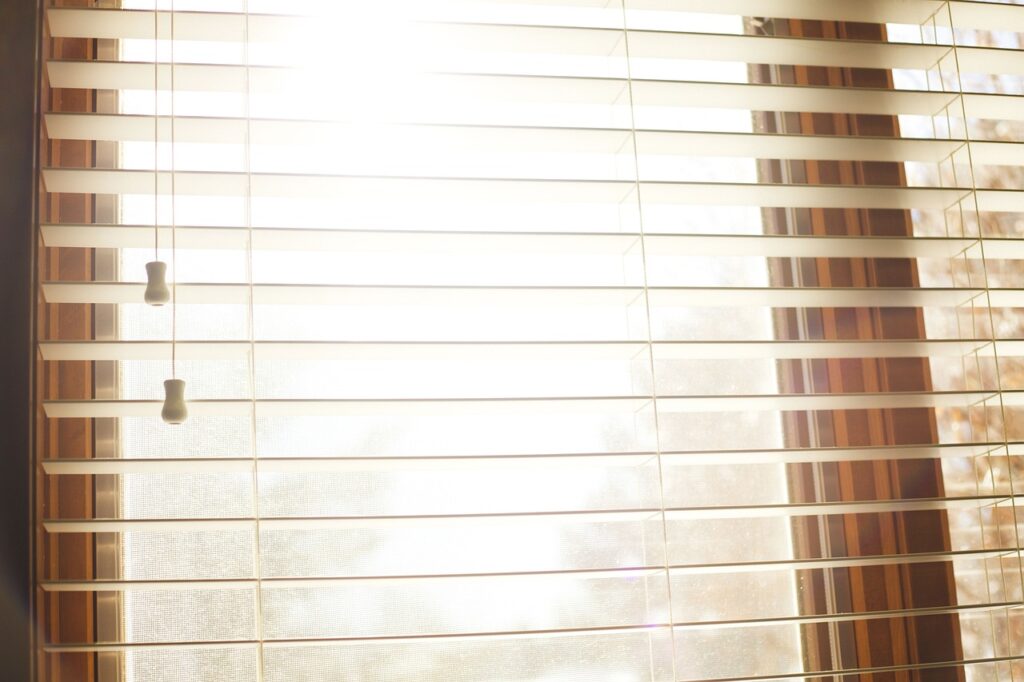
Dangling blind cords are more than an eyesore. They represent a serious strangulation hazard that injures or kills children every year, prompting the Consumer Product Safety Commission to push for mandatory cordless standards across the industry. Cordless window blinds eliminate this risk entirely while delivering a cleaner, more modern look than their corded predecessors. With prices dropping steadily as cordless becomes the default, there has never been a better time to upgrade every window in your home.
Part of our Windows & Doors guide — explore the full guide →
How Cordless Blinds Work
Cordless blinds use an internal spring or tension mechanism housed inside the headrail. Instead of pulling a cord to raise or lower the blinds, you simply push the bottom rail up with your hand to raise them and pull it down to lower them. The internal mechanism holds the blinds at any position you choose through friction or a ratcheting system.
Higher-end cordless blinds use a balanced spring system that makes the blinds feel nearly weightless when adjusting. Budget models rely on a simpler friction-lock mechanism that may feel stiffer over time. Both designs are significantly more reliable than they were even five years ago, with most quality brands offering five to ten year warranties on the cordless mechanism.
Types of Cordless Blinds
Nearly every blind style is now available in a cordless version. The most popular options include:
- Cordless faux wood blinds: The most popular choice for living rooms, bedrooms, and offices. PVC or composite slats mimic real wood at a fraction of the cost. Moisture-resistant and easy to clean. $15 to $40 per window for standard sizes
- Cordless cellular (honeycomb) shades: Excellent insulation with air pockets that trap heat in winter and block heat in summer. Available in light-filtering and blackout fabrics. $20 to $60 per window
- Cordless roller shades: Minimalist fabric shades that roll up into a compact tube at the top. Clean modern aesthetic. $15 to $50 per window
- Cordless mini blinds: Aluminum slats in 1-inch width. Most affordable cordless option at $8 to $20 per window. Best for kitchens, bathrooms, and utility spaces
- Cordless real wood blinds: Basswood or bamboo slats with a premium natural look. $40 to $100 per window. Best for formal living spaces
Benefits Beyond Child Safety
While eliminating cord hazards is the primary advantage, cordless window blinds offer several additional benefits that make them superior to corded versions:
Clean aesthetics rank high on the list. Without cords, tassels, and cleats cluttering the window frame, the blinds present a streamlined appearance that complements modern interiors. The lack of hanging hardware also means less dust collection and easier cleaning.
Durability improves because cordless mechanisms have fewer failure points. Corded blinds frequently break when cords fray, tangle, or when the pulley mechanism fails. Cordless systems have fewer moving parts, and the ones they do have are protected inside the headrail. Pet owners appreciate cordless blinds especially, as cats and dogs notorious for chewing and tangling cords cannot damage a system that has none.
Measuring and Ordering
Accurate measurements are critical for cordless blinds because you cannot adjust fit after installation the way you might with a curtain. Decide between an inside mount (blinds sit inside the window frame) and an outside mount (blinds cover the frame and extend beyond it).
- Inside mount: Measure the width at three points (top, middle, bottom) and use the narrowest measurement. Measure height at three points (left, center, right) and use the longest measurement. Minimum depth of 1.5 to 2.5 inches is required depending on blind type
- Outside mount: Measure the full area you want to cover, adding 1.5 to 3 inches on each side for light overlap. No depth requirement since the blinds mount on the wall or trim face
Many retailers including Home Depot, Lowe’s, and Blinds.com offer custom-cut cordless blinds at only a modest premium over stock sizes. Custom sizing ensures a perfect fit that eliminates light gaps and looks intentional. Expect to pay 20% to 40% more than stock sizes for custom width and height.
Installation Guide
Most cordless blinds install in 10 to 15 minutes per window with a drill, screwdriver, and level. Inside-mount brackets screw into the top of the window frame header. Outside-mount brackets attach to the wall or trim face above the window. The blind headrail snaps or slides into the mounted brackets.
For inside mounts, pre-drill screw holes to prevent splitting the wood frame. Use wall anchors if mounting outside on drywall without studs behind. Each bracket typically supports 5 to 15 pounds, which is more than adequate for standard residential blinds. Verify that the blind operates smoothly after installation by raising and lowering it fully three to four times. If the mechanism sticks, check that the brackets are level and not pinching the headrail.
Motorized Cordless Options
Motorized blinds take the cordless concept further by adding remote control, smartphone app control, or smart home integration. A button press or voice command through Alexa, Google Home, or Apple HomeKit raises and lowers the blinds without touching them. Motorized options cost $60 to $200 per window for battery-powered models and $100 to $400+ for hardwired versions.
Battery-powered motorized blinds from brands like Levolor, Bali, and IKEA Fyrtur use rechargeable lithium batteries that last 6 to 12 months between charges depending on usage. Hardwired motorized blinds by Lutron and Hunter Douglas connect to your home electrical system and never need battery changes. The ability to program schedules (blinds open at sunrise, close at sunset) adds convenience, energy savings, and a lived-in look when you are away from home.
Maintenance and Troubleshooting
Cordless blinds require minimal maintenance. Dust slats or fabric monthly with a microfiber duster or the brush attachment on your vacuum. For faux wood and aluminum blinds, wipe with a damp cloth and mild soap for deeper cleaning. Fabric cellular shades can be spot-cleaned with a damp cloth or lightly vacuumed with an upholstery attachment.
The most common issue with cordless blinds is uneven raising, where one side lifts higher than the other. This usually means the internal cord (yes, there is a cord inside, just not accessible from outside) has slipped on one side. Most manufacturers provide instructions for resetting the mechanism by fully lowering the blind, then slowly raising it again. If the mechanism feels loose or will not hold position after two to three years of use, contact the manufacturer for a warranty replacement of the headrail mechanism before replacing the entire blind.