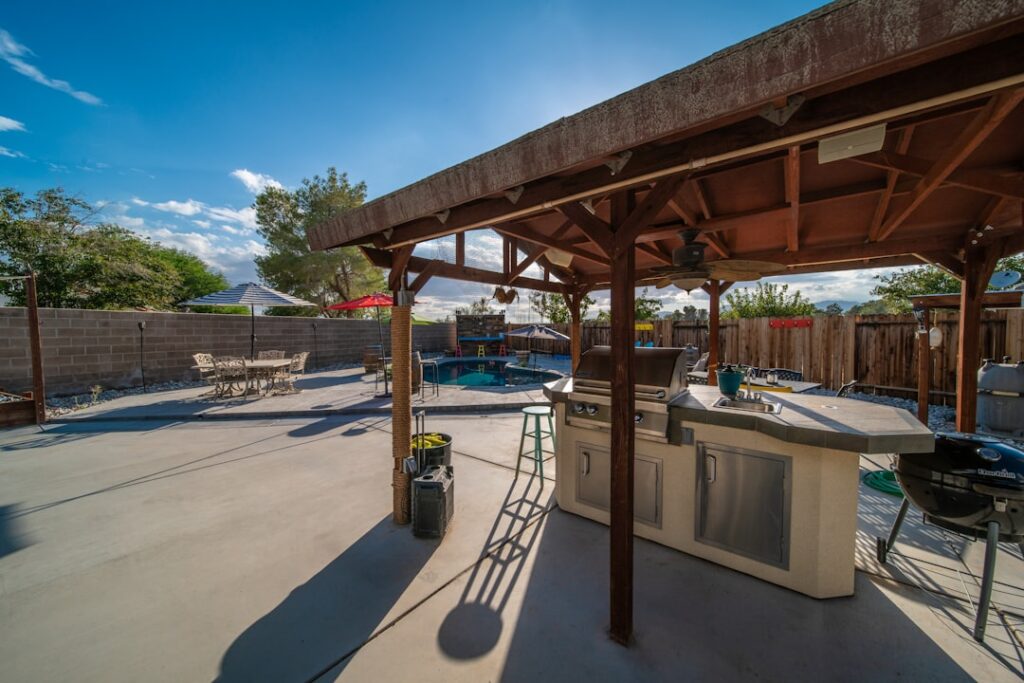
A patio is only as usable as it is comfortable, and harsh sun or sudden rain can cut your outdoor time short. Vinyl patio covers solve that by adding durable, low-maintenance shade overhead, extending your living space outdoors without the upkeep that wood structures demand. They resist rot, insects, and fading, and they keep their clean white appearance with little more than an occasional rinse.
From solid roof panels that block sun and rain to open lattice designs that filter light, vinyl covers come in styles to match nearly any backyard. This guide walks through the types available, their advantages and drawbacks, how installation works, and what you should budget for the project.
What Vinyl Patio Covers Are
A vinyl patio cover is an overhead structure, supported by posts and beams, that shades a patio or deck. The framing and panels are made from rigid PVC vinyl, often reinforced with aluminum inserts in the load-bearing members for strength. Unlike paint-and-stain wood, the vinyl color runs through the material, so it will not peel, rot, or need refinishing.
These covers attach to the house or stand freestanding, and they range from simple flat-roofed shade structures to full pergola and patio-room designs. The appeal is a clean, bright, modern look that holds up to weather and asks very little of you in return.
Common Styles
Vinyl covers come in a few main configurations, each delivering a different balance of shade and openness:
- Solid roof covers: Continuous panels that block direct sun and shed rain, creating a fully shaded, dry area beneath.
- Lattice (open) covers: A grid of vinyl rafters that filters sunlight into dappled shade while keeping an airy, open feel.
- Combination covers: A solid section over the seating area paired with lattice elsewhere, blending full shade with light filtering.
- Insulated patio covers: Solid panels with a foam core that reduce heat transfer and noise for a cooler, quieter space underneath.
Solid covers suit those who want reliable protection from sun and rain, while lattice appeals to anyone who prefers filtered light and a more decorative, pergola-like look.
Advantages of Vinyl
Vinyl earns its popularity through low maintenance and durability. The standout benefits include:
- No painting or staining: The color is built in, so there is no refinishing cycle to keep up with.
- Rot- and pest-proof: Vinyl will not rot, warp from moisture, or fall prey to termites the way wood can.
- Easy cleaning: A rinse with a hose or a wipe with mild soap keeps it looking fresh.
- Weather resistance: Quality vinyl resists fading, cracking, and moisture damage over years of exposure.
For homeowners who want to enjoy their patio rather than maintain it, that hands-off ownership is the main draw.
Drawbacks to Consider
Vinyl is not perfect, and weighing the downsides helps set expectations. In very hot climates, vinyl can become brittle over many years of intense UV exposure, and some products yellow slightly with age, though modern formulations resist this better than older ones. Color choices are typically limited compared with paintable wood, with white and a few neutral tones dominating.
Structurally, vinyl spans are limited, so large covers rely on aluminum reinforcement and more posts. In regions with heavy snow loads, you must confirm the cover is rated for the weight, since vinyl is less forgiving than steel framing. Finally, while clean and modern, vinyl lacks the natural warmth and grain that some homeowners prefer in wood.
It also helps to think about how the cover changes the space below. A solid roof creates deep, reliable shade but can make the patio feel darker and may need gutters to handle runoff, while a lattice design keeps things bright and airy but lets sun and rain filter through. If you want the best of both, a combination cover or the addition of a clear polycarbonate roof panel over part of the structure lets light through while still shedding water, a popular compromise for entertaining areas.
Installation Overview
Many vinyl patio covers are sold as kits with pre-cut, pre-engineered components, which makes installation more approachable. The general process involves setting and anchoring support posts on a solid footing, attaching a ledger board to the house for attached designs, installing the beams and rafters, and securing the roof panels or lattice on top. Snapping fasteners and interlocking pieces speed the work considerably.
That said, this is a structural project. Footings must be sized and anchored correctly, the cover must be rated for your local wind and snow loads, and attached covers must be flashed and sealed where they meet the house to prevent leaks. Most areas require a building permit for a permanent cover, so check local codes before you start. Unless you are an experienced DIYer, hiring a qualified installer ensures the structure is safe, code-compliant, and properly sealed.
Cost Expectations
Cost depends on size, style, and whether you install it yourself. As a rough guide, materials for a basic vinyl patio cover kit often run from about $15 to $40 per square foot, with insulated solid covers at the higher end. A typical attached cover for a modest patio might land somewhere between $3,000 and $10,000 installed, while large or custom structures cost more. Professional installation adds labor but ensures proper engineering and permitting. Treat these as estimates that vary by region, design, and installer.
When comparing quotes, factor in the long-term savings of skipping paint, stain, and rot repairs that a wood structure would require over its life. The lower maintenance often narrows the gap in total cost of ownership.
Maintenance and Longevity
Keeping a vinyl patio cover looking good is genuinely easy. Rinse it with a garden hose a few times a year to remove dust and pollen, and wash stubborn spots with mild soap and a soft brush, avoiding abrasive cleaners that can dull the surface. Clear leaves and debris from the top of solid covers so water drains freely, and check the fasteners and any caulked seams at the house periodically.
With this minimal care, a quality vinyl patio cover can last many years while retaining its clean appearance and structural integrity. For homeowners who want more usable outdoor space with as little upkeep as possible, it remains one of the most practical shade solutions available.
Prefer to explore on your own?
See how new flooring looks in your actual room in seconds — free, no signup.
Try the free Floor Studio →