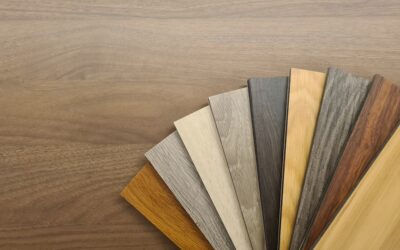
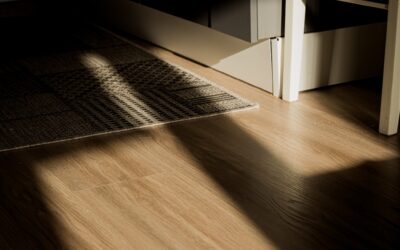
While most modern LVP comes in 6 to 9-inch wide planks, vinyl strip flooring in 1.5 to 3.5-inch widths is making a comeback. The narrow format references traditional 2 1/4-inch oak strip hardwood — the standard residential floor in 1900-1960 American homes — and works in spaces where wide-plank reads as too modern or out of period. This guide covers what vinyl strip is, where it fits, and which brands sell it.
Why Strip Width Matters Visually
Plank width affects how a floor reads in a room. Wide planks (7-9 inches) emphasize horizontal lines and contemporary spaciousness; narrow strips (1.5-3.5 inches) read as traditional, busy, and period-appropriate.
For Craftsman bungalows, Foursquare homes, Federal-style colonials, and pre-1960 homes generally, narrow strip in 2 1/4 to 3 1/4-inch widths matches the original architectural intent. Wide-plank in those homes reads as a modernization rather than a renovation. Strip vinyl gives the period-correct width with vinyl’s water resistance and easy install.
Strip Width Options
Vinyl strip flooring comes in several width ranges:
- 1.5 inch — narrow strip, formal/period look, less common
- 2.25 inch — traditional residential strip, matches 1900-1960 oak strip dimension
- 3 inch — wider strip, transitional aesthetic
- 3.5 inch — borderline strip/plank, contemporary-traditional
For period-correct restoration, 2 1/4-inch matches original hardwood. For transitional homes, 3 to 3.5-inch reads as period-influenced without being strict period.
Top Vinyl Strip Brands
COREtec Pro Plus Designer — narrow plank line including 2.5 and 3.5-inch widths in oak and maple decors. SPC core, 12-22mil wear layer. $4-7 per sq ft material.
Karndean Korlok Reserve — 2.25-inch and 3-inch widths in their premium line. Glue-down or click-lock available. $5-9 per sq ft.
Mannington Adura Max Apex — 3-inch and 3.5-inch widths. SPC core, 20mil wear layer. $4-7 per sq ft.
Shaw Floorte Pro — 2.65-inch and 3-inch widths in select collections. $3-5 per sq ft.
Mohawk SolidTech Plus — 3.5-inch widths in their premium tier. $3-6 per sq ft.
Most premium LVP brands offer at least one strip-width option. Stock at big-box stores is limited; specialty showrooms and online direct retailers carry the broader strip selection.
Where Vinyl Strip Works
Best applications for narrow strip vinyl:
- Period and restoration homes — Craftsman, Foursquare, Federal colonials, pre-1960 homes generally
- Traditional kitchens — narrow strip reads as wood floor, scales appropriately to typical kitchen size
- Formal dining rooms — period detail matches traditional furniture and trim
- Hallways and stairs — narrow strips bring visual rhythm to long narrow spaces
- Small rooms — wide planks can overwhelm under-150 sq ft spaces; strips scale better
Avoid in: large open-plan spaces (the busy pattern competes with the openness), modern minimalist homes (architecturally inconsistent), wide-open contemporary kitchens.
Strip vs Wide Plank Install Differences
Narrow strip vinyl installs the same as wide plank but with more pieces per square foot:
- ~3x more individual pieces per sq ft vs wide plank
- ~2x the install time per sq ft
- Higher importance of subfloor flatness (small pieces hide less imperfection)
- More careful pattern stagger (8-12 inches minimum, longer is better)
Plan for 30-40% more install time on a strip-format job versus equivalent wide-plank LVP. The result is a more refined, traditional-looking floor that justifies the additional labor.
Pattern and Layout
Strip flooring patterns favor specific layouts:
- Random staggered — most common, end seams stagger 8-16 inches between adjacent rows
- Brick pattern — 50-50 stagger, more formal, reads as traditional brick layout
- Herringbone — strip pieces in herringbone is unusual but striking, requires specific narrow-strip products designed for the pattern
For period homes, random stagger matches original hardwood install patterns. Brick pattern works in modern homes that want the traditional width but contemporary install pattern.
Color Selection
Period-appropriate colors for narrow strip:
- Honey oak — classic 1900-1960 American color, fits Craftsman and Foursquare
- Medium walnut — formal traditional, dining and library applications
- Warm brown maple — slightly more contemporary, works in transitional homes
- Light oak — Mission and Arts & Crafts aesthetic
- Reclaimed barnwood — farmhouse and rustic-traditional
Avoid the trendy 2018-2023 cool greys and whitewashed looks for period applications — those date the floor to a specific design window inappropriate for traditional homes.
Cost Comparison
Strip vinyl is typically priced similar to wide plank from the same brand line, sometimes 5-10% more for premium strip widths. Installation costs 20-30% more due to additional time. Total installed cost:
- Mid-tier strip LVP: $5-9 per sq ft installed
- Premium strip LVP (Karndean, COREtec Designer): $9-15 per sq ft installed
For a 200 sq ft kitchen in mid-tier strip, expect $1,000-1,800 total installed cost. For 600 sq ft of main-floor strip in premium grades, $5,400-9,000.
Care and Maintenance
Vinyl strip cares like all LVP — vacuum, damp mop with vinyl-specific cleaner, avoid steam mops. The narrow seams need slightly more attention to grit accumulation; vacuum more frequently along the strip seams to prevent seam scratching from trapped grit.
Spot-replacement of damaged strips is harder than with wide plank because each strip is smaller. Order 15% overage at original purchase rather than the typical 10% — getting matching strips later (especially in click-lock) can be impossible if the line discontinues.
Prefer to explore on your own?
See how new flooring looks in your actual room in seconds — free, no signup.
Try the free Floor Studio →