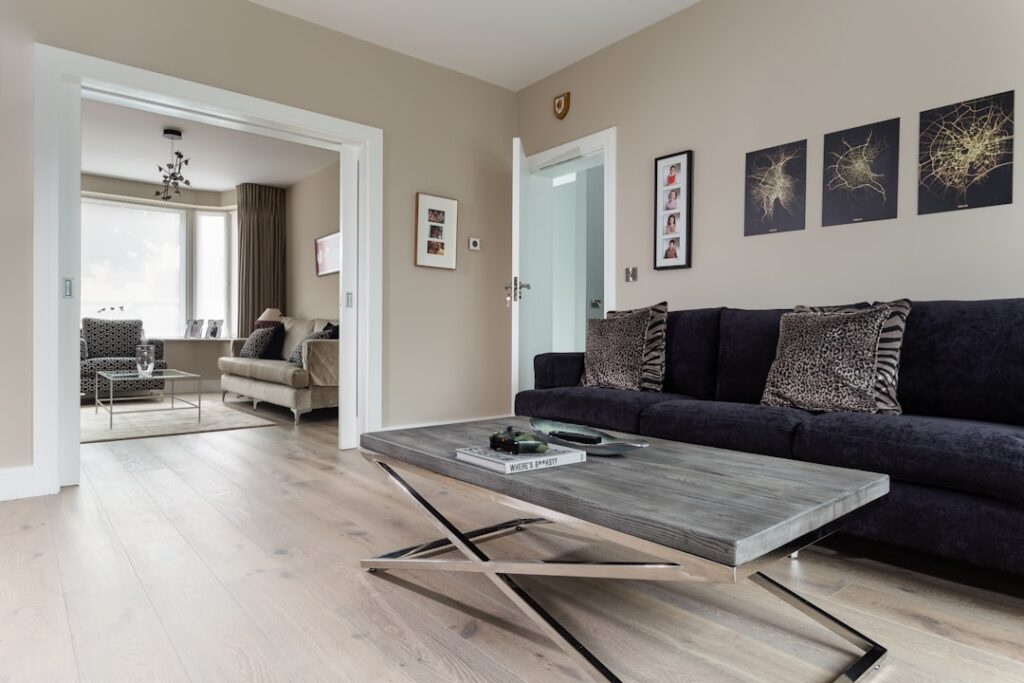
Vinyl and laminate look similar on the showroom floor, install the same way (click-lock floating), and cost roughly the same per square foot. So why does it matter which one you pick? Because underneath the surface, they are fundamentally different products that handle moisture, wear, and comfort in opposite ways. Understanding the vinyl vs laminate flooring pros and cons before you buy prevents expensive mistakes, especially in kitchens, bathrooms, and basements.
How They Are Made: The Core Difference
Laminate flooring has a core made of high-density fiberboard (HDF), which is essentially compressed wood fiber. A photographic image of wood grain is printed on top, and a clear melamine wear layer protects the surface. Because the core is wood-based, laminate absorbs water and swells when exposed to moisture.
Vinyl flooring (LVP/LVT) uses a core made of PVC-based materials: either SPC (stone polymer composite) or WPC (wood polymer composite). Neither contains any wood fiber. The surface features a printed vinyl layer topped with a urethane wear layer. Because the entire plank is synthetic, vinyl is inherently waterproof.
Water Resistance: Vinyl Wins Decisively
This is the most important distinction between the two products. Vinyl is 100% waterproof. Spills, pet accidents, and even standing water will not damage the core or cause swelling. Laminate, by contrast, swells and warps when water reaches the HDF core, and once that happens, the damage is permanent. You cannot dry out a swollen laminate plank and expect it to lie flat again.
For kitchens, bathrooms, laundry rooms, basements, and mudrooms, vinyl is the clear choice. Laminate belongs in dry rooms only: bedrooms, living rooms, offices, and hallways away from exterior doors.
Durability and Scratch Resistance
Laminate’s melamine surface is harder than vinyl’s urethane wear layer, giving it an edge in scratch resistance. Heavy furniture, pet claws, and dropped objects are less likely to leave visible marks on quality laminate. Brands like Pergo and Mohawk offer AC4 and AC5-rated laminates that handle commercial traffic.
Vinyl is softer, which means it dents more easily under concentrated pressure points like furniture legs and high heels. However, vinyl flexes instead of cracking. Drop a heavy pan on laminate and you might chip the surface permanently. Drop the same pan on vinyl and it will likely bounce without visible damage. Each material has a different durability strength: laminate resists scratches, vinyl resists impacts.
Comfort and Sound
Vinyl, particularly WPC-core products with attached padding, feels warmer and softer underfoot. It absorbs more sound and is quieter to walk on. SPC-core vinyl is firmer but still more comfortable than most laminate.
Laminate can sound hollow and produce a clicking noise when walked on, especially on concrete subfloors without a thick underlayment. Adding a premium underlayment ($0.30-$0.75/sq ft) helps, but laminate will never feel as cushioned as WPC vinyl.
Appearance and Realism
Both products use high-resolution printing to mimic real wood, stone, and tile. In 2026, the visual quality is nearly identical between comparable price tiers. Where they differ is in texture. Laminate’s hard surface produces a crisper, more wood-like feel when you run your hand across it. Vinyl feels slightly softer and more rubbery, which some people notice when walking barefoot.
Laminate also holds its appearance longer because the melamine surface resists fading from UV exposure better than vinyl. In rooms with large windows and direct sunlight, laminate maintains its color consistency over time, while some vinyl products fade or yellow.
Cost Comparison
- Budget laminate: $0.75-$2.00 per square foot
- Mid-range laminate: $2.00-$4.00 per square foot
- Budget LVP: $1.50-$2.50 per square foot
- Mid-range LVP: $2.50-$5.00 per square foot
- Installation (both): $1.50-$3.00 per square foot
At the budget end, laminate is cheaper. At the mid-range, vinyl costs slightly more but includes waterproofing that laminate cannot match. The total price difference for a 1,000-square-foot project is typically $500-$1,500 between comparable laminate and vinyl options.
Installation Difficulty
Both products use click-lock systems and float over the subfloor, making them popular DIY choices. Laminate planks are lighter and easier to handle but crack if forced together. Vinyl planks are heavier and more forgiving during installation because the material flexes slightly.
Cutting laminate requires a miter saw or laminate-specific cutter. Vinyl can be cut with a utility knife (score and snap) for straight cuts, making it slightly easier for first-time installers. Both require flat subfloors within 3/16 inch per 10 feet.
Lifespan and Warranty
Quality laminate lasts 15-25 years in dry conditions. Quality vinyl lasts 15-25 years as well, but unlike laminate, it survives moisture exposure throughout that lifespan. Both carry lifetime residential warranties from major brands, though laminate warranties typically exclude water damage, which is the most common way laminate fails.
Which Should You Choose?
Choose vinyl if you are flooring kitchens, bathrooms, basements, laundry rooms, or any space where moisture is a concern. Also choose vinyl if you have pets that have accidents, young children who spill frequently, or if you want a warmer, quieter floor.
Choose laminate if you want maximum scratch resistance in dry rooms like bedrooms and offices, prefer a harder surface feel, or need to save money on a large dry-area project. Understanding these vinyl vs laminate flooring pros and cons keeps you from putting the wrong product in the wrong room, which is the most common and most expensive mistake homeowners make with budget flooring.
Prefer to explore on your own?
See how new flooring looks in your actual room in seconds — free, no signup.
Try the free Floor Studio →