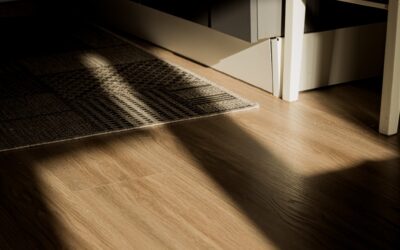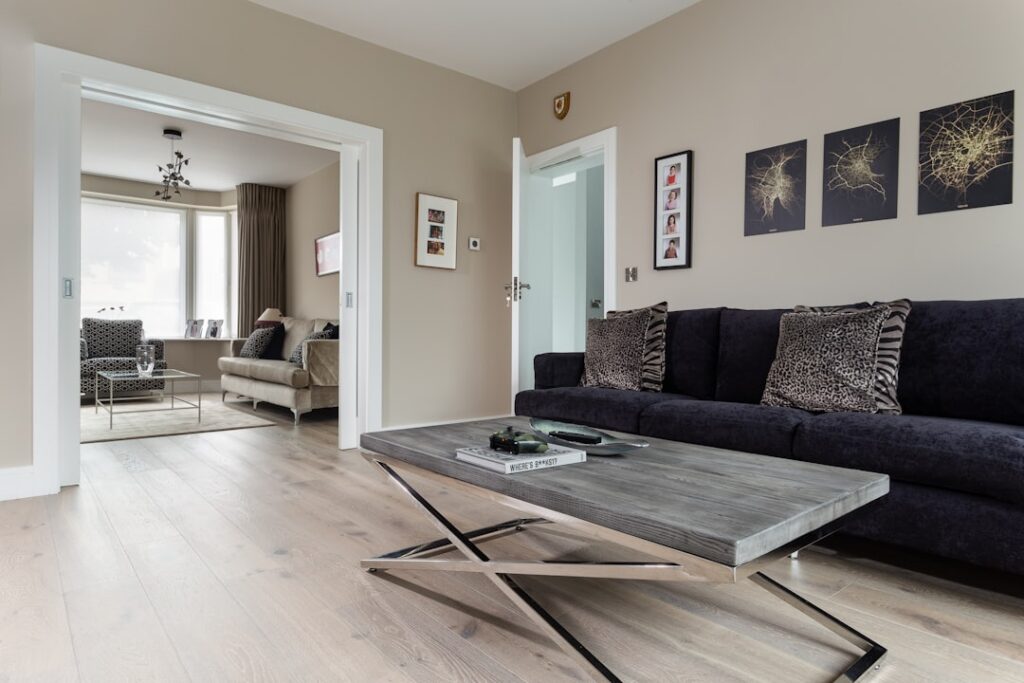
The two most popular budget-friendly hard surface floors in America today look nearly identical on a showroom display board, but they perform very differently once installed in a real home. The LVT vs laminate decision controls how your floor handles a dishwasher leak, a 70-pound dog with untrimmed nails, and the temperature swing in a Minneapolis basement. Both materials cost between $2 and $5 per square foot installed, both click together with a floating system, and both come in convincing wood-look visuals. The differences that matter sit one layer below the surface and only show up after a year or two of use.
The Core Construction Difference
Laminate flooring is a high-density fiberboard core (HDF, basically compressed wood pulp) with a printed paper image on top and a clear melamine wear layer above that. LVT (luxury vinyl tile, also sold as LVP for plank format) is a multi-layer plastic floor with a PVC core, a printed vinyl image layer, and a urethane wear layer.
That single difference (wood-based core versus plastic core) drives almost every performance difference between the two products. Wood swells when wet. Plastic does not. Wood is harder underfoot. Plastic is softer. Wood holds its profile in temperature swings. Plastic expands and contracts more.
Waterproofing: LVT Wins Clean
Most modern LVT is fully waterproof. Brands like CoreLuxe, LifeProof, Mohawk RevWood (technically not LVT but waterproof laminate), and Pergo Extreme can sit underwater for 72 hours and emerge intact. The plastic core does not absorb moisture, the click joints seal tight enough that water rarely reaches the subfloor, and the wear layer shrugs off spills, pet accidents, and leaky appliances.
Standard laminate is not waterproof. Spills left on the surface for more than an hour seep into the click joints, swell the HDF core, and lift the edges into permanent crowns. Newer “waterproof laminate” lines from Pergo, Shaw, and Mohawk add a sealed core treatment that resists swelling, but they still warn against standing water and prolonged moisture exposure.
- LVT: Fully waterproof, safe in bathrooms and basements
- Standard laminate: Water-resistant up to 30 minutes
- Waterproof laminate: Up to 24-72 hours of water exposure
- Basement use: LVT preferred, laminate needs vapor barrier
- Bathroom use: LVT only, laminate fails at toilet leaks
Durability and Scratch Resistance
Laminate is harder than LVT. The melamine wear layer is roughly twice as scratch-resistant as a urethane wear layer of equivalent thickness. For high-traffic homes with large dogs, that hardness translates to fewer visible scratches over the years.
LVT counters with better dent resistance. Drop a cast iron pan and laminate may chip along the click joint, while LVT absorbs the impact and shows only a small mark. The trade-off favors laminate in homes with pets and high foot traffic, and favors LVT in homes with kitchen appliances and small children dropping toys.
Both products are rated by wear layer thickness for LVT (measured in mil) and AC rating for laminate (AC3, AC4, AC5). For residential use, look for 20-mil LVT minimum and AC4 laminate minimum. Anything below those numbers shows wear within five years.
Feel Underfoot
Laminate feels harder and louder. The HDF core transmits footstep noise and pet nail clicks throughout the room. The surface texture also tends to be more uniform, which some people read as fake. Adding an attached cork or foam underlayment helps but does not eliminate the hard click of footsteps.
LVT feels softer and quieter. The plastic core flexes slightly underfoot, which reads as warmer and more forgiving on hard surfaces. The downside is that flexibility shows up as visible deflection over uneven subfloors. LVT requires a subfloor flatter than 3/16 inch over 10 feet, where laminate tolerates up to 1/4 inch over 10 feet.
Cost Comparison at the Same Quality Level
Entry-level LVT and laminate both sell for $1.50 to $2.50 per square foot at Home Depot and Lowe’s. Mid-grade products run $2.50 to $4 per square foot. Premium lines reach $4 to $7 per square foot.
Installation costs are nearly identical. Both are floating floor systems with click joints, and most installers charge $2 to $4 per square foot to install. DIY installation is straightforward for either product if the subfloor is properly prepped. A confident homeowner can install 200 square feet of floating floor in a weekend.
Visual Realism
Top-tier LVT has overtaken laminate for visual realism in the last five years. High-end LVT from Coretec, Karndean, and Mannington uses embossed-in-register texture, which means the wood-grain feel you see and feel are perfectly aligned. The result reads as real wood from 3 feet away.
Premium laminate still wins on the photo image quality itself. The printed paper layer captures detail like knots, mineral streaks, and grain variation with more sharpness than vinyl printing. For homeowners who want the look of wood at a distance, top-tier laminate is hard to beat. For homeowners who walk barefoot on their floors, LVT’s better tactile realism matters more.
Heat and Cold Performance
Laminate handles temperature swings better. The HDF core has a coefficient of thermal expansion roughly half that of LVT. In a Minneapolis sunroom or a Phoenix four-season porch, LVT can grow and shrink 1/4 inch across a 12-foot run between summer and winter. Laminate moves about half as much.
Both products work with radiant floor heat, but each manufacturer specifies a maximum surface temperature, typically 80 to 85°F. Exceeding that temperature voids the warranty and accelerates wear layer breakdown.
Which One to Pick
For basements, bathrooms, kitchens, mudrooms, and any space that sees water, LVT is the clear choice. The waterproof construction prevents the swelling failures that ruin standard laminate.
For living rooms, bedrooms, hallways, and any space with heavy dog traffic on a normal interior climate, laminate offers slightly better scratch resistance at the same price. The hard surface and stable core hold up in households with active pets and high foot traffic.
For most whole-home installations where one floor type runs throughout, LVT is the safer bet. It handles the kitchen and bathroom requirements without failure, looks nearly as good as premium laminate, and matches the price within a few cents per square foot. The LVT vs laminate decision usually comes down to that single waterproofing question.
Prefer to explore on your own?
See how new flooring looks in your actual room in seconds — free, no signup.
Try the free Floor Studio →