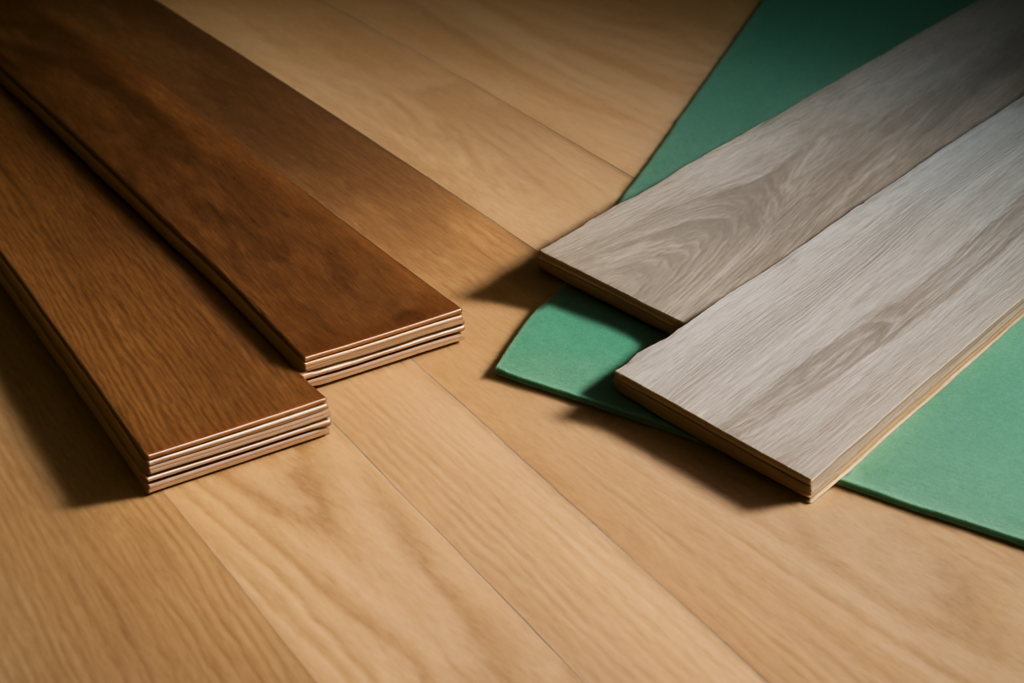
Engineered wood and laminate can look strikingly similar from across a room, yet they are built from completely different materials and cost as much as two to three times apart per square foot. Understanding engineered wood flooring vs laminate is the key to choosing a floor that fits your budget, your lifestyle, and the demands of each room. This guide breaks down how they are made, how they perform, and which one wins in the scenarios that matter most.
What Each Floor Is Made Of
The core difference is in the construction. Engineered wood flooring is real wood. It features a top layer, or wear layer, of genuine hardwood veneer bonded over a stable core of plywood or high-density fiberboard. Because the surface is authentic timber, it looks and feels like solid hardwood. Laminate, by contrast, contains no real wood on its surface. It is built from a dense fiberboard core topped with a high-resolution printed photographic image of wood, sealed under a tough clear wear layer. In short, engineered wood is wood; laminate is a photograph of wood under plastic.
Appearance and Authenticity
Both can look convincing, but up close engineered wood has the edge in authenticity. Because its surface is real hardwood, it offers natural grain variation, genuine texture, and the warmth of true wood, and no two planks are identical. Laminate technology has improved dramatically, with realistic embossing and varied plank images, but because the pattern is printed, you may notice repeating designs across a large floor. For homeowners who want the genuine article underfoot, engineered wood delivers; for those who prioritize a wood look at a lower price, modern laminate satisfies.
Durability and Scratch Resistance
Here the comparison gets interesting. Laminate’s clear wear layer is extremely hard and highly scratch- and dent-resistant, often outperforming real wood against pet claws, dropped toys, and heavy foot traffic. Engineered wood, having a genuine wood surface, can scratch and dent more easily, though a thicker veneer holds up better. However, engineered wood has a major advantage in longevity, discussed below: it can sometimes be refinished, while laminate cannot. For busy households with kids and pets, laminate’s surface toughness is a real strength.
Water and Moisture Resistance
Neither floor is truly waterproof in its standard form, but their failure modes differ. Both have fiberboard or wood cores that swell if water penetrates seams and sits there. Engineered wood handles humidity swings better than solid hardwood thanks to its layered, dimensionally stable core, making it suitable for basements and over concrete where solid wood is risky. Standard laminate is vulnerable to standing water at the seams, which can cause the edges to swell and chip, though many manufacturers now offer water-resistant and waterproof laminate lines. For bathrooms and laundry rooms, look specifically for a waterproof-rated product in either category.
Refinishing and Lifespan
This is one of the most decisive differences. Engineered wood with a sufficiently thick wear layer can usually be sanded and refinished once or twice over its life, letting you erase wear and even change the stain color. That ability can give a quality engineered floor a lifespan of 20 to 40 years or more. Laminate cannot be refinished at all; once the wear layer is worn through or damaged, the only fix is replacement. Laminate typically lasts around 10 to 25 years depending on quality and traffic. If long-term renewability matters, engineered wood wins.
Installation
Both are friendly to DIY installation, which helps keep project costs down.
- Laminate almost always uses a click-lock floating system over an underlayment, making it one of the easiest floors for a confident homeowner to install.
- Engineered wood offers more options: click-lock floating, glue-down, or nail-down, depending on the product and subfloor.
- Both can often be installed over existing subfloors and many existing floors, reducing prep.
- Engineered wood glue-down or nail-down installs are more involved and may warrant professional help.
Cost Comparison
Budget is often the deciding factor. Laminate is the more affordable option, with materials commonly running about $1 to $5 per square foot. Engineered wood costs more, typically $3 to $10 per square foot for materials, and premium products go higher. Installation adds to both, though laminate’s simpler floating install can lower labor costs. Across a whole house, the price gap is significant, so weigh the upfront savings of laminate against the longevity and refinishing potential of engineered wood.
Comfort, Sound, and Feel
Underfoot, engineered wood feels warmer and slightly softer, much like solid hardwood, and tends to sound more solid. Laminate can feel harder and, without a good underlayment, may produce a hollow or clicky sound when walked on. A quality underlayment beneath laminate improves both sound and comfort considerably. Both can work with radiant floor heating, but always confirm the specific product is rated for it before installing over a heated subfloor.
Resale Value
When it comes to home value, real wood carries weight with buyers. Engineered wood, being genuine hardwood on the surface, is generally viewed as a premium flooring that can support a higher resale value, similar to solid hardwood in buyer perception. Laminate, while attractive and practical, is typically seen as a budget-friendly material and does not add the same premium. If you are renovating with resale in mind, engineered wood may offer a better return, while laminate makes sense for rentals and cost-conscious updates.
Which Should You Choose
The right pick depends on your priorities. Choose engineered wood if you want authentic real-wood looks, the ability to refinish, better moisture handling than solid wood, and stronger resale appeal, and you have the budget for it. Choose laminate if you want maximum scratch resistance, easy DIY installation, and the lowest cost, and you are comfortable replacing it rather than refinishing down the road. Many homeowners use engineered wood in main living spaces and laminate in secondary or high-traffic utility areas.
Final Thoughts
In the engineered wood flooring vs laminate decision, there is no single winner, only the right fit for your home. Engineered wood offers authenticity, refinishing potential, and resale value, while laminate counters with toughness, simplicity, and affordability. Weigh how each performs against your budget, your rooms, and how long you plan to stay, and you will land on the floor that serves your household best. At D and G Flooring, we help homeowners match the material to the room every day.
Prefer to explore on your own?
See how new flooring looks in your actual room in seconds — free, no signup.
Try the free Floor Studio →