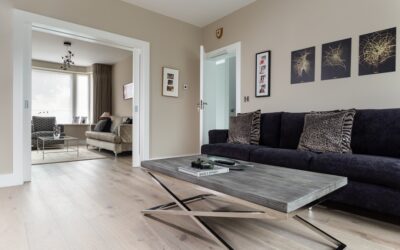
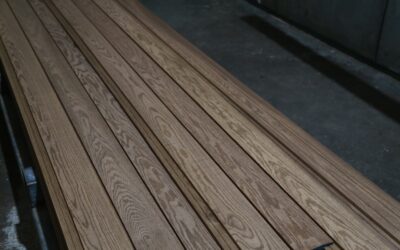
Engineered hardwood vs laminate is a comparison that every budget-conscious homeowner encounters when shopping for wood-look flooring. Both products deliver attractive, realistic wood appearances at prices well below solid hardwood. Both use layered construction and are available in click-lock formats for straightforward installation. But beneath the surface, these are fundamentally different products with different strengths, limitations, and long-term value propositions.
This guide provides a thorough, honest comparison of engineered hardwood and laminate across every factor that influences the buying decision: construction, appearance, feel, durability, moisture resistance, refinishing capability, cost, resale value, and best applications.
Construction: What Is Each Made Of?
Engineered Hardwood Construction
Engineered hardwood consists of a real hardwood veneer bonded to a multi-layer plywood or HDF core. The top veneer is genuine wood (oak, maple, walnut, hickory, or any other hardwood species), typically 0.6 mm to 6 mm thick. The cross-laminated layers beneath provide dimensional stability that solid hardwood cannot match, allowing engineered hardwood to be installed in environments where solid wood would be risky, including over concrete and with radiant heating.
The key distinction is that the surface you walk on and see is real wood. It has real grain, real texture, and real color that develops naturally over time.
Laminate Construction
Laminate flooring consists of a high-density fiberboard (HDF) core topped with a high-resolution photographic image of wood, protected by a clear melamine resin wear layer. The bottom has a balancing layer to prevent warping. There is no real wood in laminate flooring. The wood appearance is entirely printed.
Modern laminate photography has become remarkably detailed, but the material is fundamentally a picture of wood protected by a plastic-like coating, not actual wood.
Appearance and Realism
Engineered Hardwood Appearance
Engineered hardwood looks like real wood because it is real wood. The grain patterns are genuine, the color variations are natural, and the texture is authentic. No two planks are identical, just as with solid hardwood. The floor develops patina over time as the real wood surface ages and responds to light. You can choose from every species and finish available in solid hardwood, from wire-brushed white oak to hand-scraped hickory.
Laminate Appearance
Premium laminate has achieved impressive visual quality. High-definition printing reproduces wood grain patterns with excellent detail, and embossed surfaces add tactile texture. From standing height in normal lighting, top-tier laminate can be difficult to distinguish from real wood visually.
However, laminate has limitations. The number of unique plank patterns is finite (typically 8 to 20 unique designs per product), so repeating patterns can become visible in larger installations. The printed surface lacks the depth and dimensionality of real wood grain when viewed at close range or in raking light. And the feel, which we cover next, is where the difference becomes most obvious.
Winner: Engineered Hardwood
Real wood will always look more like real wood than a photograph of wood. The gap has narrowed, but engineered hardwood’s authenticity remains a clear advantage.
Feel and Comfort
Engineered Hardwood Feel
Walking on engineered hardwood feels like walking on wood because it is wood. The surface has the natural warmth, subtle texture variations, and organic feel that wood provides. Running your hand across the surface, you feel genuine grain, knots, and the slight irregularities that give wood its character. Underfoot, engineered hardwood feels solid and warm, especially with a quality underlayment.
Laminate Feel
Laminate feels harder and more uniform than real wood. The melamine surface has a consistent, slightly plastic quality that experienced eyes (and feet) can detect. Walking on laminate, especially without adequate underlayment, can produce a hollow, clicking sound that real wood does not make. The surface temperature tends to feel cooler than real wood. While texture embossing helps, it does not replicate the organic feel of genuine wood grain.
Winner: Engineered Hardwood
The tactile experience of real wood underfoot is something laminate has not been able to replicate.
Durability
Scratch Resistance
Laminate wins on scratch resistance. The melamine wear layer is extremely hard and resists scratches from pet claws, chair legs, and abrasive foot traffic better than the natural wood surface of engineered hardwood. For homes with large dogs or heavy furniture movement, laminate’s surface holds up better day to day.
Engineered hardwood can be protected with durable finishes (aluminum oxide-infused polyurethane, for example), but the wood surface is inherently softer than laminate’s melamine coating.
Dent Resistance
Both products resist dents reasonably well, though the specific performance depends on the hardwood species (for engineered) and the core density (for laminate). A hickory engineered floor will resist dents better than a pine engineered floor. Similarly, a thick, high-density laminate resists dents better than a thin, budget laminate.
Overall Durability
For daily wear resistance, laminate edges ahead. For long-term durability (considering refinishing capability), engineered hardwood wins. More on that in the next section.
Refinishing: The Critical Difference
This is the single most important functional difference between engineered hardwood and laminate.
Engineered Hardwood: Can Be Refinished
Engineered hardwood with a veneer thickness of 2 mm or more can be sanded and refinished at least once. Products with 4 mm to 6 mm veneers can be refinished two to three times. Refinishing removes scratches, dents, and wear, restores the surface to like-new condition, and allows you to change the stain color or finish type. This ability to refresh the surface extends the floor’s useful life to 30 to 50 years or more.
Laminate: Cannot Be Refinished
Laminate cannot be sanded or refinished. Once the wear layer is worn through or the photographic layer is damaged, the floor must be replaced. The typical lifespan of laminate before it needs replacement is 10 to 25 years depending on quality and traffic levels.
Why This Matters
The ability to refinish engineered hardwood means you pay more upfront but can maintain the floor indefinitely. Laminate’s lower upfront cost is offset by the eventual need for complete replacement. Over a 30-year period, engineered hardwood that is refinished once may cost less in total than two installations of laminate.
Moisture Resistance
Engineered Hardwood
Engineered hardwood is more moisture-resistant than solid hardwood but is not waterproof. The plywood core can absorb water if exposed to prolonged moisture, leading to warping or delamination. Engineered hardwood can be installed in kitchens with caution but is not recommended for bathrooms or basements with active moisture issues.
Laminate
Standard laminate has the same moisture vulnerability as engineered hardwood. The HDF core absorbs water readily, causing irreversible swelling. Some newer “waterproof” laminate products use treated cores and sealed edges, but most laminate is not suitable for wet areas.
Winner: Tie
Neither product is truly waterproof. For wet areas, both lose to waterproof flooring options like LVP, tile, or vinyl sheet.
Cost Comparison
Materials
Budget engineered hardwood: $3 to $5 per square foot
Mid-range engineered hardwood: $5 to $9 per square foot
Premium engineered hardwood: $9 to $15+ per square foot
Budget laminate: $0.75 to $1.50 per square foot
Mid-range laminate: $1.50 to $3.00 per square foot
Premium laminate: $3.00 to $5.00 per square foot
Installation
Both products can be installed as floating click-lock floors, with professional installation running $2 to $4 per square foot. Engineered hardwood can also be glued down or nailed, which costs $3 to $6 per square foot professionally. DIY installation costs are similar for both floating formats.
Lifetime Cost
Engineered hardwood’s higher upfront cost is partially offset by its longer lifespan and ability to be refinished. A quality engineered hardwood floor installed for $10 per square foot and refinished once ($3 per square foot) costs $13 per square foot over a 40-year lifespan. A quality laminate floor installed for $4 per square foot and replaced once ($4 per square foot) costs $8 per square foot over the same period. Engineered hardwood costs more over its lifetime, but it provides real wood quality and adds more home value.
Resale Value
This is a category where engineered hardwood has a decisive advantage.
Engineered Hardwood Resale Impact
Real hardwood flooring (including engineered hardwood) is consistently listed as one of the most desired features among home buyers. National Association of Realtors data shows that homes with hardwood floors sell faster and often for higher prices than comparable homes with other flooring types. Engineered hardwood flooring is recognized as real wood by appraisers and buyers, contributing positively to home value.
Laminate Resale Impact
Laminate is viewed neutrally to slightly negatively in the resale market. It does not add value the way hardwood does, and in higher-end markets, laminate can be seen as a drawback. In entry-level and mid-range homes, quality laminate is accepted without penalty, but it rarely increases sale price or buyer interest.
Winner: Engineered Hardwood
If resale value is a consideration, engineered hardwood is the clear choice.
Installation Comparison
Subfloor Requirements
Both products require a clean, flat, dry subfloor. Laminate requires a moisture barrier over concrete. Engineered hardwood may require a moisture barrier depending on the installation method and manufacturer specifications.
Installation Methods
Both are available in click-lock floating formats. Engineered hardwood additionally offers glue-down and nail-down options, providing more flexibility for different situations. Laminate is exclusively a floating floor.
DIY Friendliness
Both are good DIY options in click-lock format. Laminate is slightly easier to cut (standard miter saw works well) compared to some engineered hardwoods that have harder, denser veneers. Both are rated as intermediate-level DIY projects.
Best Applications for Each
Choose Engineered Hardwood When
You want real wood beauty and feel. Your budget accommodates the higher cost. Resale value matters. You want a floor that can be refinished. The space is a living room, bedroom, dining room, or other dry area. You are installing over radiant heat. You want wide plank formats with premium finishes.
Choose Laminate When
Budget is the primary concern. You need maximum scratch resistance for pets or heavy traffic. The floor is in a rental property or temporary space. You are covering a large area and need to minimize cost. The application is in a low-moisture area like a bedroom, office, or living room.
Quick Comparison Summary
Surface material: Engineered hardwood uses real wood; laminate uses a photograph
Can be refinished: Engineered hardwood yes; laminate no
Scratch resistance: Laminate wins
Moisture resistance: Tie (neither is waterproof)
Feel underfoot: Engineered hardwood wins
Appearance: Engineered hardwood wins
Cost: Laminate is significantly cheaper
Resale value: Engineered hardwood wins
Lifespan: Engineered hardwood 30-50 years; laminate 10-25 years
DIY installation: Both are good (tie)
Final Verdict
Engineered hardwood and laminate serve different priorities. Engineered hardwood is the better long-term investment, offering real wood beauty, refinishing capability, and genuine resale value. Laminate is the smarter budget choice when upfront cost is the priority and the floor is in a dry, moderate-traffic environment.
If you can afford engineered hardwood, it is almost always the better choice. It looks better, feels better, lasts longer, and adds more value to your home. Laminate is not a bad product; it is simply a different product serving a different need. Match your choice to your budget, timeline, and priorities, and either option can serve you well.
Prefer to explore on your own?
See how new flooring looks in your actual room in seconds — free, no signup.
Try the free Floor Studio →