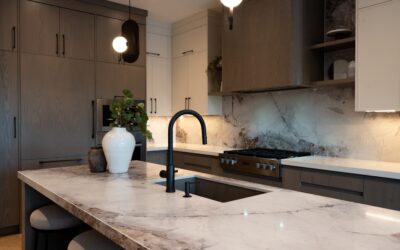
Granite and quartz have dominated kitchen and bathroom countertop design for over two decades, and both remain top choices in 2026. But they are fundamentally different materials with distinct strengths and trade-offs. Granite is a natural stone quarried from the earth, while quartz countertops are engineered from ground quartz crystals bound with resin.
Part of our Countertops guide — explore the full guide →
This comprehensive comparison covers every factor — cost, maintenance, heat and stain resistance, appearance, durability, resale value, and environmental impact — so you can choose the countertop that fits your kitchen, lifestyle, and budget.
- Granite vs Quartz: Side-by-Side Comparison
- What Is Granite?
- What Is Quartz?
- Cost Comparison
- Maintenance: Sealing vs. Zero Maintenance
- Heat Resistance: Granite Wins
- Stain Resistance: Quartz Wins
- Appearance
- Durability and Lifespan
- UV Resistance and Outdoor Use
- Resale Value
- Environmental Impact
- When to Choose Granite
- When to Choose Quartz
- Frequently Asked Questions
Granite vs Quartz: Side-by-Side Comparison
| Feature | Granite | Quartz |
|---|---|---|
| Composition | 100% natural stone | ~93% ground quartz + 7% resin/pigment |
| Cost (installed) | $50-$150 per sq ft | $50-$120 per sq ft |
| Maintenance | Requires annual sealing | No sealing required |
| Heat Resistance | Excellent — handles hot pots | Moderate — resin can scorch |
| Stain Resistance | Good when sealed | Excellent — non-porous |
| Scratch Resistance | Very good (Mohs 6-7) | Very good (Mohs 7) |
| Appearance | Unique natural patterns | Consistent, uniform patterns |
| Color Options | Limited to natural variations | Virtually unlimited |
| Durability | Extremely durable (can chip) | Extremely durable (can chip) |
| UV Resistance | Excellent — won’t fade | Poor — can yellow in sunlight |
| Resale Value | Excellent | Excellent |
| Environmental Impact | Quarrying impact; natural material | Mining + manufacturing; not biodegradable |
What Is Granite?
Granite is an igneous rock formed deep within the earth’s crust from slowly cooling magma. It is composed primarily of quartz, feldspar, and mica, which give it the distinctive crystalline pattern and depth of color that no engineered material can truly replicate. Every granite slab is unique — a selling point for homeowners who value one-of-a-kind natural beauty.
Granite countertops are fabricated by cutting large blocks from quarries worldwide (Brazil, India, Italy, and the United States are major sources), then slicing them into slabs typically 2cm or 3cm thick. The slabs are polished, cut to fit your kitchen layout, and installed by professional fabricators.
What Is Quartz?
Quartz countertops — often referred to by brand names like Caesarstone, Cambria, or Silestone — are engineered surfaces made from approximately 93% ground natural quartz crystals combined with 7% polymer resins and pigments. The mixture is compressed under intense vibration and heat to form slabs that are extremely hard, non-porous, and consistent in appearance.
Because quartz is engineered, manufacturers can produce it in virtually any color, pattern, and finish — including convincing imitations of marble, concrete, and natural stone. This consistency is a major advantage for homeowners who want a specific look that matches across an entire kitchen. For popular options, see our white quartz countertops guide.
Cost Comparison
Granite and quartz occupy a similar price range, though the spread within each material varies considerably based on rarity, color, and brand.
| Cost Category | Granite | Quartz |
|---|---|---|
| Material (per sq ft) | $30-$100 | $30-$80 |
| Fabrication & Installation | $20-$50 per sq ft | $20-$40 per sq ft |
| Total installed | $50-$150 per sq ft | $50-$120 per sq ft |
| Average kitchen (40 sq ft) | $2,000-$6,000 | $2,000-$4,800 |
| Premium slab kitchen | $6,000-$12,000+ | $4,000-$8,000+ |
Entry-level granite (ubatuba, caledonia, new venetian gold) and entry-level quartz are priced similarly at $50-$70 per square foot installed. The price gap widens at the premium end: rare exotic granites (blue bahia, van gogh, patagonia) can exceed $150 per square foot, while premium quartz brands top out around $100-$120.
Maintenance: Sealing vs. Zero Maintenance
This is arguably the biggest practical difference between the two materials.
Granite is a natural stone with microscopic pores. When properly sealed, these pores are protected from liquid absorption. But sealers wear off over time, so granite countertops need to be resealed every 6 to 12 months depending on the granite type and the sealer used. Dark granites with tight crystal structures (absolute black, uba tuba) are naturally denser and need less frequent sealing. Lighter, more porous granites (kashmir white, colonial white) require more vigilant sealing.
Resealing is simple — spray the sealer on, let it absorb, wipe off the excess — and takes about 15 minutes. But if you forget, an unsealed granite surface can absorb red wine, cooking oil, or coffee, leading to permanent stains.
Quartz requires zero sealing. Its resin-bound composition makes it completely non-porous, meaning liquids sit on the surface and cannot penetrate. Spills can be wiped up whenever you get to them without any risk of staining. For busy households, this maintenance-free quality is quartz’s single biggest selling point.
Heat Resistance: Granite Wins
Granite is formed under extreme geologic heat and pressure, making it one of the most heat-resistant countertop materials available. You can place a hot pot directly from the stove onto granite with virtually no risk of damage. While using trivets is still a good practice, the occasional direct contact with hot cookware will not harm a granite surface.
Quartz is less forgiving with heat. The resin binders in quartz countertops can scorch, discolor, or crack at temperatures above approximately 300 degrees Fahrenheit. A hot pan straight off the burner can leave a permanent white or brown mark on quartz. Always use trivets and hot pads on quartz surfaces — this is non-negotiable.
Stain Resistance: Quartz Wins
Thanks to its non-porous surface, quartz is virtually stain-proof under normal kitchen conditions. Red wine, turmeric, coffee, beet juice — all of these can be wiped away without a trace. This makes quartz especially popular in busy family kitchens where spills happen frequently.
Granite, when properly sealed, resists most stains well. But the seal is not permanent, and if it wears thin, the stone becomes vulnerable. Oil-based stains are particularly problematic on unsealed or under-sealed granite, as they penetrate deep into the pores and can be very difficult to remove. With diligent sealing maintenance, staining is preventable — but the risk is always higher than with quartz.
Appearance
This category comes down to personal preference and what you value: natural uniqueness or controlled consistency.
Granite offers depth, movement, and character that only nature can create. The interplay of minerals produces dramatic veining, speckles, and swirls that vary from slab to slab. If you choose a granite countertop, you should always view the actual slab you will receive — samples only approximate the color and pattern. This natural variation is part of the appeal for many homeowners, but it also means two granite kitchens will never look the same.
Quartz offers precision and predictability. If you find a sample you love, the installed countertop will look virtually identical. Quartz manufacturers have become remarkably skilled at creating designs that mimic the look of Calacatta marble, concrete, and even natural granite. For homeowners who want a specific aesthetic locked in before installation, quartz delivers that certainty. Explore options at our quartzite countertops page for natural stone alternatives.
Durability and Lifespan
Both granite and quartz are exceptionally durable countertop materials that will outlast most other kitchen components. Granite has a slight edge in raw hardness and heat tolerance, while quartz’s engineered composition makes it more uniformly strong without natural weak points like fissures.
Both materials can chip if struck hard on an edge or corner, and neither should be used as a cutting board surface (though granite will dull your knives faster). Chip repairs are possible for both materials using color-matched epoxy.
Granite countertops regularly last 30 to 50+ years with proper care. Quartz countertops have a proven track record of 25 to 50 years, though the material has only been widely available since the 1990s, so the true upper limit is still being established.
UV Resistance and Outdoor Use
If you are choosing a countertop for an outdoor kitchen, patio bar, or any area with direct sunlight exposure, granite is the clear winner. Natural stone is unaffected by UV light and will not fade, yellow, or degrade from sun exposure.
Quartz, on the other hand, can yellow and discolor when exposed to prolonged direct sunlight. The resin binders break down under UV radiation, causing color shifts that are irreversible. Most quartz manufacturers explicitly state that their products are not warranted for outdoor use. Even indoors, quartz countertops near large south-facing windows may develop uneven coloring over many years of sun exposure.
Resale Value
Both granite and quartz are considered premium countertop materials by homebuyers and real estate professionals. According to industry surveys, kitchens with either material consistently appraise higher than those with laminate, tile, or solid surface countertops.
In most markets, the two materials are viewed as equals for resale purposes. However, regional preferences exist: some luxury markets favor the prestige of natural stone, while younger buyers often prefer quartz for its clean, modern look and zero-maintenance appeal. Either choice will serve you well if you plan to sell your home. See our natural stone countertops overview for additional resale data.
Environmental Impact
Neither material is an environmental standout, though both have been improving.
Granite is quarried from the earth, a process that involves heavy machinery, blasting, and transportation of massive stone blocks — often across oceans from quarries in Brazil and India. On the positive side, granite is a 100% natural material with no synthetic chemicals, and remnants can be repurposed as pavers, aggregates, or decorative stone.
Quartz manufacturing consumes significant energy in the grinding, mixing, and curing process. The resin component is petroleum-based and not biodegradable. However, some manufacturers now use recycled glass and other post-consumer materials in their products, and the industry has made strides in reducing VOC emissions during manufacturing.
When to Choose Granite
- You want a one-of-a-kind natural stone surface
- Heat resistance is a priority (frequent cooking without trivets)
- You are installing an outdoor kitchen
- You do not mind annual sealing maintenance
- You prefer the depth and character of natural stone
When to Choose Quartz
- You want zero-maintenance countertops
- Stain resistance is a top priority (busy family kitchen)
- You want a specific, consistent color and pattern
- You prefer a modern, uniform aesthetic
- The countertop will be indoors and away from direct sunlight
Frequently Asked Questions
Is quartz cheaper than granite?
At the entry level, both are similarly priced at around $50-$70 per square foot installed. At the premium end, rare exotic granite can cost significantly more than top-tier quartz. For most mid-range kitchen projects, the cost difference is negligible.
Can I put hot pans on granite?
Yes. Granite handles heat extremely well and will not scorch or discolor from hot cookware. While using trivets is still a good habit, occasional direct contact with hot pots is not a problem for granite.
Does quartz stain?
Quartz is highly stain-resistant under normal conditions. However, prolonged exposure to strong chemicals (permanent marker, certain dyes, harsh solvents) can potentially leave marks. For everyday kitchen use, quartz is effectively stain-proof.
Which is harder, granite or quartz?
They are comparable. Granite ranges from 6 to 7 on the Mohs hardness scale, while quartz rates approximately 7. Both are highly scratch-resistant, though you should never cut directly on either surface.
Can quartz be used outdoors?
No. UV exposure causes quartz to yellow and discolor over time. Most manufacturers void their warranty if quartz is installed outdoors. Granite, natural quartzite, and concrete are better choices for outdoor countertops.
Do granite countertops emit radon?
Granite does contain trace amounts of naturally occurring radioactive elements, but extensive testing by the EPA and independent laboratories has consistently shown that granite countertops do not produce radon levels that pose a health risk. This concern, while understandable, has been thoroughly debunked by scientific research.