You want a floor that looks like hardwood. That narrows your options, but you still face a pivotal decision: LVP vs engineered hardwood. One is waterproof synthetic vinyl that mimics wood through high-resolution printing. The other is actual wood — a real hardwood veneer over a stabilized plywood core.
Both deliver the wood aesthetic. But they differ sharply in feel, moisture handling, longevity, cost, and resale impact. This comparison covers all of it so you can pick the right product with confidence.
Quick Overview
LVP (luxury vinyl plank) is a synthetic flooring product with a stone polymer composite (SPC) or wood polymer composite (WPC) core, a photographic print layer that mimics wood grain, and a clear protective wear layer on top. It is 100% waterproof, affordable, and extremely practical.
Engineered hardwood has a real wood veneer (typically 2 to 6 mm of oak, walnut, hickory, or other species) bonded to a multi-ply plywood or HDF core. The surface is genuine wood with all its natural variation. It is more dimensionally stable than solid hardwood but not waterproof.
The choice between these two often comes down to priorities: if moisture performance and budget are paramount, LVP leads. If authenticity and long-term value matter most, engineered hardwood is the pick.
Appearance and Authenticity
Engineered Hardwood
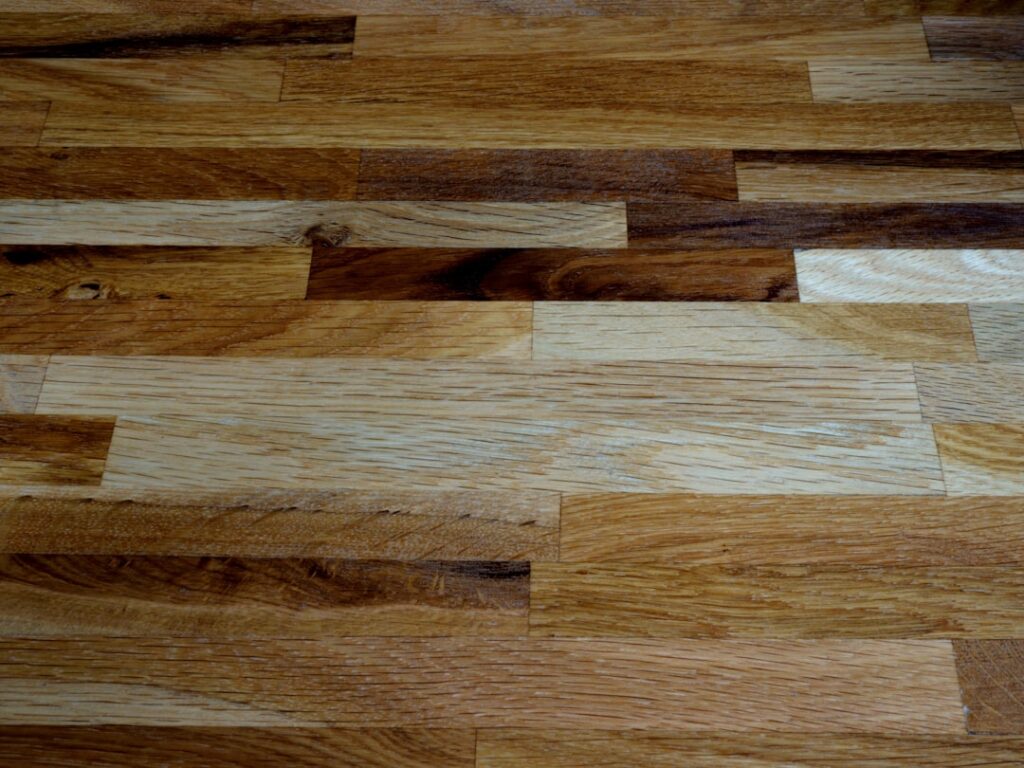
There is no substitute for real wood. Engineered hardwood has natural grain variation, depth, and character that no printed product can fully replicate. Each plank is unique. The way light plays across real wood grain, the subtle inconsistencies in pattern, the warmth of natural material — these qualities are difficult to fake convincingly.
Factory finishes on engineered hardwood have also improved considerably. Wire-brushed, hand-scraped, and reactive-stained finishes add texture and character that enhance the natural beauty of the wood.
LVP
Modern LVP has made enormous strides in visual realism. High-definition printing, embossed-in-register (EIR) texturing, and multi-plank design variation (where dozens of unique plank visuals appear in each box) make today’s premium LVP impressively convincing at a casual glance.
Where LVP falls short is in close inspection and touch. The printed pattern repeats (even if infrequently), the surface texture does not quite match the tactile experience of real wood, and there is a plastic quality to the finish that trained eyes can detect. In a well-lit room at arm’s length, premium LVP looks great. On your hands and knees examining the floor, the difference from real wood becomes apparent.
The Honest Assessment
Budget LVP ($2 to $3 per square foot) looks noticeably like vinyl. Mid-range LVP ($3 to $5) is convincing to most casual observers. Premium LVP ($5 to $8) is very good but still distinguishable from real wood by flooring professionals and discerning eyes. Engineered hardwood looks like hardwood because it is hardwood.
Water Resistance
LVP: Fully Waterproof
LVP’s SPC or WPC core is completely impervious to water. Spills, pet accidents, overflowing bathtubs, and even minor flooding will not damage the planks themselves. You can install LVP in bathrooms, kitchens, laundry rooms, and basements without moisture concerns at the plank level.
Engineered Hardwood: Not Waterproof
While engineered hardwood handles humidity changes better than solid hardwood (thanks to its cross-ply core), it is not waterproof. Standing water will penetrate the finish, soak into the wood veneer, and eventually reach the core. A water event — a dishwasher leak, toilet overflow, or basement moisture — can cause swelling, warping, cupping, and permanent damage.
Engineered hardwood can handle the occasional splash or quickly cleaned spill without issues. But it requires the same basic moisture caution as solid hardwood: wipe spills promptly, do not wet mop, and maintain consistent indoor humidity.
If your primary flooring need involves wet areas, LVP is the obvious choice. For dedicated waterproof flooring, no wood product can compete with vinyl-based options.
Durability
Scratch Resistance
LVP’s polyurethane wear layer provides good scratch resistance, but it varies by thickness. Budget LVP (6 to 12 mil) scratches relatively easily. Premium LVP (20 mil and above) handles pet claws and furniture movement well.
Engineered hardwood’s scratch resistance depends on the wood species and finish. Softer species like pine or walnut scratch easily. Harder species like hickory or white oak resist scratches better. Factory-applied finishes with aluminum oxide are significantly more durable than site-applied polyurethane.
Dent Resistance
SPC-core LVP is very dent-resistant. Its rigid mineral core does not compress easily under heavy furniture. WPC-core LVP, with its foam-infused core, can dent under sustained heavy loads like piano legs or heavy furniture.
Engineered hardwood dents like any real wood — it depends on the species. Hickory (Janka 1,820) handles impacts far better than walnut (1,010) or cherry (950). Felt pads under furniture and area rugs in high-traffic zones are standard precautions with any wood floor.
Overall Durability Winner
For households with kids, pets, and heavy use, LVP is the more forgiving product. It handles abuse without permanent consequences. Engineered hardwood is durable but shows its wear more visibly and requires more care to maintain its appearance.
Comfort and Feel
This is where engineered hardwood scores an often-overlooked win.
Walking Feel
Engineered hardwood feels like a real wood floor because it is one. The density and rigidity of the plywood core, combined with the natural warmth of the wood surface, creates a walking experience that LVP cannot match. There is a substantialness to real wood that synthetic products do not replicate.
LVP feels solid underfoot (especially SPC-core) but has a slightly different acoustic and tactile quality. It is warmer than tile but does not have the same resonance as wood. WPC-core LVP is softer and more cushioned, which some people prefer for comfort, though it moves further from the “real wood” feel.
Temperature
Wood is a natural insulator. Engineered hardwood feels warmer underfoot than LVP or tile in unheated rooms. Both products work well with radiant floor heating, where this difference is less relevant.
Sound
A nail-down or glue-down engineered hardwood floor is quiet and solid-sounding. A floating engineered hardwood floor can have a slight hollow sound, similar to laminate, though a quality underlayment minimizes this.
LVP is generally quiet, especially WPC-core with attached underlayment. SPC-core LVP can be slightly louder without proper underlayment.
Installation
Both products offer DIY-friendly options, but engineered hardwood provides more installation methods overall.
LVP Installation
- Click-lock floating: The most common method. Fast, no adhesive needed.
- Glue-down: Common in commercial settings and for thinner products.
- Over most subfloors: Concrete, plywood, existing tile, and existing vinyl (if flat and solid).
- No acclimation needed: Synthetic core is dimensionally stable.
Engineered Hardwood Installation
- Nail-down: Over plywood subfloors. Provides the most solid feel.
- Glue-down: Directly to concrete slabs. Common in condos and slab homes.
- Click-lock floating: Available for many products. Fastest method.
- Over concrete: Yes (glue-down or floating with moisture barrier).
- Acclimation required: Most manufacturers recommend 3 to 5 days in the room before installation.
Both install over concrete and plywood. LVP is faster for DIY projects because it cuts with a utility knife. Engineered hardwood requires a miter saw or table saw for clean cuts.
Cost Comparison
| Cost Category | LVP | Engineered Hardwood |
|---|---|---|
| Budget Materials | $1.50 to $3.00/sq ft | $3.00 to $5.00/sq ft |
| Mid-Range Materials | $3.00 to $5.00/sq ft | $5.00 to $9.00/sq ft |
| Premium Materials | $5.00 to $8.00/sq ft | $9.00 to $14.00+/sq ft |
| Professional Installation | $2.00 to $4.00/sq ft | $3.00 to $6.00/sq ft |
| Total Installed (Mid-Range) | $5.00 to $9.00/sq ft | $8.00 to $15.00/sq ft |
LVP is substantially less expensive at every tier. For a 1,000-square-foot project, the difference between mid-range LVP and mid-range engineered hardwood can be $3,000 to $6,000 — a significant budget consideration.
Maintenance
LVP Maintenance
Sweep and mop with any vinyl-safe cleaner. No special precautions needed. Spills can wait. Steam mops are safe on most products. LVP is among the lowest-maintenance flooring options available.
Engineered Hardwood Maintenance
Sweep regularly to prevent grit from scratching the finish. Damp mop only — never wet mop. Clean spills promptly. Use hardwood-specific cleaners (no vinegar, no soap-based products). Maintain indoor humidity between 35% and 55%. Place felt pads under furniture. Avoid high heels in high-traffic areas. Refinish when the finish shows wear (typically every 7 to 10 years, depending on traffic).
Engineered hardwood requires more conscious care, but none of it is burdensome for most homeowners. It is simply a floor that demands respect — treat it like the natural material it is.
Lifespan and Refinishing
LVP: 15 to 25 years. Cannot be refinished. When the wear layer wears through or the product looks dated, it must be replaced.
Engineered hardwood: 25 to 50+ years with maintenance and refinishing. Products with 4 mm+ veneers can be sanded and refinished 2 to 4 times. Each refinishing adds 7 to 15 years of life. A high-quality engineered hardwood floor installed in 2026 could still be in service in 2070 with proper care.
This is where the cost calculation gets interesting. LVP is cheaper upfront but has a fixed lifespan. Engineered hardwood costs more initially but can last two to three times as long. Over a 50-year horizon, engineered hardwood may be the more cost-effective choice — though that only matters if you plan to stay in the home that long.
Resale Value
Engineered hardwood wins this category clearly. Real wood floors — whether solid or engineered — consistently rank among the top features home buyers want. Real estate data shows that homes with hardwood floors sell faster and for more money than comparable homes without them.
LVP is viewed positively by buyers (certainly better than old carpet or worn laminate), but it does not carry the same premium as real wood. In higher-end markets ($500K+ homes), buyers specifically look for hardwood and may view LVP as a negative or at best a neutral feature.
In entry-level and mid-market homes, LVP’s appeal is strong because buyers in those segments prioritize low maintenance and modern aesthetics. But as a general rule, real wood adds more resale value per dollar spent.
Full Comparison Table
| Feature | LVP | Engineered Hardwood |
|---|---|---|
| Surface Material | Printed vinyl | Real hardwood veneer |
| Waterproof | Yes | No |
| Scratch Resistance | Good (depends on wear layer) | Varies by species and finish |
| Dent Resistance | Very Good (SPC) / Moderate (WPC) | Varies by species |
| Appearance Realism | Very Good (premium) to Fair (budget) | Authentic (real wood) |
| Comfort Underfoot | Good | Very Good |
| Mid-Range Installed Cost | $5.00 to $9.00/sq ft | $8.00 to $15.00/sq ft |
| Refinishable | No | Yes (veneer dependent) |
| Lifespan | 15 to 25 years | 25 to 50+ years |
| DIY Friendly | Yes (utility knife cuts) | Moderate (needs saw) |
| Bathrooms | Yes | Not recommended |
| Basements | Yes | Yes (with precautions) |
| Resale Value | Moderate | High |
Best Rooms for Each
Choose LVP For
- Kitchens (spill and splash protection)
- Bathrooms (fully waterproof)
- Laundry rooms
- Basements (no moisture risk)
- Mudrooms and entryways
- Rental properties (durable, affordable to replace)
- Households with young children or multiple pets
- Budget-conscious whole-house installations
Choose Engineered Hardwood For
- Living rooms and family rooms
- Dining rooms
- Bedrooms and master suites
- Home offices
- Hallways
- Higher-end homes where resale value matters
- Homeowners who value natural materials
The Verdict
This is not a question of which product is “better” — it is about which product matches your priorities.
Choose LVP if your top priorities are waterproof performance, low maintenance, and budget. LVP is the practical, no-worry choice that handles everything modern life throws at a floor.
Choose engineered hardwood if you value the look, feel, and character of real wood, you want a floor that can be refinished and last decades, and you are willing to invest more upfront and provide more ongoing care. Engineered hardwood is the floor that improves your home’s value and its daily experience.
Many homeowners use both: engineered hardwood in living areas and bedrooms where you spend the most time and want the best aesthetic, and LVP in kitchens, bathrooms, and basements where moisture resistance is essential. That combination gives you the best of both worlds.
Frequently Asked Questions
Does LVP look cheap compared to engineered hardwood?
Budget LVP can look obviously synthetic. Mid-range and premium LVP products are convincing to most people in normal settings. Side by side with real wood, the difference becomes apparent. Whether that matters depends on your standards and budget.
Can I use engineered hardwood in a kitchen?
Yes, with care. Engineered hardwood works in kitchens as long as you clean spills promptly, use mats in front of the sink and dishwasher, and ensure no hidden leaks. Many beautiful kitchens have engineered hardwood floors. The risk is real but manageable.
Is LVP bad for resale?
No. LVP is well-accepted by buyers and viewed as a modern, practical flooring choice. It just does not carry the same premium that real hardwood does. In mid-range homes, LVP is a neutral-to-positive selling feature.
Which is better for dogs?
LVP handles pet accidents (urine) better and is more scratch-resistant at the mid-range price point. Engineered hardwood can be scratched by dog nails, especially softer species. For heavy pet households, LVP is the more practical choice unless you choose a hard species like hickory with a durable factory finish.
Can I install LVP over existing hardwood?
Yes, as long as the existing hardwood is flat, solid, and in reasonable condition. A click-lock floating LVP installation can go directly over old hardwood. This is a common approach when the existing hardwood is too damaged to refinish but the homeowner wants to avoid the cost of removal.
Prefer to explore on your own?
See how new flooring looks in your actual room in seconds — free, no signup.
Try the free Floor Studio →