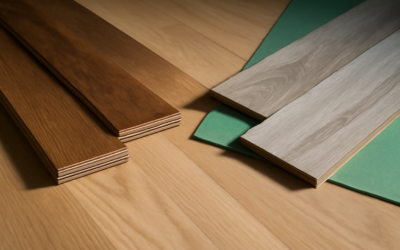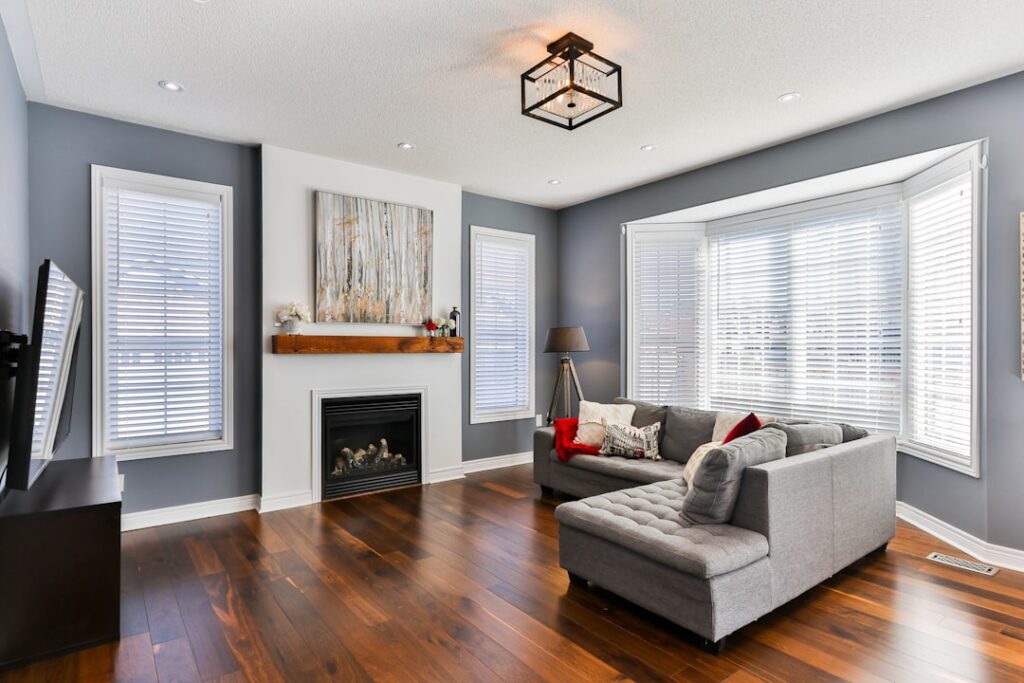
Both floors have real wood on top, so once installed they can look identical, yet what lies beneath changes everything about where you can put them and how long they last. The engineered wood flooring vs hardwood decision comes down to a few practical differences: solid hardwood is a single plank of wood you can refinish many times, while engineered wood is a thin veneer over a stable plywood core that resists moisture and costs less. Choose wrong and you either overpay or install a floor that cups and buckles in the wrong room.
After installing both for years, my advice is straightforward: match the floor to the room and the subfloor, not to which one sounds more premium. Here is how they actually compare across the factors that matter.
Construction: What You Are Actually Buying
Solid hardwood is exactly that, a 3/4-inch plank milled from a single piece of oak, maple, hickory, or another species. It is all wood, top to bottom.
Engineered wood is a hardwood veneer, typically 1/16 to 1/6 inch thick, bonded to a core of plywood or high-density fiberboard, usually 3/8 to 1/2 inch total. That layered construction gives engineered wood its signature advantage: dimensional stability. The cross-layered core resists the expansion and contraction that plagues solid wood in humid or dry conditions.
Moisture Resistance
Moisture is the deciding factor for many rooms. Solid hardwood swells, cups, and gaps when exposed to humidity or water, which is why it should never go below grade or over a concrete slab in a basement. Engineered wood, thanks to its stable core, tolerates humidity swings far better and can be installed in basements, over concrete, and in kitchens with reasonable care. Neither is truly waterproof, but engineered wins clearly on moisture tolerance.
Refinishing and Lifespan
This is where solid hardwood earns its premium. A 3/4-inch solid plank can be sanded and refinished 6 to 10 times over its life, meaning it can last 50 to 100 years and look new again each time. Engineered wood can only be refinished if its veneer is thick enough:
- Thin veneer (1/16 inch): cannot be sanded; must be replaced when worn.
- Medium veneer (1/12 to 1/10 inch): one light refinish.
- Thick veneer (1/6 inch): two or three refinishes over its life.
If multi-generational longevity matters, solid hardwood is the winner. If you expect to replace flooring within 20 to 30 years anyway, engineered’s shorter refinishing life is a non-issue.
Cost Comparison
Pricing overlaps but trends differently:
- Solid hardwood material: $5 to $12 per square foot, more for exotic species.
- Engineered wood material: $4 to $10 per square foot depending on veneer thickness.
- Installation: solid runs $4 to $8 per square foot; engineered often less because click-lock and floating options simplify the job.
Engineered typically comes out cheaper installed, especially when a DIY floating install avoids nail-down labor entirely.
Installation Differences
Solid hardwood almost always requires nailing or stapling to a wood subfloor by a professional, a slower and messier job. Engineered wood offers three methods: nail-down, glue-down, or floating click-lock, and that floating option is genuinely DIY-friendly. For homeowners installing over concrete or wanting to do the work themselves, engineered’s flexibility is a major advantage. Solid wood also needs to acclimate in the room for several days before install, while engineered acclimates faster.
Appearance and Feel
Both use real wood veneers, so the surface looks and feels like genuine hardwood, because it is. Underfoot, solid hardwood has a slightly more solid, substantial feel. Engineered can sound marginally hollower when floated over an underlayment, though a glue-down engineered install feels nearly identical to solid. Wide planks over 5 inches are actually more stable in engineered form, since solid wide planks are prone to cupping.
Resale Value
Buyers and appraisers generally treat both as real wood flooring, which they are, and both add value over laminate or vinyl. Solid hardwood carries a slight prestige edge in high-end homes and listings that specifically advertise it. In practice, quality engineered wood with a thick veneer holds its value nearly as well, and most buyers cannot tell the difference once it is down.
Which Should You Choose
Pick solid hardwood if you want a floor that lasts generations, plan to refinish it multiple times, and are installing in an above-grade room over a wood subfloor. Choose engineered wood if you are going over concrete or below grade, want easier DIY installation, need better humidity tolerance, or want wide planks that stay flat. For a main-floor living room in a dry climate, solid hardwood is a lifetime investment. For a basement, a kitchen, or a slab-on-grade home, engineered wood is the smarter, more durable choice. Match the floor to the room, and either one will serve you well.
Radiant Heat and Climate Considerations
Radiant floor heating is where the two really part ways. Solid hardwood expands and contracts too much over heated slabs and will gap in winter and cup in summer, so most manufacturers void the warranty if you install it over radiant. Engineered wood’s cross-layered core stays dimensionally stable through those temperature cycles, which makes it the only real wood choice over a heated floor. The same logic applies to climate extremes: homes in Arizona that run dry all year or Gulf Coast houses that sit at 70 percent humidity punish solid planks, while engineered handles the swing. Keep any wood floor between 35 and 55 percent relative humidity for best results.
Maintenance and Everyday Care
Both floors want the same daily routine, and neither tolerates standing water. Follow a simple schedule to protect the finish:
- Weekly: dry-mop or vacuum with a hard-floor setting to clear grit that scratches the finish.
- Monthly: damp-mop with a pH-neutral wood cleaner like Bona; never use vinegar, steam, or oil soaps.
- Yearly: add felt pads under furniture, and use a walk-off mat at entries to catch abrasive dirt.
- Every 7 to 10 years: recoat solid or thick-veneer engineered floors with a fresh polyurethane top coat to delay a full sanding.
Wipe spills immediately on either floor. Engineered shrugs off a quick splash better, but neither should sit wet.
Frequently Asked Questions
A few points come up on nearly every job. Wide planks over 6 inches are almost always a better bet in engineered form, since solid boards that wide are notorious for seasonal gapping. Engineered floors can go directly over concrete with a moisture barrier, while solid cannot. And no, you generally cannot tell them apart by sight once installed, because the wear layer on quality engineered wood is the exact same species and finish as the solid version sitting next to it on the showroom floor.
Is engineered hardwood real wood?
Yes. The top layer of engineered hardwood is a slice of real hardwood, such as oak, maple, or hickory, bonded to a plywood or fiberboard core. That is why it looks, feels, and ages like solid hardwood and why buyers treat it as real wood flooring. Laminate and vinyl, by contrast, use a printed photo of wood.
What is the difference between engineered hardwood and laminate?
Engineered hardwood has a real wood veneer on top, while laminate uses a printed image under a clear plastic wear layer over fiberboard. Laminate is usually cheaper and more scratch resistant, but it can never be sanded or refinished. Engineered wood with a thick veneer can be refinished and generally carries more resale appeal.
Is LVP better than engineered hardwood?
It depends on the room. Luxury vinyl plank is waterproof, cheaper, and tougher against pets and spills, so it suits bathrooms, laundry rooms, and busy kitchens. Engineered hardwood is real wood, feels warmer underfoot, can be refinished if the veneer is thick, and adds more value in living areas and bedrooms.
How can you tell if a floor is engineered or solid hardwood?
Look at the edge of a plank where it is exposed, such as under a removed floor vent cover, at a stair nose, or at a threshold. Solid hardwood shows one continuous piece of wood through its thickness, while engineered wood shows a thin wood layer over stacked plies or fiberboard. Leftover planks or original boxes settle it too.
Prefer to explore on your own?
See how new flooring looks in your actual room in seconds — free, no signup.
Try the free Floor Studio →