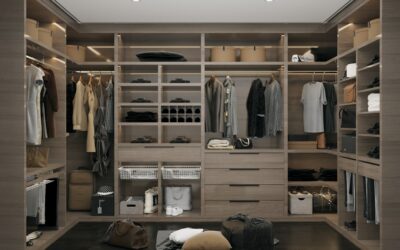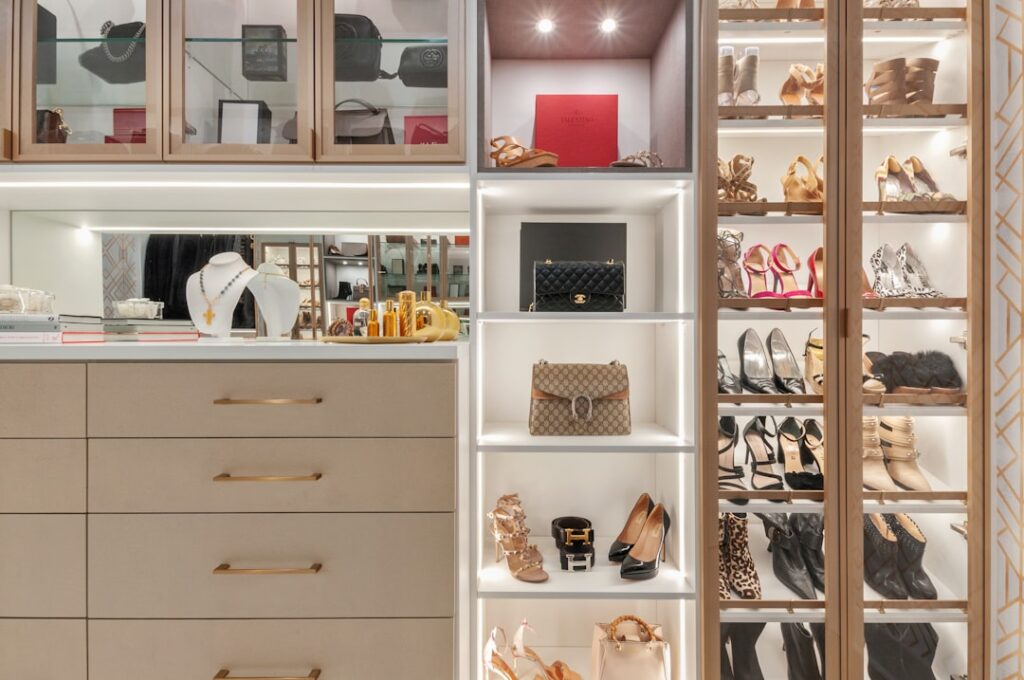
A walk-in closet is only as good as the shelving inside it, and plenty of large closets waste half their potential on a single high shelf and one long hanging rod. Smart walk in closet shelving ideas turn dead vertical space into organized, accessible storage that actually fits how you dress. Whether you have a compact 5-by-6-foot closet or a spacious dressing room, these walk in closet shelving ideas focus on maximizing capacity while keeping everything visible and reachable.
- Start With the Right Dimensions
- Adjustable Systems Beat Fixed Shelving
- Build Up: Vertical Storage and Upper Shelves
- Dedicated Shoe Storage
- Add a Center Island for Bigger Closets
- Drawers, Bins, and Specialty Storage
- Lighting and Finishing Touches
- Budget-Friendly DIY Shelving Approaches
- Common Closet Shelving Mistakes
Start With the Right Dimensions
Good shelving begins with understanding the numbers that make a closet work. Hang a single rod for shirts and jackets at about 42 inches high, and double-hang shorter items with rods at roughly 42 and 84 inches to nearly double your hanging capacity. Reserve full-height single hanging, around 68 to 72 inches, for dresses and long coats.
Standard shelf depth runs 12 to 16 inches, deep enough for folded sweaters and bins without swallowing items at the back. Space adjustable shelves 12 to 14 inches apart for folded clothes and closer for shoes. Leave a walkway of at least 24 inches, ideally 36 inches, between opposite shelving runs so two people are not needed to open a drawer. Getting these baseline measurements right prevents the frustrating layout mistakes that no amount of pretty shelving can fix later.
Adjustable Systems Beat Fixed Shelving
The single best decision you can make is choosing an adjustable shelving system over fixed, built-in shelves. Track-based systems like Elfa, Rubbermaid FastTrack, and ClosetMaid ShelfTrack let you reposition shelves, rods, and drawers as your wardrobe changes, and they cost far less than custom millwork. A wall-mounted track system for a mid-size closet runs $300 to $900 in materials and installs in a weekend.
Adjustability matters more than it sounds. Seasons change, you swap bulky coats for summer dresses, and your storage needs shift year to year. A fixed built-in locks you into one configuration forever, while a track system adapts in minutes with a screwdriver. For a higher-end look at a mid-range price, semi-custom systems from The Container Store or IKEA’s PAX line blend flexibility with a built-in appearance.
Build Up: Vertical Storage and Upper Shelves
Most closets stop shelving at eye level and leave two feet of prime real estate empty near the ceiling. Add a top shelf that runs the full perimeter for storing out-of-season items, luggage, and rarely-used goods in labeled bins. A second high shelf above the standard one, reachable with a small folding step stool, effectively adds a whole extra tier of storage without expanding the footprint.
Vertical dividers on upper shelves keep stacks of folded blankets, purses, and clutches from toppling into each other. For frequently accessed items, keep the zone between 30 and 72 inches high, the comfortable reach range, and push storage above and below that for seasonal or bulky things. Thinking vertically is often the difference between a closet that feels cramped and one that holds twice as much.
Dedicated Shoe Storage
Shoes multiply and sprawl, so give them a defined home. Angled shelves display shoes at a slight tilt for easy viewing and run about 7 to 8 inches of vertical space per pair for flats and 10 to 12 inches for boots. Flat cubbies work too and stack efficiently, while a dedicated boot shelf with 14 to 16 inches of clearance keeps tall footwear upright rather than flopping over.
For a large collection, a full shoe wall of adjustable shelves along one side is both practical and visually striking. Budget roughly 6 to 8 inches of shelf width per pair. Adjustable brackets let you set boot-height rows and flat-shoe rows to match your actual collection. Clear acrylic shoe boxes protect and display favorites while keeping dust off, a small upgrade that makes the space feel curated.
Add a Center Island for Bigger Closets
If your walk-in is at least 8 feet wide, a center island transforms it into a boutique-style dressing room. An island provides drawer storage for folded items, jewelry, and accessories, plus a flat top for laying out outfits or folding laundry. Standard island dimensions run about 24 inches deep and 36 inches high, and you need at least 36 inches of clearance around it to move comfortably.
Islands do double duty by concealing everyday clutter in drawers while presenting a clean, furnished look. A shallower peninsula shelving unit against one wall achieves a similar benefit in narrower closets. Top the island with a stone or butcher-block surface and add a felt-lined top drawer for watches and jewelry to elevate the whole space from storage room to personal boutique.
Drawers, Bins, and Specialty Storage
Not everything hangs or folds on open shelves. Pull-out drawers keep socks, underwear, and folded knits contained and dust-free, and mixing a few drawers into a shelving run adds valuable closed storage. Pull-out valet rods, belt and tie racks, and slide-out hampers tuck useful features into small gaps without occupying floor space.
Woven baskets and labeled bins on open shelves corral loose items like scarves, workout clothes, and accessories while adding texture and warmth. Clear bins work best for items you need to see, and opaque baskets hide visual clutter for a tidier look. Divide deep shelves with vertical partitions so stacks stay upright, and use the backs of doors for hooks, jewelry organizers, or a full-length mirror.
Lighting and Finishing Touches
Even the best shelving fails if you cannot see into the closet. Add LED strip lighting under shelves and along the perimeter to eliminate shadows, and motion-activated fixtures turn on automatically when you walk in. A color temperature around 3500 to 4000K renders clothing colors accurately so you are not surprised by a mismatched outfit in daylight.
Finish with a few practical extras: a full-length mirror, a bench or ottoman for putting on shoes if space allows, and consistent hangers, which instantly make any closet look more organized. Group clothing by type and color on the shelves and rods, and the whole system becomes easier to use and maintain. Combine smart dimensions, adjustable shelving, vertical thinking, and good light, and even a modest walk-in will hold and display far more than you expected.
Budget-Friendly DIY Shelving Approaches
You do not need a five-figure custom install to get an organized walk-in. A wall-mounted wire or track system from the home center runs $150 to $500 in materials and gives you adjustable shelves, rods, and baskets that rival pricey built-ins in function. For an even leaner budget, freestanding cube shelving, tension-rod hanging sections, and stackable drawer units let you build a working system for a few hundred dollars and take it with you if you move, which matters for renters.
The key to a budget install looking intentional rather than improvised is consistency. Use matching bins, uniform hangers, and a single finish across your shelving so the eye reads it as one system. Repurpose a small dresser or bookcase you already own as an island or shoe station. Painting the closet interior a light, clean color and adding inexpensive stick-on LED strips instantly elevates a modest setup, proving that organization, not budget, is what makes a closet feel custom.
Common Closet Shelving Mistakes
The most frequent misstep is one long rod and a single high shelf, which wastes the entire lower half of the closet on empty air below hanging shirts. Double-hang short garments to reclaim that space instantly. Another common error is building shelves too deep, over 16 inches, which buries folded items at the back where you never see or use them. Keep everyday storage shallow and reachable, and reserve deep or high shelves for bulky, seldom-used items. Finally, resist over-customizing to your current wardrobe; leave adjustable capacity so the closet adapts as your needs change, and it will serve you well for years rather than needing a redo the next time your storage requirements shift.