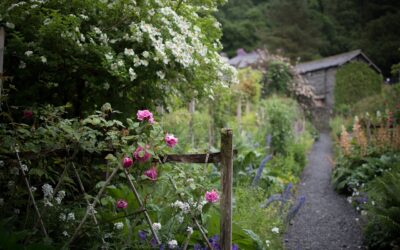
A proper paver walkway costs $2,500 to $6,000 installed, and that stops a lot of homeowners before they start. The truth is you can build a walkway that looks intentional and holds up for 5 to 10 years for under $500 with the right materials. These walkway ideas cheap enough for a weekend project will cover nearly every front, side, and garden path scenario I’ve dealt with on client budgets.
- Pea Gravel Path With Steel Edging
- Stepping Stones in Lawn
- Mulch and Timber Path
- Poured Concrete With a Form Mold
- Flagstone Pieces From a Salvage Yard
- Wood Rounds From a Fallen Tree
- Recycled Brick Path
- Rubber Paver Path
- Crushed Limestone Path
- Tips That Save Real Money
- Base Prep Matters More Than Material
- Drainage Considerations
- Seasonal Maintenance
- What to Skip
Pea Gravel Path With Steel Edging
Dig 3 inches deep, lay landscape fabric, install steel or aluminum edging, and fill with pea gravel. A 30-foot path at 3 feet wide runs roughly $140 to $220 in materials. Stays clean, drains well, and refreshes with a new half-inch top layer every 3 years.
Stepping Stones in Lawn
Pre-cast 16 x 16-inch concrete pavers at Home Depot cost $4 to $8 each. Set them at a natural stride spacing (24 to 28 inches center-to-center), cut sod to fit with a sharp shovel, bed in 1 inch of sand, and tap level. A 20-foot path uses 10 stones for about $60 total.
Mulch and Timber Path
Lay pressure-treated 2 x 4s on edge as rails, fill between with shredded hardwood mulch 3 inches deep. Cost for 25 feet runs $80 to $130. Looks tidy in cottage gardens, rots out in 4 to 6 years. Easy to refresh.
Poured Concrete With a Form Mold
Plastic walkway molds from Quikrete or Amazon cost $30 to $55 and stamp 6 to 8 “cobblestones” at once. Pour Quikrete Crack Resistant into the mold, screed flat, and lift. Repeat down the path. Materials for 20 feet: $90 to $180. Takes a full Saturday but looks like a $1,500 job.
Flagstone Pieces From a Salvage Yard
Stone yards and landscape supply pallets often sell broken or cull flagstone at $0.30 to $0.60 per pound. A 30-foot path in random-shape flagstone runs $120 to $250 in stone plus $30 for polymeric sand joints. Set in compacted screenings and sweep joints dry.
Wood Rounds From a Fallen Tree
Cut 4-inch-thick slices from a downed oak, maple, or locust. Set them in sand with 2 inches spacing and fill gaps with pea gravel or moss. Free if you have the tree, or $1 to $3 per round at a municipal wood yard. Lasts 3 to 5 years before rot sets in.
Recycled Brick Path
Check Craigslist, Facebook Marketplace, or urban salvage yards for reclaimed brick at $0.25 to $0.75 each. A running-bond 30-foot path needs roughly 300 bricks. Total materials including sand and edging: $150 to $300. Perfect patina, takes a weekend to lay.
Rubber Paver Path
Recycled rubber pavers (the kind used under playground swings) cost $3 to $6 each at big-box stores. Soft underfoot, never cracks, rolls out almost like tile. Great for side-yard utility paths. Budget $150 to $240 for a 20-foot run.
Crushed Limestone Path
Dig 3 inches, lay fabric, edge with aluminum or plastic bender board, fill with crushed limestone or decomposed granite. Packs to a firm surface with a plate compactor. A 30-foot path runs $110 to $180. Looks clean in Southwest and Mediterranean-style landscapes.
Tips That Save Real Money
- Rent a plate compactor for $65/day instead of buying
- Buy bulk gravel by the cubic yard, not by the bag (60 percent cheaper)
- Pick up free delivery on orders over $300 at most stone yards
- Edge with scrap pavers you negotiate for free at construction sites
- Install in fall when stone yards discount leftover inventory
Base Prep Matters More Than Material
The single biggest separator between a walkway that lasts and one that fails is what’s under it. For any stone, brick, or paver path, excavate 4 to 6 inches, lay 3 inches of compacted 3/4-inch road base, and top with 1 inch of sharp concrete sand before setting stones. Skipping the base and laying stones directly on dirt or turf is why most DIY walkways heave in the first winter. A $40 investment in base material saves $400 in rework within two seasons.
Drainage Considerations
Walkways should pitch 1/4 inch per foot to one side or crown gently from center to edges so water sheds off. Paths that pond water grow moss, ice in winter, and rot wood edging in 2 to 3 years. For low spots in the yard, run a 4-inch corrugated perforated drain pipe under the walkway base and daylight it to a lower grade; a $50 add during install prevents a muddy mess every spring.
Seasonal Maintenance
- Rake leaves off stone and brick paths in fall so they don’t stain
- Top up gravel and mulch paths each spring with 1/2 inch of fresh material
- Reset heaved flagstones after first thaw by lifting and re-bedding in sand
- Clean polymeric joints with a stiff brush to remove moss before it takes hold
- Reseal wood rounds and pallet paths every 2 years with penetrating stain
What to Skip
Skip poured concrete slab jobs that require forms and rebar unless you have experience; a bad pour is expensive to remove. Skip loose pine bark on sloped paths (washes out). Skip anything that requires a permit without checking your local code first. Done right, walkway ideas cheap enough for a weekend can still add real curb appeal to your home.