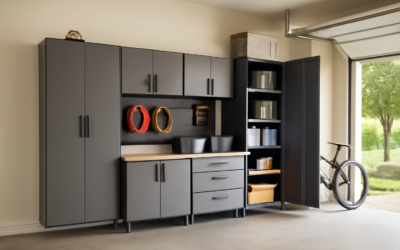
The average two-car garage holds thousands of dollars of tools and gear, yet most of it ends up in a pile you have to climb over to reach the car. Wall mounted garage storage flips that problem by moving everything off the floor and onto the vertical space you’re already paying for. A well-designed wall system reclaims parking room, protects your equipment, and turns a chaotic garage into a workshop you actually enjoy using. Here’s how to choose and install the right system.
Why Vertical Storage Beats Floor Storage
Floor cabinets and shelving units eat the very space you’re trying to preserve, and they trap moisture underneath where it rusts tools and grows mold. Mounting storage on the wall keeps the floor clear for vehicles, lets you sweep and hose down easily, and keeps gear at eye level where you can find it. It also gets flammable items and sharp tools out of reach of kids and pets.
The garage wall is prime real estate hiding in plain sight. A single 8-foot wall section can hold everything from rakes and ladders to power tools and sports equipment if you organize it with the right hardware.
The Main System Types
Three approaches dominate the market, each with a different strength.
- Slatwall panels: Horizontal grooved panels that cover the wall and accept hooks, baskets, and shelves anywhere along their length. The most flexible and best-looking option
- Track and rail systems: Heavy-duty horizontal rails with hangers that slide and lock. Excellent for very heavy items and long-handled tools
- Pegboard: The classic budget solution, great for hand tools but weight-limited
Matching System to Need
Choose slatwall if you want a clean, fully adjustable wall that looks finished and rearranges in seconds. Pick a track system when you’re hanging bikes, wheelbarrows, and heavy ladders that need serious holding power. Reach for pegboard when the budget is tight and you mainly need to organize screwdrivers, wrenches, and small hand tools within arm’s reach of a workbench.
Weight Capacity and Wall Anchoring
The single most important rule of garage wall storage is anchoring into studs. Drywall anchors alone will pull out under the load of tools and equipment, sending everything crashing. Locate your studs, typically 16 inches on center, and drive lag screws or the system’s specified fasteners directly into the framing.
Respect the rated capacities. Slatwall panels commonly hold 50 to 100 pounds per square foot when properly mounted to studs, while individual hooks may be rated for 25 to 50 pounds each. A heavy-duty track hanger can carry a loaded bike or a 40-pound ladder, but only if the rail is lagged into multiple studs. Spread heavy loads across several anchor points rather than concentrating them.
Installation Overview
Most systems are a manageable weekend project with basic tools.
- Find and mark all studs across the installation area with a stud finder
- Snap a level chalk line at your desired mounting height, usually starting 24 inches off the floor
- For slatwall, mount the first panel level, screwing into every stud it crosses
- Interlock subsequent panels above and beside the first, checking level as you go
- Insert hooks, baskets, and shelf brackets, then load them, keeping heavy items low
Starting level is critical. A first panel that’s even slightly off will throw every panel above it out of alignment, and the error compounds across the wall.
Organizing for Real Use
Hardware is only half the job; layout is the other half. Group items by zone: garden tools near the door to the yard, automotive gear near the workbench, seasonal and holiday items up high where access is rare. Keep frequently used tools between waist and shoulder height, the easy-reach band. Store heavy items low so a failed anchor causes less damage and less risk.
Use clear bins for small parts, hang long-handled tools by their heads so they don’t fall through, and reserve overhead ceiling racks for lightweight, bulky, rarely-touched items like camping gear and out-of-season decorations.
Cost Expectations
- Pegboard setup: $30 to $100 for a small wall with hooks
- Slatwall (per 8-foot section): $80 to $250 including panels and starter hooks
- Heavy-duty track system: $150 to $400 for a full wall
- Complete two-car garage system: $500 to $2,000 depending on coverage and accessories
Common Mistakes to Avoid
The failures repeat themselves. Mounting into drywall instead of studs is the top cause of collapsed shelves. Overloading a single hook beyond its rating snaps it under weight. Installing panels too low wastes the tall clearance a garage offers, while installing everything too high makes daily-use tools annoying to reach. And buying a system too small forces a second purchase within a year, so measure your wall and plan for growth from the start.
Is a Wall System Worth It?
If your garage floor has become a storage unit and you’d rather park your car in it, wall mounted garage storage is one of the highest-impact home projects you can tackle in a weekend. Anchor into studs, respect the weight ratings, and organize by zone, and you’ll reclaim floor space, protect your equipment, and finally know where everything is. Start with one wall, live with the layout, and expand as your needs grow.