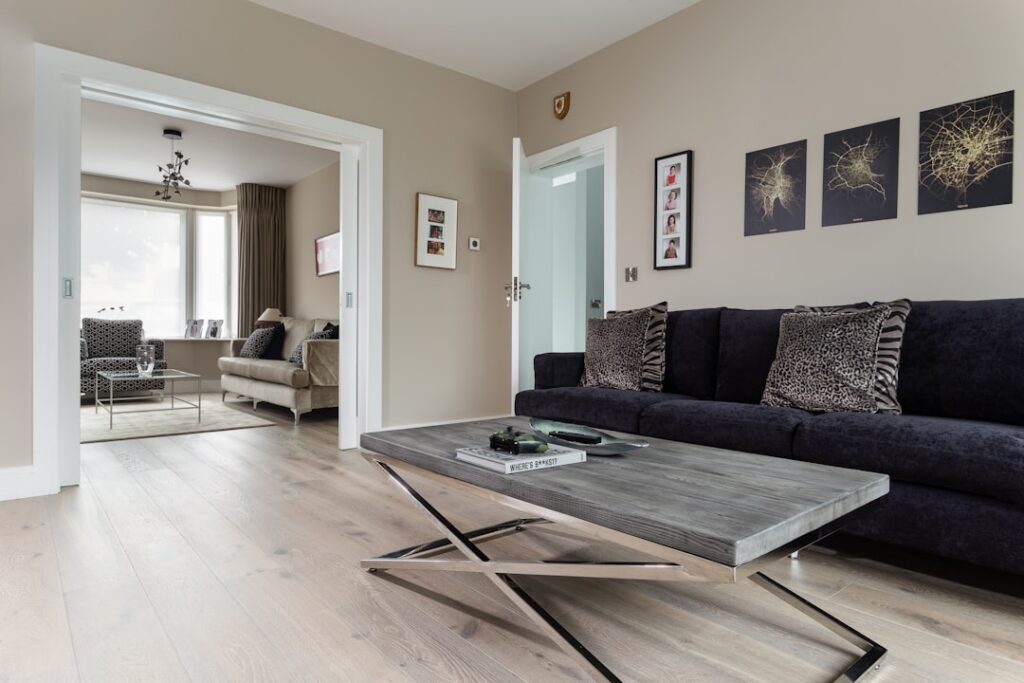
Most people assume all laminate feels cold and hard underfoot, but the right product can feel surprisingly warm and comfortable, especially in winter. Warm laminate flooring usually means one of two things: laminate with an attached underlayment pad for comfort and insulation, or laminate rated to work over radiant heating. Both deliver the cozy, insulated feel that bare laminate over concrete never can. This guide explains how warmth is built into laminate, what to look for, and how to pair it with radiant heat safely.
What Makes Laminate Feel Warm
Two factors drive how warm a laminate floor feels. The first is thermal insulation: laminate’s fiberboard core and any attached pad slow heat transfer, so the surface does not pull warmth from your feet the way cold tile or stone does. The second is the underlayment beneath it, which adds a cushioning, insulating layer that traps a thin pocket of air and softens each step.
Compared to ceramic tile, which feels icy in winter, laminate naturally reads as warmer because wood-based materials conduct heat slowly. Add an attached pad and the comfort jumps again. That combination is what people mean by warm laminate.
Attached Underlayment: The Comfort Upgrade
Many mid-range and premium laminates now ship with a foam or cork pad pre-bonded to the underside of each plank. This attached underlayment delivers several benefits at once:
- Warmth: The pad insulates against a cold subfloor, especially over concrete slabs and basements.
- Comfort: It cushions each step, reducing the hard, hollow feel of bare laminate.
- Quiet: It dampens the click-clack and echo that plain laminate produces.
- Convenience: No separate underlayment roll to buy and install, saving time and a labor step.
Attached-pad laminate typically costs $2.50 to $5 per square foot, a modest premium over basic boards. For a noticeably warmer, softer floor, it is usually worth it. If your product lacks an attached pad, a separate 3mm cork or foam underlayment achieves a similar effect.
Laminate Over Radiant Heat
For genuinely warm floors, pairing laminate with a radiant heating system is the gold standard. Many laminate products are rated as radiant-heat compatible, but you must confirm it before buying, because not all are. The fiberboard core can react to heat, and using an incompatible product can cause gapping, warping, or warranty voiding.
When pairing laminate with radiant heat, follow a few firm rules. Keep the floor surface temperature at or below 82°F to 85°F, which most manufacturers specify, since hotter temperatures stress the core and seams. Use a slow, gradual warm-up rather than blasting the system to full heat, especially right after install. And note that a thick separate underlayment can insulate against the heat you want to feel, so attached thin pads or radiant-specific underlayment work best.
Choosing a Warm Laminate Product
When shopping, look for these features to maximize warmth and comfort:
- Attached cork or foam pad: The simplest path to insulation and a softer step.
- Thickness of 10mm to 12mm: Thicker boards feel more solid and insulate slightly better than thin 7mm products.
- Radiant-heat compatibility: Clearly stated on the spec sheet if you plan to use underfloor heating.
- AC4 or higher rating: Ensures the wear layer holds up to traffic in the cozy rooms you will want to spend time in.
A matte or satin finish also reads warmer visually, complementing the cozy feel underfoot. Lighter oak and hickory tones tend to feel inviting, while gray and high-gloss surfaces can look cooler.
Best Rooms for Warm Laminate
Warm laminate shines in bedrooms, living rooms, basements, and any space over a cold concrete slab. Basements in particular benefit, since the slab stays cool year-round and an insulating pad makes the difference between a comfortable family room and a chilly one. Bedrooms gain a soft, quiet surface for bare feet in the morning.
Avoid laminate, warm or not, in bathrooms and laundry rooms where standing water can swell the seams, unless you choose a water-resistant line. For those wet spaces, waterproof luxury vinyl with an attached pad delivers similar warmth without the moisture risk.
Installation Tips for Maximum Warmth
Always acclimate laminate in the room for at least 48 hours before installing so the boards adjust to the home’s temperature and humidity. Leave the proper expansion gap, typically 1/4 inch, around the perimeter, since warm floors expand. If installing over a slab, add a vapor barrier beneath the underlayment to block ground moisture, which both protects the floor and improves the insulating effect. Over radiant heat, run the system at a low setting during install and ramp up gradually afterward.
Warm Laminate Versus Other Warm Floors
If warmth underfoot is your priority, it helps to see how laminate stacks up against alternatives. Carpet is the warmest and softest of all, but it stains and traps allergens. Cork and warm-rated luxury vinyl with attached pads rival laminate for coziness and add waterproofing that laminate lacks. Tile is the coldest option unless paired with radiant heat, at which point it becomes the most efficient heat conductor of all.
Laminate sits in a comfortable middle ground: warmer and quieter than tile, more durable and scratch-resistant than many woods, and far cheaper than hardwood. With an attached pad or radiant heat, it delivers genuine comfort at a budget-friendly price, which is why it stays popular for bedrooms and basements.
Maintaining the Cozy Feel
A warm laminate floor stays comfortable longest with simple care. Sweep or vacuum regularly so grit does not dull the surface, and clean with a barely-damp microfiber mop and a laminate-safe cleaner, never a flood of water that could reach the seams. Add area rugs in the coldest spots, like beside the bed, for an extra layer of warmth and softness. Keep indoor humidity moderate so the boards stay stable through the seasons.
If you have radiant heat, resist the urge to crank it up fast after a cold spell; gradual temperature changes protect the seams and core, keeping the floor flat and warm for its full lifespan.
The Bottom Line
Warm laminate flooring delivers the cozy, insulated feel that plain laminate over concrete cannot, either through an attached underlayment pad or pairing with radiant heat. Look for a cork or foam attached pad, 10mm-plus thickness, and clear radiant-heat compatibility if you plan to heat the floor. Keep radiant surface temperatures under 85°F, acclimate the boards, and add a vapor barrier over slabs. Choose that way and your laminate will feel as warm as it looks.
Prefer to explore on your own?
See how new flooring looks in your actual room in seconds — free, no signup.
Try the free Floor Studio →