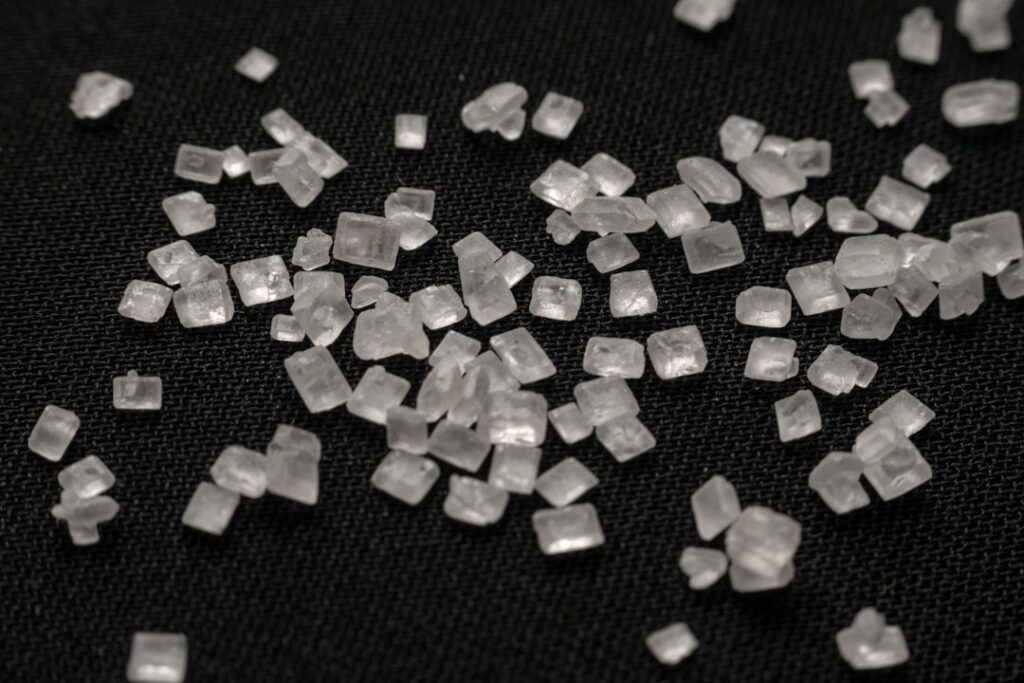
Understanding how your water softener and salt work together takes the mystery out of maintaining soft water. The salt isn’t softening the water directly — it’s recharging the resin that does the actual work. Choose the right salt, keep the brine tank filled, and watch for a few common issues, and your softener will run reliably for years. This guide explains the whole relationship in plain terms.
How Salt Softens Your Water
Hard water carries dissolved calcium and magnesium. A salt-based softener runs that water through a tank filled with tiny resin beads coated in sodium ions. As water passes through, the resin swaps its sodium for the calcium and magnesium — the hardness sticks to the resin and soft water flows out.
Eventually the resin fills up with hardness minerals and can’t hold more. That’s where the salt comes in. During regeneration, the softener draws a strong salt brine from the brine tank and flushes it through the resin. The high sodium concentration knocks the calcium and magnesium off the beads, recoats them with fresh sodium, and rinses the hardness down the drain. Then the cycle starts over. So the salt’s real job is recharging the resin, not touching your water directly.
Types of Water Softener Salt
Not all salt is the same, and the type affects performance and maintenance:
- Pellets (evaporated salt): The purest option, 99.9% sodium chloride. Fewer impurities means less residue and fewer clogs. Best all-around choice; $6 to $15 per 40-lb bag.
- Solar salt (crystals): Made by evaporating seawater, slightly less pure than pellets. Cheaper but dissolves less cleanly. $5 to $10 per bag.
- Rock salt: Mined salt, cheapest but full of insoluble impurities that build up and can foul the tank and valve. Generally not recommended.
- Potassium chloride: A sodium-free alternative for people on low-sodium diets or with sodium-sensitive plants/septic concerns. Works well but costs 3 to 4 times more ($25 to $40 per bag) and you use about 10% more.
- Block salt: For specific compact systems only — check your manual before using it.
For most homes, high-purity pellets are the right buy — they minimize the two biggest hassles, salt bridges and mushing.
How Much Salt You Need
A typical family uses 40 to 80 pounds of salt per month — roughly one to two 40-lb bags. Your actual usage depends on:
- Water hardness — harder water regenerates more often and burns more salt.
- Household size and water use — more people, more regenerations.
- Softener efficiency — modern demand-initiated units use salt only when needed, older timer units may waste it.
Annual salt cost lands around $50 to $150 for most homes. Keep the brine tank at least one-quarter to one-half full at all times, and never let it run empty or you’ll get hard water until you refill and regenerate.
How to Add Salt
Refilling is simple:
- Check the salt level monthly — it should stay a few inches above the water line in the brine tank.
- Before adding, loosen any crust on top with a broom handle to break up a possible salt bridge.
- Pour in new salt, filling to about two-thirds full — don’t overfill, which encourages bridging.
- Match the salt type you’ve been using; don’t mix pellets and crystals randomly.
- If the tank was empty, run a manual regeneration after refilling so soft water resumes.
Common Salt Problems
Salt bridges
A salt bridge is a hard crust that forms across the top of the brine tank, leaving an empty gap underneath. The softener draws water below the bridge but the salt above never dissolves into brine — so it stops softening even though the tank looks full. Break the bridge by gently pushing a broom handle down through the crust. Using high-purity pellets and not overfilling prevents it.
Salt mushing
Mushing is when dissolved salt recrystallizes into a thick sludge at the bottom of the tank, blocking the system. It’s worse with lower-purity salts. Fixing it means scooping out the mush and cleaning the tank. High-purity pellets and periodic tank cleaning prevent it.
Running out of salt
Empty tank equals hard water. You’ll notice spots on dishes, film in the shower, and less lather. Refill and regenerate to recover.
Cleaning the Brine Tank
Every 1 to 2 years, clean the brine tank to prevent buildup:
- Use up or bail out the remaining salt and water.
- Remove the brine grid/platform if present.
- Scrub the tank with warm soapy water, rinse, and add a little bleach solution to sanitize, then rinse again.
- Refill with fresh salt and run a manual regeneration.
This is a good time to check the brine valve and float for proper operation.
Is the Sodium a Health Concern?
Softened water does add a small amount of sodium — roughly 20 to 40 mg per liter for moderately hard water, less than a slice of bread. For most people that’s negligible. If you’re on a strict low-sodium diet, options include using potassium chloride instead of salt, or installing a separate unsoftened tap or reverse-osmosis system for drinking and cooking water. Many homeowners leave one kitchen tap on hard water for drinking and softening the rest of the house.
Salt-Free Alternatives
If you’d rather skip salt entirely, “salt-free” conditioners (template-assisted crystallization) change the minerals so they don’t stick to surfaces, without removing them. They need no salt and little maintenance, but they don’t truly soften — you won’t get the slick feel or the same scale prevention as a salt-based unit in very hard water. They’re a reasonable choice for moderate hardness or where salt discharge is restricted, but for genuinely hard water, salt-based softening still performs best.
Understanding the Regeneration Cycle
Knowing what happens during regeneration helps you spot problems and set the softener correctly. A full cycle runs in stages: backwash, where water flows up through the resin to flush out trapped sediment; brine draw, where the salt solution is pulled from the brine tank through the resin to knock off the hardness minerals; slow rinse, which pushes the brine slowly through for a thorough recharge; and fast rinse and refill, which clears the remaining brine and adds water back to the tank to dissolve salt for next time. The whole process takes 1.5 to 2.5 hours and uses 25 to 65 gallons of water, which is why softeners are set to regenerate overnight. Modern demand-initiated units regenerate only after they’ve softened a measured volume of water, which saves salt and water versus older timer-based units that regenerate on a fixed schedule whether needed or not.
Signs Your Softener Isn’t Working
Salt problems usually announce themselves through your water. Watch for these tells:
- Spots and film returning on dishes, glassware, and shower doors.
- Soap and shampoo not lathering the way they did.
- A slippery feel disappearing — soft water feels silky, hard water squeaky.
- Scale building up on faucets and in the kettle again.
- Salt level not dropping for weeks, which points to a salt bridge or a stuck valve.
- The brine tank overfilling with water, signaling a float or valve problem.
Most of these trace back to running out of salt, a salt bridge, or mushing — all covered above and all easy to fix.
Buying Tips
- Stick with one salt type once you find one that works cleanly.
- Buy high-purity pellets to minimize bridging and mushing.
- Store bags in a dry place — damp salt clumps.
- Watch for store sales and buy several bags at once; salt keeps indefinitely if dry.
- Check whether your softener has a low-salt indicator or app alert to avoid running out.
The Bottom Line
Your water softener and salt work as a team: the resin softens the water, and the salt recharges the resin during regeneration. Use high-purity pellets, keep the brine tank a quarter to half full, break up salt bridges before they starve the system, and clean the tank every year or two. Budget one to two 40-lb bags a month and about $50 to $150 a year. Keep up that simple routine and you’ll enjoy consistent soft water with almost no hassle.